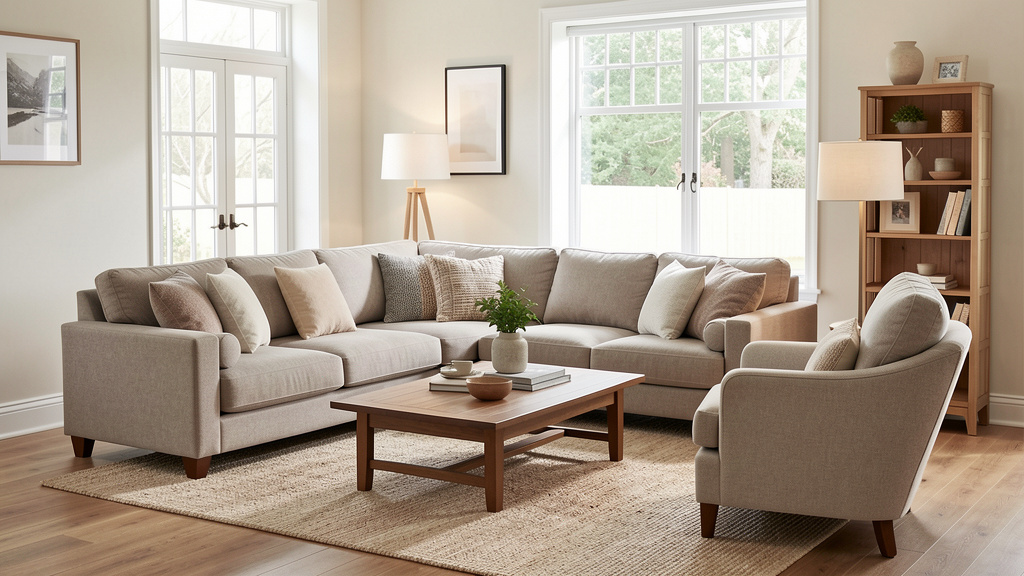
Stop guessing and start choosing with confidence. This comprehensive framework guides you in selecting furniture that lasts, fits, and elevates your home through intentional, informed decisions.
Selecting furniture that thoughtfully balances craftsmanship, proportion, and personal expression forms the foundation of a home that feels both deeply comfortable and authentically yours. Yet many navigate this process overwhelmed by fleeting trends, marketing language, and the understandable concern about making costly missteps. This guide offers a clear, integrated approach centered on three interconnected pillars—Quality, Scale, and Style—grounded in established design principles, material science insights, and spatial psychology. You’ll gain practical protocols to evaluate construction integrity, determine harmonious proportions for your specific space, and cultivate a style language that evolves with you. This transforms furniture selection from a source of anxiety into a purposeful, rewarding practice of shaping environments that support your daily life.
Introduction: Seeing Beyond the Surface
Step into any showroom, and you encounter carefully curated scenes designed to inspire. A plush sofa invites relaxation. A dining set suggests effortless entertaining. Yet beneath this curated appeal lies a common gap: many resources emphasize what to buy rather than how to evaluate whether a piece truly aligns with your life, space, and values. You may recognize the post-purchase unease of a beautiful chair that loses support too quickly, a table that disrupts room flow, or a trendy accent that feels disconnected from your home’s character. These aren’t reflections of poor taste—they often stem from an incomplete selection process.
True furniture confidence emerges when three essential elements work together: Quality (will it serve you reliably over time?), Scale (does it relate harmoniously to your space and body?), and Style (does it reflect your authentic perspective?). Overlooking any single element can undermine the whole. A meticulously crafted sofa may feel imposing in a compact room. A perfectly proportioned console might clash with your home’s architectural language. A cherished vintage find may not withstand daily use without thoughtful reinforcement.
This guide synthesizes widely recognized industry standards, material research, and spatial principles into a repeatable, adaptable system. It shifts the focus from subjective preference (“Do I like how it looks?”) toward objective evaluation (“Does this serve my needs well?”). You’ll learn to assess joinery, material suitability, proportional relationships, and stylistic cohesion with greater clarity. More importantly, you’ll develop a personalized lens—one that honors your lifestyle rhythms, spatial realities, and evolving sense of home. This isn’t about replicating magazine imagery; it’s about cultivating spaces where every piece earns its place through function, resonance, and thoughtful integration. Let’s begin building that clarity, one intentional choice at a time.
The Triad Framework: Where Quality, Scale, and Style Converge
Imagine furniture selection as a three-legged stool. Remove one leg—Quality, Scale, or Style—and stability is compromised. Many focus intensely on Style (the most visible element) while underestimating how deeply Quality and Scale shape daily experience. This framework corrects that imbalance by treating all three as equally vital, interdependent components. Their synergy creates what many describe as “visual quiet”: spaces where furniture feels inherently right, requiring no mental justification.
The framework follows a logical sequence. Quality forms the foundational layer—the non-negotiable basis of durability, safety, and long-term value. Without structural integrity, even the most beautiful piece becomes a source of frustration. Scale builds the middle layer—the spatial intelligence ensuring furniture supports human movement and complements architectural boundaries. A well-made piece of incorrect scale disrupts comfort and flow. Style completes the structure—the expressive layer that communicates personality and fosters emotional connection. Yet style without quality and scale can feel superficial, like decoration layered over dysfunction.
The Guiding Principle: Furniture that thoughtfully integrates all three pillars doesn’t just occupy space—it actively enhances how you live within it, reducing daily friction while deepening your sense of belonging.
This approach moves beyond the short-term thinking of “buy cheap, replace often.” Instead, it champions value density: investing strategically where longevity matters most (frames, core mechanisms), optimizing scale for lifelong usability, and selecting style elements with enduring resonance. Throughout this guide, you’ll see how decisions in one pillar influence the others. Choosing a solid wood dining table (Quality) affects its visual presence in the room (Scale) and sets a tonal anchor for surrounding elements (Style). Selecting a modular sofa system (Scale) requires evaluating frame construction (Quality) and fabric suitability for your lifestyle (Style + Quality). This interconnected perspective is where lasting confidence takes root.
Let’s explore each pillar with practical detail, beginning with the essential foundation: Quality.
Pillar 1: The Quality Assessment Protocol—Reading Craftsmanship with Clarity
Quality is not defined by price alone. A moderately priced piece with thoughtful construction often outperforms a costly item built with shortcuts. Quality reflects intentional choices in materials, joinery, and finishing—choices you can learn to identify. This protocol empowers you to evaluate furniture critically across diverse settings: showrooms, online listings, antique markets, or secondhand sources. Think of it as developing a “quality lens”—a practical skill that grows sharper with use.
Why Quality Assessment Matters
Furniture serves as functional infrastructure for daily living. Chairs support posture for hours. Tables endure meals, projects, and gatherings. Cabinets safeguard meaningful objects. Thoughtful construction directly impacts:
– Safety and stability: Wobbly bases, loose joints, or unstable mechanisms create hazards, especially in homes with children or pets.
– Long-term value: Replacing poorly constructed items every few years often exceeds the initial investment in a durable piece.
– Environmental consideration: Extending a piece’s usable life reduces waste. Industry analyses note furniture contributes significantly to landfill volume, much of it due to premature disposal of repairable or avoidable failures.
– Daily well-being: Constant adjustments, visible wear, or functional compromises create subtle friction. Reliable, well-made furniture supports a calmer, more grounded home experience.
Assessing quality is an act of mindful stewardship—shifting focus from immediate cost to lifecycle value and personal peace of mind.
The Four Quality Dimensions: A Practical Evaluation Guide
Approach every potential purchase through these interconnected lenses. Keep this mental checklist handy during evaluations.
Dimension 1: Frame and Structural Integrity—the Foundation
The frame determines longevity. Upholstery and finishes can be replaced; a compromised frame cannot. Here’s how to assess:
For Upholstered Pieces (Sofas, Chairs, Ottomans):
– Test rigidity: Gently lift one front corner. Does the entire frame feel solid, or does it twist noticeably? A stable frame resists torsion. Significant flex suggests weak joints.
– Inspect the skeleton: If possible, view the frame beneath cushions. Kiln-dried hardwoods (maple, oak, ash, beech) offer excellent durability. “Mixed hardwoods” without specification may include softer, less stable woods. Thick plywood (¾”+) with proper joinery can be durable, but solid hardwood remains the gold standard for high-use frames.
– Examine joinery: Look for mortise-and-tenon, double-doweled joints, or corner blocks secured with screws and glue. Avoid frames held solely by staples, nails, or weak adhesive bonds. Run a hand along frame edges—rough splinters suggest rushed finishing and potential future issues.
– Evaluate suspension: Sit firmly at the front, center, and sides. Does support feel consistent? Eight-way hand-tied springs offer exceptional longevity but are rare today. Sinuous springs (zig-zag wires) are acceptable when made of thick-gauge steel and securely anchored. Avoid systems relying only on webbing or elastic bands—they tend to sag prematurely. For foam-core seats, high-resilience (HR) foam with a density of approximately 2.0 lbs/cu ft or higher provides better long-term support (reputable brands often disclose this).
Illustrative Example: Two visually similar sofas are priced at $1,800 and $3,200. Lifting the corner of the lower-priced model reveals noticeable frame flex. The sales associate confirms a “mixed hardwood” frame with basic sinuous springs. The higher-priced model specifies a kiln-dried maple frame with corner blocking and HR foam. The price difference reflects foundational construction—a meaningful consideration for a piece used daily over many years.
For Case Goods (Tables, Desks, Cabinets, Dressers):
– Drawer construction: Open every drawer. Dovetail joints (interlocking wood “fingers”) on fronts and backs signal quality craftsmanship. Avoid drawers assembled with only staples, nails, or plastic cams. Slide drawers fully open—they should move smoothly on wood-on-wood runners or full-extension metal slides. Partial-extension slides limit access and often indicate cost-cutting.
– Back panel integrity: Look inside or behind the piece. Is the back made of thin hardboard (¼” particleboard) merely stapled on? Or is it plywood (½”+) set into a rabbeted groove and screwed securely? Thin backs warp easily and compromise overall stability, especially in taller pieces like bookcases.
– Leg and apron connection: Gently wiggle table legs. Do they feel firmly integrated with the apron (horizontal supports)? Mortise-and-tenon joints or robust bolted connections provide strength. Legs screwed directly into particleboard without reinforcement often loosen over time.
– Accommodating wood movement: Solid wood expands and contracts with humidity changes. Quality construction uses floating panels (tabletops not rigidly glued to aprons) or breadboard ends with hidden tongues/grooves. Rigidly glued solid wood tops are prone to seasonal cracking.
Note of Caution: A “solid oak” table arriving with hairline cracks near attachment points likely suffered from rigid construction that didn’t allow for natural wood movement—a fundamental oversight masked by an attractive surface finish.
Dimension 2: Materials and Finishes—Surface and Substance
Materials shape tactile experience, maintenance needs, and visual evolution. Finishes protect and enhance. Evaluate both thoughtfully.
Understanding Common Wood Types:
Not all “hardwood” labels indicate equal durability. Use this reference when assessing wood furniture:
| Wood Type | Relative Hardness* | Ideal Applications | Longevity Considerations | Points to Verify |
|---|---|---|---|---|
| White Oak | Very High | Tables, chairs, high-traffic surfaces | Excellent durability, water-resistant grain | Solid wood frame vs. veneer over particleboard |
| Maple | Very High | Desks, work surfaces | Hard, fine grain, takes finishes well | Edge banding on veneers; check for chipping |
| Walnut | High | Statement pieces, cabinets | Rich color, stable, ages gracefully | Structural areas free of large knots or sapwood |
| Cherry | Medium-High | Heirloom pieces, libraries | Develops warm patina over time | “Cherry finish” may indicate stain on other woods |
| Ash | High | Chairs, bentwood forms | Strong yet flexible, distinctive grain | Verify sustainable sourcing where possible |
| Heart Pine | Medium | Rustic pieces, painted furniture | Durable when properly kiln-dried | Avoid large knots in load-bearing sections |
| Rubberwood | Medium | Budget-conscious frames | Sustainable source, stable when processed well | Confirm frame specifications; often grouped under “hardwood” |
| Engineered Panels | N/A | Painted pieces, non-structural elements | Acceptable when appropriately sealed and used | Avoid in structural frames, drawer boxes, or unstained surfaces |
*Relative hardness based on industry standards like the Janka scale; higher values indicate greater resistance to dents and wear.
Evaluating Finishes Thoughtfully:
– Surface feel: Run your palm slowly across the wood. A quality finish feels smooth and consistent. Thin lacquers may feel “skinny” and scratch more easily. Avoid sticky residues or uneven sheen—signs of rushed application.
– Hidden areas matter: Check drawer interiors, table undersides, and cabinet backs. Quality finishes are applied thoroughly, even to unseen surfaces. Unfinished or poorly sealed hidden areas can lead to warping (due to uneven moisture absorption) and signal broader cost-cutting.
– Moisture resistance check: With permission, place a small water droplet on an inconspicuous spot. After 10 minutes, wipe away. A quality finish beads water and prevents penetration. Immediate darkening suggests inadequate protection for dining surfaces or humid environments.
– Upholstery fabric insights: Move beyond appearance. Request technical details when possible:
– Abrasion resistance (Double Rubs): 15,000+ indicates suitability for residential seating. 30,000+ approaches commercial grade. Below 9,000 is typically decorative only.
– Fiber content: Solution-dyed acrylics (e.g., Sunbrella) resist fading and stains. Performance fabrics (Crypton, Revolution) often include moisture barriers. Delicate fibers like silk or loosely woven velvets require low-traffic placement.
– Weave density: Hold fabric to light. Less light passing through generally indicates a tighter, more durable weave with better stain resistance.
Dimension 3: Hardware and Mechanisms—The Functional Core
Hardware silently shapes daily usability. Thoughtful mechanisms make interactions smooth; poor ones create friction.
- Drawer slides: Full-extension, soft-close slides (from brands like Blum or Grass) enhance accessibility and longevity. Test operation: smooth glide? Silent closure? Partial-extension or plastic slides often wear faster.
- Hinges: Cabinet doors should open/close smoothly without slamming. Concealed European hinges allow precise alignment adjustments. Traditional butt hinges require expert installation to prevent sagging over time.
- Table mechanisms: For extendable tables, operate the mechanism yourself. Does it move smoothly? Are leaves stored securely? Cheap mechanisms may jam, scratch surfaces, or fail to lock firmly.
- Adjustable features: For recliners or ergonomic chairs, cycle through all positions slowly. Listen for grinding or looseness. Hydraulic or mechanical actions should feel fluid and secure in locked positions.
Practical Consideration: If budget constraints affect hardware quality on a case piece, prioritize robust slides on frequently used drawers (kitchen, bedside). Less-accessed drawers may tolerate simpler mechanisms. Never compromise on hardware for pieces used multiple times daily.
Dimension 4: Comfort and Ergonomics—Designing for Real Bodies
Quality encompasses experiential comfort. Furniture must serve diverse human forms.
- Seat depth: When seated fully back, 2–4 inches should remain between the seat edge and the back of your knee. Too deep encourages slouching; too shallow causes perching. General guidance: under 5’4″ → 20–22″; 5’4″–5’10” → 22–24″; over 5’10” → 24″+.
- Seat height: Feet should rest flat with knees near 90 degrees. Standard chair height: 18–20″. Counter stools: 24–26″. Bar stools: 28–30″. Test while wearing typical footwear.
- Arm height: Arms should rest comfortably with shoulders relaxed. Arms too high cause tension; too low offer inadequate support. Ideal range: 7–9″ above the seat cushion.
- Back support: Lumbar curvature should align with your spine’s natural curve. Flat backs may cause fatigue during extended sitting. If possible, sit for 2+ minutes to assess evolving comfort.
Practical Tip for Online Shopping: Email the retailer: “Could you share the seat depth, height, and cushion specifications?” Reputable brands provide these details. Reluctance to share may warrant caution.
Quality in Context: Room-by-Room Priorities
Not every piece demands equal investment. Allocate resources based on usage intensity and repairability:
| Room | Highest Priority Focus | Thoughtful Compromises | Key Considerations |
|---|---|---|---|
| Living Room | Sofa frame integrity, cushion resilience, fabric durability | Accent chairs (lower abrasion rating acceptable), occasional tables (veneer over plywood) | Frame joinery, foam density, fabric rub count |
| Dining Room | Table frame/apron joinery, leg stability, leaf mechanism | Chair frames (solid wood preferred; quality plywood acceptable), sideboard back panel | Wood movement accommodation, mechanism smoothness |
| Bedroom | Bed frame joinery, slat support system, dresser slides | Nightstand construction (veneer acceptable with solid frame), mirror backing | Frame stability, slide quality on primary drawers |
| Home Office | Desk frame rigidity, chair ergonomic adjustability | Bookshelf back panel (½” plywood sufficient), filing cabinet exterior | Desk stability during use, chair adjustability range |
Common Quality Assessment Pitfalls—and How to Navigate Them
- Pitfall: Judging solely by weight. Insight: Heavy pieces can be dense particleboard; lightweight items may be expertly crafted solid wood. Weight indicates density, not craftsmanship quality.
- Pitfall: Trusting “solid wood” labels uncritically. Insight: Verify joinery and structural details. A piece may use solid wood selectively while relying on weaker materials in critical joints.
- Pitfall: Skipping the “hidden areas” check. Insight: Examine undersides, interiors, and backs. Consistent attention to detail in unseen areas often predicts overall durability.
- Pitfall: Overlooking warranty specifics. Insight: Read coverage details carefully. What components are covered? For how long? Who handles shipping for repairs? Transparent warranties reflect manufacturer confidence.
Quality assessment is a learnable, empowering skill. Start small: notice seat depth on chairs you encounter, check drawer joinery in stores. With practice, you’ll develop intuitive discernment that saves resources, reduces regret, and builds lasting confidence. This foundation of integrity ensures your furniture serves you reliably—making the next pillar, Scale, truly meaningful.
Pillar 2: The Scale and Proportion Mastery System—Creating Harmonious Spatial Relationships
Scale governs the silent dialogue between furniture, human bodies, and architectural space. It’s the difference between a room that feels intuitively comfortable and one that triggers subtle unease—a sofa that dominates a space, a table that feels lost, or pathways that disrupt natural movement. Proportion refines scale within individual pieces (e.g., a chair’s back height relative to its seat depth). Mastering both transforms environments into effortlessly functional, emotionally resonant sanctuaries.
Why Scale Challenges Are So Common
Showrooms and digital imagery distort perception. Pieces float in vast, empty settings. Wide-angle photos exaggerate space. We’ve all experienced the surprise of a “perfect” sofa arriving only to overwhelm a living area, or a dining table feeling adrift in a kitchen nook. These missteps often stem from overlooking three critical relationships:
1. Furniture-to-Room: Does the piece respect the room’s volume, flow, and fixed features?
2. Furniture-to-Human: Does it accommodate the bodies and movements of those who use it?
3. Furniture-to-Furniture: Do adjacent pieces relate visually and functionally without competing?
Neglecting scale creates tangible friction: blocked pathways, awkward postures, or spaces that feel psychologically cramped or cavernous. Scale mastery is spatial empathy—designing with your environment, not against it.
The Scale Assessment Toolkit: Practical Measurement Protocols
Move beyond guesswork with these actionable steps. Measure twice; purchase once.
Step 1: Document Your Room’s True Dimensions (The Spatial Blueprint)
Before considering any furniture, record immutable features:
– Core dimensions: Length, width, ceiling height (critical for vertical scale)
– Fixed elements: Window/door locations and sizes, radiator positions, fireplace dimensions, built-ins, architectural details (moldings, beams)
– Traffic patterns: Identify primary pathways (minimum 30″ wide for single-person flow; 36″+ for main corridors). Trace them lightly with painter’s tape.
– Sightlines: Stand at entry points. What views matter? Avoid placing tall furniture that blocks key vistas (windows, artwork, garden views).
Helpful Technique: Create a simple scaled floor plan. Use graph paper (¼” = 1 foot) or free apps like RoomSketcher. Cut paper templates of furniture dimensions to arrange physically. This prevents costly “will it fit?” errors and visualizes flow.
Step 2: Apply Proportional Guidelines (Adaptable Frameworks)
These evidence-informed ratios adapt to most residential contexts. Adjust ±10% for unique room shapes or needs.
Living Room Essentials:
– Sofa length: Ideally occupies ⅔ to ¾ of the wall it faces. Example: 12-foot wall → target sofa length: 8–9 feet. Avoid exceeding 80% of wall length.
– Coffee table: Height typically 1–2″ lower than sofa seat height. Length: approximately ⅔ the sofa’s length. Clearance: 14–18″ between sofa and table for comfortable legroom.
– Area rug: Front legs of all primary seating should rest on the rug. Minimum rug size extends 12–18″ beyond the coffee table edges. In open plans, the rug should clearly define the seating zone.
– TV placement: Viewing distance ideally 1.5x the screen’s diagonal measurement (e.g., 65″ TV → sit 8–10 feet away). Console width should support the TV comfortably.
Dining Room Essentials:
– Table size: Allow minimum 24″ width per person; 30″ for relaxed comfort. Example: 6-person table → minimum 72″ long x 36″ wide. Ensure 36″ clearance between table edge and walls/furniture for chair pull-out.
– Chairs: Seat height typically 18–20″. Standard table height: 29–30″. Verify 10–12″ clearance between chair seat and table apron.
– Buffet/Sideboard: Height generally ≤ table height. Depth: 16–22″ to avoid protruding into walkways.
Bedroom Essentials:
– Bed placement: Allow 24–30″ clearance on both sides and foot of bed for movement. For twin beds, 36″ between allows shared access.
– Nightstands: Top height should align closely with mattress top (±2″). Depth: 18–24″ to accommodate essentials without crowding.
– Dresser: Height should not obstruct windows or wall art. Depth: ≤ room clearance minus 6″ for drawer operation.
Home Office Essentials:
– Desk: Minimum depth 24″ for monitor/laptop setup. Knee space: ≥24″ high x 20″ deep. Clearance behind chair: 33″ for rolling back comfortably.
– Chair: Seat height adjustable to keep feet flat, thighs parallel to floor. Armrests should slide under the desk when needed.
Step 3: Understand Visual Weight—The Invisible Scale Factor
Visual weight is how “heavy” a piece feels optically, independent of physical size. A glass-top table has low visual weight; a solid walnut credenza has high visual weight. Balancing visual weight prevents rooms from feeling top-heavy, cluttered, or ungrounded.
Elements Increasing Visual Weight:
– Dark colors (matte black, deep walnut)
– Solid, closed forms (no open space underneath)
– Ornate carvings or heavy detailing
– Thick legs or substantial bases
– Opaque, dense materials
Elements Decreasing Visual Weight:
– Light colors (white, light oak, cream)
– Open bases (tapered legs, hairpin legs, floating designs)
– Transparent materials (glass, acrylic)
– Clean, minimalist lines
– Reflective surfaces (mirrored fronts, polished metal)
Application Strategy: In compact rooms, select furniture with lower visual weight (lighter tones, slender legs) to preserve openness. In spacious rooms with high ceilings, incorporate higher visual weight pieces (substantial sofas, rich wood tables) to create grounding. Balance heavier elements with lighter counterparts: a solid wood table pairs well with chairs featuring open backs or tapered legs.
Real-World Application: A 12×15′ living room with 9-foot ceilings felt cavernous with minimal furniture. The solution: a substantial sofa (high visual weight) placed against the longest wall, paired with an acrylic coffee table (low visual weight), light-colored rug, and walls. The sofa’s scale respected the room’s volume, while visual weight balance created cozy intimacy without crowding.
Step 4: Human-Centered Scale—Designing for Diverse Bodies
Furniture must serve real people across varying heights, abilities, and needs:
– Taller individuals (over 6′): Seek dining chairs with seat height 20″+, beds 80″+ long, desks with deeper knee space (≥26″).
– Shorter individuals (under 5’4″): Prioritize chairs with seat height 17–18″, ottomans for foot support, or adjustable-height desks.
– Accessibility considerations: Ensure 32″ clear width for wheelchair pathways where needed. Choose chairs with arms for leverage when standing. Avoid deep seats requiring full-body rotation to rise.
– Family-friendly scale: Include at least one seating option at child height (ottoman, small armchair). Rounded table corners reduce injury risk during active play.
Adaptable Approach: Can’t find perfect dimensions? Use adjustable elements: footrests for shorter sitters, lumbar cushions for deep seats, bed risers for taller users. These micro-adjustments bridge scale gaps affordably and effectively.
Scale Troubleshooting: Solutions for Common Spatial Challenges
Challenge: “My room feels cramped even with small furniture.”
Likely Cause: Visual weight imbalance or constrained traffic flow.
Strategies:
– Replace solid-base coffee table with glass or acrylic version
– Swap heavy armchairs for slipper chairs with exposed legs
– Verify all pathways meet minimum 30″ clearance
– Utilize vertical space (wall shelves) to reduce floor clutter
Challenge: “My large room feels empty and echoey.”
Likely Cause: Furniture scale too small for room volume.
Strategies:
– Float furniture slightly away from walls to define distinct zones
– Layer area rugs to anchor groupings visually
– Add a substantial console behind the sofa (if space allows)
– Incorporate tall plants, floor lamps, or art to fill vertical space
Challenge: “My sectional dominates the room.”
Likely Cause: Sectional exceeds proportional wall coverage or blocks flow.
Strategies:
– Consider two smaller sofas facing each other
– Choose a low-profile sectional with tapered legs
– Position perpendicular to the longest wall to create zones
– Add a narrow console behind the sectional to utilize dead space
Challenge: “My dining table feels lost in the kitchen nook.”
Likely Cause: Table too small for space; lacks visual anchors.
Strategies:
– Add a bench against one wall (increases seating without visual bulk)
– Install wall-mounted shelves above the table for vertical interest
– Use a runner rug under the table to define the zone
– Select chairs with higher backs to increase visual presence
Scale Assessment Checklist for Every Purchase
Before finalizing any furniture decision, verify:
– [ ] Clearance: Minimum 30″ for primary pathways; 14–18″ between seating and coffee table
– [ ] Proportional Fit: Piece occupies approximately 60–80% of its designated wall or zone
– [ ] Human Fit: Seat heights, depths, and clearances accommodate household members’ needs
– [ ] Visual Balance: Heavier pieces balanced with lighter elements nearby
– [ ] Architectural Respect: Doesn’t block windows, doors, radiators, or key sightlines
– [ ] Future Flexibility: Allows space for potential future needs (e.g., mobility aids, additional seating)
Scale mastery transforms furniture from isolated objects into intentional components of a cohesive spatial ecosystem. When pieces relate harmoniously to room, body, and each other, movement flows effortlessly, comfort feels innate, and the space breathes with purpose. This spatial intelligence sets the stage for the final pillar: Style.
Pillar 3: The Style Integration Blueprint—Cultivating Authentic Expression
Style is the emotional language of your home. It communicates values, memories, and aspirations without words. Yet style selection often triggers anxiety: fear of choosing “wrong,” pressure to follow trends, or uncertainty when personal taste conflicts with home architecture. This blueprint moves beyond superficial aesthetics to build a resilient, authentic style identity—one that feels uniquely yours while creating visual harmony.
Clarifying Common Style Misconceptions
-
Misconception: “I must commit to one rigid style.”
Perspective: Most enduring homes thoughtfully blend elements. A clean-lined sofa can harmonize with a rustic wood table when unified by color, texture, or intentional curation. Cohesion stems from thoughtful relationships, not uniformity. -
Misconception: “Style requires expensive, matching sets.”
Perspective: Matching suites often feel sterile. Authentic style emerges from collected, meaningful pieces with varied origins—a vintage rug, a modern lamp, an heirloom chair—unified through shared threads. -
Misconception: “My style must perfectly match my home’s architecture.”
Perspective: Intentional contrast can be compelling. A contemporary sofa in a traditional home creates dynamic interest. The key is purposeful contrast—not accidental clash. Acknowledge architectural features while expressing your perspective. -
Misconception: “Style is fixed forever.”
Perspective: Style naturally evolves with life stages, experiences, and growth. Build a foundation of timeless core pieces, then layer adaptable elements (textiles, art, accessories) that shift with your journey.
Step 1: Discover Your Core Style DNA—Beyond Surface Preferences
Pinterest boards reveal aesthetics but rarely uncover why certain spaces resonate. Dig deeper with this reflective exercise:
- Gather 15–20 images of interiors you genuinely connect with (not just “should” like). Include non-interior inspiration: landscapes, art, fashion, nature.
- Identify patterns across images. Ask:
- Color: What hues appear consistently? (e.g., earthy terracottas, cool blues, warm neutrals)
- Texture: What surfaces feel inviting? (e.g., nubby wool, smooth stone, weathered wood)
- Form: What shapes feel right? (e.g., organic curves, clean lines, gentle arches)
- Light: What quality of light feels calming? (e.g., bright and airy, warm and intimate)
- Emotion: What feeling does each image evoke? (e.g., serene, energized, nostalgic, grounded)
- Define your non-negotiables: List 3–5 words that must describe your space (e.g., “calm,” “inviting,” “stimulating,” “authentic”).
- Acknowledge constraints: What can’t you change? (e.g., existing floors, brick fireplace, rental limitations). Work with these elements intentionally.
Example Outcome: “My core style DNA leans toward Warm Minimalism: clean lines (form) + natural textures like linen and oak (texture) + earthy neutrals with terracotta accents (color) + abundant natural light (light) → creating spaces that feel calm, authentic, and nurturing (emotion). I’ll work with my existing dark walnut floors by selecting complementary warm wood tones and layered textiles.”
This DNA becomes your personal compass—filtering purchases through authentic resonance rather than external trends.
Step 2: Navigate the Style Spectrum—Recognizing Enduring Elements
Understanding style archetypes helps articulate preferences and identify compatible pieces. Focus on elements you love, not rigid labels. Below is a reference of enduring approaches (not fleeting trends):
| Style Approach | Core Essence | Signature Elements | Harmonious Pairings | Consider If You… |
|---|---|---|---|---|
| Modern | Function-led simplicity | Clean lines, neutral palette, open space, industrial materials | Scandinavian, Japanese, Contemporary | Appreciate uncluttered spaces and intentional form |
| Scandinavian | Hygge (cozy contentment) | Light woods, white walls, functional design, textural layers | Modern, Japandi, Rustic | Value light, warmth, and democratic design |
| Mid-Century Modern | Organic-industrial fusion | Tapered legs, organic shapes, warm woods, subtle color pops | Modern, Scandinavian, Eclectic | Are drawn to retro-futurism and sculptural forms |
| Industrial | Raw, utilitarian character | Exposed elements, metal fixtures, reclaimed materials, neutral palette | Modern, Rustic, Loft | Prefer authenticity over polish; like urban edge |
| Rustic/Farmhouse | Handcrafted warmth | Distressed wood, natural fibers, vintage textiles, earthy palette | Traditional, Cottage, Bohemian | Seek comfort, connection to nature, and heritage |
| Traditional | Timeless elegance | Rich woods, symmetrical arrangements, classic fabrics, architectural details | Transitional, Classic Contemporary | Appreciate history, craftsmanship, and formality |
| Transitional | Balanced bridge | Clean-lined traditional shapes, neutral palette, mixed textures | Almost any style (excellent foundation) | Prefer versatility and understated sophistication |
| Bohemian | Eclectic self-expression | Layered patterns, global textiles, plants, vibrant accents | Global, Eclectic, Rustic | Love color, texture, and storytelling through objects |
| Coastal | Relaxed ease | Whitewashed wood, blues/whites, natural textures, airy feel | Scandinavian, Hamptons, Casual Contemporary | Crave light, airiness, and connection to water |
| Japandi | Mindful minimalism | Wabi-sabi imperfection, low profiles, natural materials, muted palette | Modern, Scandinavian, Zen | Value intentionality, quiet spaces, and craftsmanship |
Key Insight: Most homes thrive in transitional or thoughtfully eclectic territory—blending 2–3 approaches with intention. A Transitional foundation (clean-lined sofa, neutral walls) allows Mid-Century chairs and Bohemian textiles to coexist harmoniously. The unifying thread? Your Style DNA.
Step 3: The Harmony Framework—Integrating Elements with Intention
Blending styles successfully requires unifying strategies. Apply these three techniques:
Technique 1: The 60-30-10 Proportion Guide
Distribute visual emphasis intentionally:
– 60% Dominant Foundation: Core furniture (sofa, bed, dining table) reflecting your primary style direction (e.g., Transitional)
– 30% Secondary Layer: Supporting pieces adding character (e.g., Mid-Century chairs, Rustic coffee table)
– 10% Accent Expression: Bold pops reflecting personality (e.g., Bohemian rug, Industrial lamp)
Why it works: Creates visual hierarchy and prevents competition. The foundation anchors the space; accents provide delight without overwhelming.
Technique 2: Unifying Threads
Connect diverse elements through consistent details:
– Color Palette: Limit core neutrals to 3–4, with 1–2 accent colors. A navy sofa (Traditional), mustard chair (Mid-Century), and terracotta vase (Bohemian) harmonize through shared earthy undertones.
– Material Continuity: Repeat key materials at least three times. Oak floors → oak dining table → oak shelf brackets creates rhythm.
– Scale Consistency: Maintain proportional relationships. Avoid pairing a massive traditional armoire with delicate modern chairs—scale dissonance causes visual tension.
– Finish Harmony: Group wood tones intentionally. Warm woods (cherry, walnut) together; cool woods (ash, maple) together. Avoid random scattering of unrelated tones.
Technique 3: Purposeful Contrast
Create dynamic interest through intentional juxtaposition:
– Example: A sleek black metal bed frame (Industrial) against a warm plaster wall (Rustic) with linen bedding (Scandinavian). Contrast feels deliberate because color (black/white) and texture (metal/linen) create dialogue.
– Avoid: Accidental contrast—like a glossy white plastic chair in a room of antique mahogany with no connecting elements.
Integration Example: A homeowner loved their home’s Traditional architecture (crown molding, wainscoting) but preferred Modern aesthetics. Solution:
– 60%: Clean-lined upholstered bed (Transitional) in neutral fabric
– 30%: Reclaimed wood nightstands (Rustic) echoing floor tone
– 10%: Art Deco mirror (Traditional accent) above dresser
– Unifying Threads: All wood tones warm; white bedding repeated on walls/trim; consistent scale in bedside lamps
Result: Architecture honored, personal style expressed, cohesive whole.
Step 4: Cultivating Style Longevity—Moving Beyond Trends
Trends cycle; personal style endures. Protect your investment with these filters:
- The Time Test: “Will I still feel connected to this piece in five years?” If uncertain, relegate trend-responsive elements to low-commitment categories: pillows, art, throws.
- The Flexibility Check: Bold colors/patterns on large furniture limit future adaptability. Neutral core pieces (sofas, beds) retain versatility and value.
- The Authenticity Filter: Does this piece reflect my story, or an external ideal? Choose items with personal meaning—a rug from travels, a chair reupholstered in meaningful fabric.
- The Layering Strategy: Build foundation with timeless core pieces (neutral sofa, solid wood table), then layer trend-responsive elements (seasonal pillow covers, rotating art).
Resourceful Style Approach: Invest thoughtfully in core furniture reflecting your Style DNA (sofa, bed, dining table). Allocate smaller budgets to expressive, changeable elements:
– Prioritize: Frame quality, scale-appropriate core pieces
– Adapt: Accent chairs, side tables, decorative objects
– Refresh: Reupholster, repaint, or update hardware on existing pieces
Style Assessment Checklist Before Purchasing
- [ ] DNA Alignment: Does this piece resonate with my core style words (e.g., “calm,” “authentic”)?
- [ ] Harmony Check: Does it connect to existing pieces via color, material, scale, or texture?
- [ ] Longevity Filter: Will I feel connected to this in 5+ years, or is it a fleeting trend?
- [ ] Personal Resonance: Does it hold a story, memory, or genuine emotional connection?
- [ ] Future Flexibility: Could this work in another room or future home?
Style mastery isn’t about achieving perfection—it’s about cultivating spaces that feel authentically yours. When Quality provides integrity, Scale ensures comfort, and Style expresses truth, your home becomes a sanctuary that supports and reflects your life journey. Now, let’s navigate the real-world complexities where these pillars intersect.
Navigating Real-World Scenarios—Practical Strategies for Common Challenges
Theory meets practice in the beautifully imperfect reality of actual homes. Budget constraints, spatial limitations, inherited pieces, and evolving needs create nuanced decisions. This section offers adaptable strategies for frequent scenarios, honoring the Triad Framework while respecting your unique context. Observed patterns in long-term satisfaction suggest Quality often outweighs Scale or Style when difficult trade-offs are necessary—but intelligent compromises preserve harmony across all pillars.
Scenario 1: Budget-Conscious Selection—Strategic Investment Over Deprivation
Situation: “I love the well-constructed sofa, but it exceeds my current budget. Should I choose a less expensive option?”
The Priority Sequence Approach:
Allocate resources where impact is greatest:
1. Foundational Quality: Frames, structural joints, core mechanisms. Compromising here often leads to earlier replacement and frustration.
2. Critical Scale: Pieces defining room flow and function (sofa, bed, dining table). Incorrect scale disrupts daily life persistently.
3. Adaptable Style: Fabrics, finishes, decorative elements. These can evolve affordably over time.
Actionable Strategies:
– Sofa Path: Select the best frame within budget. Choose a durable, neutral performance fabric you won’t tire of. Reupholster later when resources allow. Avoid frames with known structural weaknesses—even with upgraded fabric.
– Dining Table Path: Invest in a solid wood base/apron. Accept a quality veneer top initially; replace with solid wood later if desired. Alternatively, seek a well-constructed vintage table for refinishing.
– Bed Path: Prioritize frame joinery and slat support system. Mattress quality is a separate but equally important investment.
– Budget-Extending Options:
– Floor Model Discounts: Showrooms often discount display items 20–40%. Inspect thoroughly for wear, but frames are typically pristine.
– Off-Season Timing: January (post-holidays), July (mid-year), and end-of-season clearances often yield better value.
– Secondhand Discovery: Estate sales, curated online marketplaces. Focus on solid wood frames and quality joinery. Reupholster or refinish to align with your style.
– Modular Systems: Purchase one quality sofa section now; add components later as budget allows.
Illustrative Compromise: Budget: $1,500 for living room seating.
– Less Sustainable Choice: $1,200 sofa with particleboard frame and low-density foam. Likely requires replacement within 2–3 years.
– More Sustainable Choice: $900 sofa with solid hardwood frame and performance fabric + $300 for two quality secondhand armchairs + $300 saved for future reupholstery or additions. Frame longevity supports evolving style affordably.
Scenario 2: Maximizing Small Spaces—Function Without Sacrificing Character
Situation: “My apartment is compact. Every piece must earn its square footage without creating clutter.”
The Multi-Functional Quality Filter:
Demand excellence in three areas:
1. Structural Integrity: Multi-functional pieces undergo extra stress (folding, moving). Quality mechanisms are essential.
2. Scale Precision: Measure meticulously. Prioritize vertical space and intentional negative space (breathing room).
3. Style Clarity: Avoid visual clutter. Choose pieces with clean lines and lower visual weight.
Actionable Strategies:
– Sofa Beds: Prioritize European wall beds or high-quality pull-out mechanisms (e.g., Leggett & Platt). Test repeatedly in-store. Avoid inexpensive “click-clack” mechanisms prone to failure.
– Expandable Tables: Choose solid wood butterfly-leaf or gate-leg tables. Avoid particleboard extendable tables—the mechanism is often the failure point.
– Smart Storage:
– Ottomans with lids: Verify solid wood frame and smooth, secure hinges. Test lid stability when open.
– Nesting tables: Ensure casters lock securely; frames feel rigid when separated.
– Wall-mounted desks: Confirm mounting hardware supports intended weight; choose solid core over hollow construction.
– Visual Expansion Techniques:
– Mirrors opposite windows amplify light and perceived space
– Furniture with exposed legs (tapered, hairpin) increases floor visibility
– Cohesive color scheme (walls, large furniture) creates visual continuity
– Vertical storage (floor-to-ceiling shelves) draws the eye upward
Small Space Caution: Avoid “space-saving” furniture that sacrifices core quality (e.g., flimsy folding chairs, particleboard Murphy beds). These create daily frustration and safety concerns. Invest in fewer, better pieces that serve multiple needs reliably.
Scenario 3: Honoring Heirlooms and Sentimental Pieces
Situation: “I inherited my grandmother’s armchair. It’s uncomfortable and clashes with my current style. Should I keep it?”
The Respectful Integration Process:
1. Assess Structural Integrity: Is the frame sound? Are springs or support systems intact? If structurally unsound, preservation may not be feasible. For valuable antiques, consult a furniture conservator.
2. Identify Salvageable Elements: Beautiful wood grain? Unique carving? Original fabric with historical significance?
3. Reimagine Purpose: Could it serve a new role? (e.g., entryway accent, bedroom reading nook, display piece)
4. Update Thoughtfully:
– Reupholster: Select fabric aligning with your Style DNA while honoring the piece’s era. A traditional chair in modern textured wool creates meaningful dialogue.
– Refinish: Lightly sand and apply a matte finish to update dark wood. Preserve patina on valuable antiques.
– Reposition: Place where its scale and character complement rather than compete (e.g., a traditional chair in a minimalist room as an intentional focal point).
Integration Example: A client inherited an ornate Victorian chair (dark wood, floral fabric) that clashed with their Scandinavian-inspired apartment. Solution:
– Reupholstered in textured oat-colored wool (aligning with client’s “warm minimalism” DNA)
– Placed in a sunlit corner with a modern floor lamp
– Paired with a small oak side table (material continuity)
Result: The chair became a cherished focal point—honoring heritage while integrating seamlessly into contemporary life.
Scenario 4: Aligning with Sustainability Values—Beyond Greenwashing
Situation: “I want furniture choices that reflect my environmental values without falling for marketing claims.”
The Transparency Checklist:
– Materials:
– Wood: Look for FSC (Forest Stewardship Council) certification where possible. Solid wood > quality veneer over plywood > particleboard. Bamboo is renewable; verify low-VOC adhesives.
– Upholstery: GOTS-certified organic cotton, linen, or hemp. Recycled polyester (rPET) for performance fabrics. Avoid PVC/vinyl where alternatives exist.
– Foam: CertiPUR-US® certified (low VOC emissions, no prohibited flame retardants). Natural latex (GOLS certified) is a premium renewable option.
– Manufacturing:
– Local or regional production reduces transportation emissions
– Brands publishing clear sustainability reports (material sourcing, factory conditions, waste reduction)
– Take-back programs, repair services, or modular designs indicating long-term commitment
– Longevity as Sustainability: The most sustainable furniture is what you keep and use for decades. Rigorous application of the Quality Pillar is inherently sustainable.
Accessible Sustainable Strategies:
– Prioritize secondhand purchases (extends product lifecycle significantly)
– Choose solid wood pieces designed for refinishing over time
– Support local artisans using regional materials
– Repair, reupholster, or refresh existing furniture
Scenario 5: Adapting to Rentals and Temporary Spaces
Situation: “I can’t make permanent changes. How do I create a sense of home that travels with me?”
The Portable Harmony System:
– Scale Focus: Choose furniture with standard dimensions that fit current and likely future spaces. Avoid custom oversized pieces.
– Style Anchors: Invest in portable elements that define character:
– Area rugs (define zones, add warmth and texture)
– Quality lighting (floor lamps, plug-in sconces)
– Art, textiles, and personal objects (curtains, throws, plants)
– Non-Permanent Solutions:
– Removable wallpaper or fabric panels for accent walls
– Tension rods for curtains or room dividers
– Furniture sliders for rearranging heavy pieces
– Adhesive hooks or strips rated for your wall type (test in inconspicuous area first)
– Quality Priority: Since pieces will move, invest in durable frames and finishes that withstand transport. Avoid delicate veneers or fragile mechanisms.
Temporary Space Perspective: View this chapter as curation practice. Each intentionally chosen piece builds clarity around your Style DNA for future homes. Temporary doesn’t mean unimportant—it’s an opportunity to refine what truly matters to you.
Navigating Pillar Tensions: Decision Support Framework
| Tension Scenario | Guiding Priority | Thoughtful Compromise |
|---|---|---|
| Quality vs. Budget | Quality for core structural elements | Select smaller-scale quality piece now; expand later. Seek floor models or reputable secondhand. |
| Scale vs. Style | Scale for flow and function | Find style-aligned piece in correct scale. Modify style expression via textiles, art, or accessories. |
| Style vs. Architecture | Acknowledge architecture; express style intentionally | Use color, art, and textiles to bridge styles. Choose furniture scale respecting room proportions. |
| Heirloom Quality vs. Modern Needs | Assess repair feasibility and emotional value | Reupholster/update if structurally sound. Repurpose thoughtfully if not (e.g., display-only piece). |
| Sustainability vs. Budget | Prioritize longevity (Quality Pillar) | Secondhand > new low-quality. Repair existing. Focus sustainable investment on core pieces used daily. |
Navigating real-world scenarios isn’t about perfection—it’s about making intentional choices aligned with your values, constraints, and vision. Each thoughtful compromise strengthens your confidence and deepens your connection to home. Now, let’s address specific questions that commonly arise during this journey.
Your Questions, Answered—Clarity for Confident Decisions
Q: How can I assess wood quality when shopping online without physical access?
A: Prioritize retailers providing detailed, specific construction information beyond marketing terms. Request: exact wood species (not just “hardwood”), frame construction type (e.g., “kiln-dried maple with corner-blocked joints”), and finish details. Scrutinize customer reviews—search for “frame,” “wobble,” “crack,” or “joinery.” Look for videos showing assembly or close-up details. Brands transparent about construction (publishing diagrams, material sourcing) demonstrate quality commitment. When uncertain, choose retailers with clear return policies and white-glove delivery options (allowing inspection before final acceptance). Industry standards like HPVA (Hardwood Plywood and Veneer Association) guidelines offer objective benchmarks—reputable manufacturers often reference adherence to such standards.
Q: My room has awkward angles or sloped ceilings. How do I select appropriate furniture?
A: Work with the architecture rather than against it. Create a precise scaled floor plan including all angles, slopes, and obstructions. For sloped ceilings, place low-profile furniture (daybeds, storage trunks) under the lowest points. Consider modular or custom pieces designed for irregular walls—many companies offer made-to-measure options for shelves, desks, or seating. In angled corners, position a small desk or chair oriented to maximize usable space. Avoid forcing standard rectangular furniture into non-rectangular zones. Instead, use round or organic-shaped pieces (oval rugs, circular tables) to soften angularity. Measure clearance heights meticulously: ensure seated headroom is at least 24″ under slopes. When standard furniture won’t suffice, prioritize quality construction in custom solutions—they’re long-term investments.
Q: Is solid wood always superior to engineered wood like plywood?
A: Not universally—it depends on application and construction quality. Solid wood excels for visible surfaces, frames, and pieces where wood movement is properly accommodated (floating panels). However, high-quality plywood (with hardwood veneers and low-VOC adhesives) is often more dimensionally stable than solid wood for large flat surfaces like cabinet sides, drawer boxes, or table bases—it resists warping from humidity fluctuations. The critical factor is how engineered wood is used: plywood cores with substantial real wood veneers are durable; particleboard or MDF should be avoided in structural roles or unstained surfaces. Always verify core material and veneer thickness. A well-constructed plywood piece with thick veneer can outperform a poorly made solid wood item. Focus on overall construction integrity rather than material dogma.
Q: How often should quality furniture realistically need reupholstering or refinishing?
A: With proper care, quality upholstery typically lasts 7–15 years depending on fabric grade, usage patterns, and maintenance. High-traffic areas with performance fabric (≥30,000 double rubs) may exceed 10 years; delicate fabrics in low-use settings may show wear sooner. Cushion cores (high-resilience foam) generally retain shape 8–12 years before needing replacement. Wood furniture with quality finishes can go decades without refinishing—regular dusting and occasional waxing preserve surfaces. Signs it’s time: fabric pilling/fraying, foam permanently indented (>1″ depression), wood finish cloudy or scratched through to raw wood. Budget approximately 15–25% of the original furniture cost for professional reupholstery/refinishing—it’s often 40–60% less expensive than replacement and significantly extends usable life. This maintenance cycle is a feature of quality furniture, not a flaw.
Q: I have pets. What furniture choices balance durability with aesthetic appeal?
A: Prioritize performance without sacrificing design integrity. For upholstery:
– Fabric: Crypton, Revolution Performance Fabrics, or Sunbrella indoor lines resist stains, odors, and claws while offering stylish textures/colors. Tightly woven canvas or microfiber (verify rub count ≥25,000) are budget-conscious options. Avoid loose weaves, velvet, or silk in high-traffic zones.
– Color: Medium tones (charcoal, olive, taupe) hide pet hair more effectively than stark black or white. Subtle patterns camouflage minor scratches.
– Construction: Reinforced corners, sturdy frames (test for rigidity), and removable/washable cushion covers add practicality.
For wood surfaces:
– Choose dense hardwoods (white oak, maple) with matte or satin finishes—scratches are less visible than on high-gloss.
– Rounded table edges reduce injury risk during active play.
– Place scratching posts near furniture to redirect natural behavior.
Style integration: Performance fabrics now authentically mimic linen, wool, and bouclé. A charcoal performance fabric sofa with oak legs and textured pillows achieves durability and design cohesion.
Q: How do I choose the right rug size for a room with multiple furniture groupings?
A: In open-plan spaces, treat each functional zone as a distinct rug opportunity. For a living/dining combination:
– Living Zone: Rug should be large enough that front legs of all primary seating rest on it. Minimum extends 12–18″ beyond the coffee table edges.
– Dining Zone: Rug must accommodate chairs fully pulled out. Add 24″ to table length and width (e.g., 72″x36″ table → minimum 96″x60″ rug).
Ensure rugs relate visually: coordinate colors (pull one accent color from the living rug into the dining rug) or styles (both natural fiber, or both vintage-inspired). Avoid clashing patterns unless intentionally curated. If budget allows only one rug, prioritize the zone used most frequently. For visual cohesion between zones, use area rugs with similar neutral bases (cream, gray, beige) and vary patterns subtly.
Q: Are there reliable guidelines for mixing wood tones successfully?
A: Yes—follow the “Temperature Grouping” principle. Woods generally fall into warm (yellow/red undertones: cherry, walnut, mahogany) or cool (gray/brown undertones: ash, maple, bleached oak) families. Successful mixing:
1. Choose one dominant wood tone (approximately 60% of visible wood surfaces)
2. Select one complementary tone from the same temperature family (approximately 30%)
3. Add one accent tone from the opposite family sparingly (approximately 10%) for intentional contrast
Example: Light oak floors (cool dominant) + ash dining table (cool complementary) + walnut sideboard (warm accent). Avoid scattering multiple unrelated wood tones equally—they compete visually. Repeat each wood tone at least twice in the room for visual rhythm. When uncertain, use textiles, art, or plants to bridge wood tones visually.
Q: How can I evaluate “comfort” in a showroom during a brief sit?
A: Conduct a focused 90-second assessment:
1. Seat Depth: Sit fully back. Is there 2–4″ between knee bend and seat edge?
2. Cushion Support: Press firmly on the seat cushion. Does it rebound resiliently? Sit down firmly—does it bottom out?
3. Back Support: Lean back gently. Does the lumbar curve meet your spine’s natural curve?
4. Arm Height: Rest arms comfortably. Are shoulders relaxed?
5. Frame Stability: Wiggle gently while seated. Any creaking or shifting?
Also note: Showroom cushions are often pre-broken-in. Ask about cushion composition (HR foam density) and warranty against sagging. For critical pieces (primary sofa), visit the store at different times to test when less crowded. If available, inquire about trial periods—some retailers offer comfort guarantees.
Q: What’s the most frequent scale mistake people make with lighting?
A: Selecting fixtures that are undersized for the space. A tiny chandelier in a large dining room or small pendant over a kitchen island creates visual insignificance. Calculate fixture diameter: For dining tables, chandelier width should be ½ to ⅔ the table’s width. For pendants over islands, space multiple pendants 30″ apart, with bottoms hanging 30–36″ above the surface. For room scale: Add room length + width in feet; the sum approximates ideal fixture diameter in inches (e.g., 12×15 room → 27″ diameter fixture). Height matters too: Hang pendants lower over surfaces (task lighting), higher in open areas (ambient light). When uncertain, choose slightly larger fixtures—they typically feel more intentional than undersized ones.
Q: How do I incorporate bold color or pattern without overwhelming my space?
A: Apply the “Anchor, Bridge, Accent” method:
– Anchor: One large neutral piece (sofa, bed) in a foundational color (white, gray, beige)
– Bridge: Medium elements connecting neutrals to bold choices (e.g., oak wood tones, textured cream rug, woven baskets)
– Accent: Bold color/pattern introduced through smaller, changeable items:
– Single armchair in a solid bold color
– Patterned rug with neutrals + one accent color
– Throw pillows, art, or ceramic objects
Limit bold accents to 10–15% of the visual field initially. Ensure bold elements share undertones with neutrals (e.g., terracotta pillow with warm beige sofa). Test with paint swatches or fabric samples in your actual space at different times of day before committing to large pieces.
Q: Is repairing old furniture often worthwhile compared to buying new?
A: Frequently yes—especially for structurally sound pieces with sentimental or aesthetic value. Repair viability depends on:
– Frame Integrity: Solid wood frames with loose joints can often be reglued; broken rails repaired. Particleboard damage is rarely fixable.
– Cost Comparison: Obtain quotes from reputable upholsterers or refinishers. If repair costs are ≤50% of a comparable new quality piece, repair is often economical.
– Sentimental Value: Heirlooms or pieces with personal history may justify higher investment.
– Environmental Impact: Repairing significantly extends lifecycle and reduces waste.
Start with simple fixes: tighten loose screws, replace worn glides, re-glue loose veneer. For complex repairs, consult specialists—many offer free assessments. Repairing also supports local artisans and preserves traditional craftsmanship skills.
Conclusion and Your 24-Hour Action Step—From Insight to Integration
You now hold a flexible, integrated framework for navigating furniture selection with greater clarity and confidence. The Triad—Quality, Scale, Style—is more than a checklist; it’s a mindset shift from reactive shopping to intentional curation. Remember this core perspective: furniture’s highest purpose is to serve your life seamlessly, reflecting your authenticity while standing the test of time. When Quality provides reliable integrity, Scale creates intuitive comfort, and Style expresses your unique narrative, your home transforms into a true sanctuary—a place that doesn’t just house you, but actively supports your well-being and sense of belonging.
The Three Pillars in Practice
- Quality is your foundation: Apply the evaluation protocols to frames, materials, hardware, and ergonomics. Invest strategically where longevity and safety matter most.
- Scale is your spatial intelligence: Measure thoughtfully, calculate proportions, balance visual weight, and design for real human bodies and movement. Honor your architecture while optimizing flow.
- Style is your authentic voice: Clarify your Style DNA, blend elements intentionally using unifying threads, and prioritize resonance over fleeting trends. Let your space tell your story.
The 24-Hour Action Step: One Small, Meaningful Move
Knowledge gains power through action. Within the next 24 hours, complete this specific, manageable task:
Measure one frequently used room in your home. Record length, width, ceiling height, and locations of windows, doors, and fixed elements. Then, measure one key piece of furniture in that room (sofa, bed, desk). Reflect on:
– Does the furniture occupy approximately 60–80% of its designated wall or zone?
– Is there at least 30″ clearance for primary pathways?
– Do seat and surface heights align comfortably for intended use?
Write down one observation: “My sofa spans 90% of the wall—no wonder the room feels tight,” or “My desk has perfect knee clearance—this is why I work comfortably here.” This single act bridges theory and reality, building momentum for intentional choices ahead.
The Larger Perspective: Furniture as Intentional Living
Your home is not a static backdrop—it’s a living ecosystem that evolves with you. Each furniture choice is an opportunity to align your environment with your values: sustainability through longevity, compassion through ergonomic design, joy through authentic expression. Release the pressure of perfection. Start where you are. Apply one protocol today. Repair one beloved piece. Measure one room. Celebrate small steps. Over time, these intentional acts compound into spaces that feel deeply, unmistakably yours—spaces that welcome you home with quiet confidence, day after day.
True mastery isn’t about having all the answers; it’s about asking better questions. The next time you consider a purchase, pause and ask: “Does this honor Quality, Scale, and Style in service of my life?” That question alone will guide you toward choices that endure.
Explore Our Complete Home Curation System:
The Conscious Consumer’s Guide to Sustainable Home Goods | Mastering Small Spaces: Layouts That Breathe | The Art of Layering: Textiles, Light, and Texture for Depth | Furniture Repair 101: Revive, Restore, Reimagine | Building Your Style DNA: A Workbook for Authentic Spaces | The Long-Term Home: Designing for Life’s Evolving Chapters | Material Matters: A Deep Dive into Wood, Metal, and Textile Science