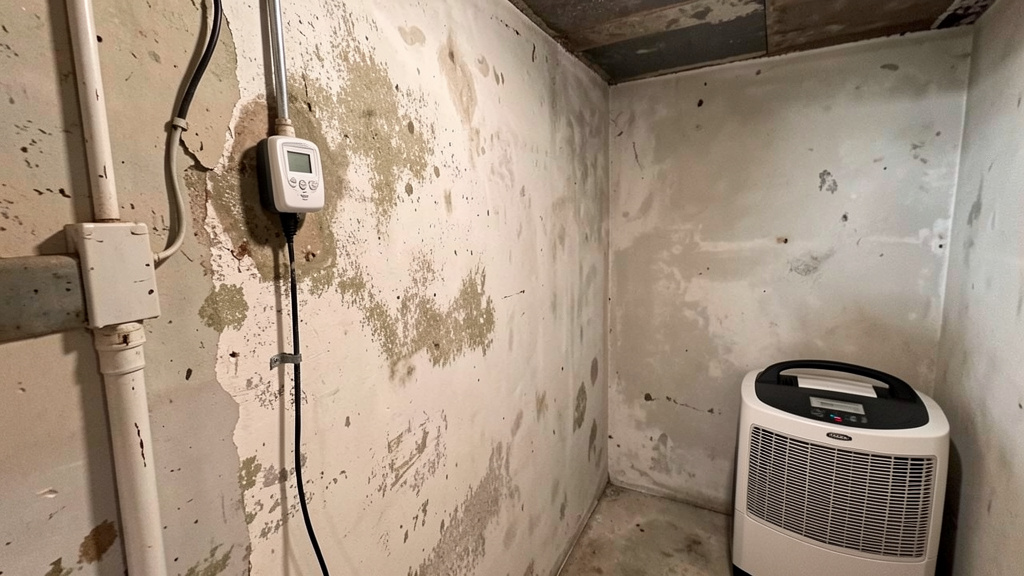
Stop treating symptoms and start solving the source—master the science-backed process to identify hidden moisture pathways, decode mold triggers, and implement lasting solutions.
Moisture and mold problems silently compromise indoor air quality, structural integrity, and occupant health long before visible signs appear. This definitive guide moves beyond superficial checklists to deliver a field-tested diagnostic framework grounded in building science principles. You’ll learn precisely how to trace moisture from its origin through building materials, interpret subtle clues others miss, and distinguish between harmless discoloration and active biological growth. Grounded in physics, material science, and documented case patterns, this resource transforms uncertainty into actionable clarity—equipping you to protect your space with informed precision.
Introduction
Walk into any home with persistent musty odors, peeling paint near windows, or mysterious wall stains, and you’re witnessing the visible tip of a complex moisture ecosystem. Mold spores exist everywhere—in outdoor air, on clothing, in dust—but they only proliferate when three conditions converge: available spores, suitable organic material (like drywall, wood, or insulation), and critically, sustained moisture. The Environmental Protection Agency (EPA) and World Health Organization (WHO) consistently emphasize that moisture control is the single most effective strategy for preventing mold growth. Yet countless homeowners and facility managers focus energy on surface cleaning or air purifiers while the underlying water source continues unabated. This reactive approach wastes resources, risks health complications like respiratory irritation or allergic responses, and allows structural decay to advance unseen. Understanding the inseparable relationship between moisture dynamics and biological growth isn’t merely technical knowledge—it’s foundational stewardship for any indoor environment. Whether you’re troubleshooting a damp basement corner, investigating ceiling discoloration after a roof leak, or evaluating a property pre-purchase, this guide provides the systematic methodology to move from observation to root-cause resolution. We’ll dismantle common misconceptions, decode building science principles in plain language, and equip you with a repeatable process applicable across climates, construction eras, and building types. Your journey toward a healthier, drier space begins not with bleach or scrubbing, but with disciplined observation and causal reasoning.
The Unbreakable Link: Why Moisture Always Precedes Mold
Before examining detection techniques or cataloging causes, we must establish the non-negotiable scientific principle governing this entire topic: mold cannot grow without moisture. This isn’t opinion—it’s microbiology. Mold fungi require liquid water (not just humidity) at the material surface to germinate spores and develop hyphae (root-like structures). Relative humidity alone won’t trigger growth; the material itself must reach a critical moisture content threshold. For common building materials like gypsum drywall, this threshold is approximately 16–20% moisture content by weight. Wood framing requires sustained levels above 20%. Below these thresholds, mold remains dormant. Above them, colonization can begin in 24–48 hours under favorable temperatures (68–86°F / 20–30°C).
Consider this analogy: Spores are like seeds scattered across a field. Humidity is the general climate. But only where rain pools (liquid moisture intrusion) or irrigation leaks (chronic dampness) will seeds sprout. You can remove every visible sprout (surface mold), but without fixing the leaky irrigation line (moisture source), new growth will inevitably return. This explains why “mold remediation” efforts that skip moisture source identification frequently fail post-remediation verification testing, with industry documentation indicating high recurrence rates when the origin remains unaddressed. The Centers for Disease Control and Prevention (CDC) explicitly states: “Fixing the moisture problem is essential. If you clean up the mold but don’t fix the moisture problem, the mold will likely return.”
This principle reshapes your entire investigative mindset. Instead of asking “How do I kill this mold?”, your primary question becomes: “Where is the water coming from, and why is it accumulating here?” Every detection method, every clue you observe, must serve this diagnostic purpose. A dark patch on a basement wall isn’t “a mold problem”—it’s a moisture indicator. The discoloration is merely evidence pointing toward a hidden condition: hydrostatic pressure forcing groundwater through foundation cracks, condensation from uninsulated ductwork, or plumbing leakage inside a wall cavity. By anchoring your approach in this cause-effect reality, you avoid costly missteps like applying antimicrobial coatings over actively wet surfaces (which traps moisture and accelerates decay) or obsessing over airborne spore counts while ignoring a slow drip behind a cabinet.
Furthermore, not all discoloration is mold. Efflorescence (white, crystalline salt deposits on masonry) signals moisture movement but is mineral-based, not biological. Mildew—a surface-level fungus often confused with mold—typically appears powdery white or gray on shower grout and is easier to remove but still indicates excessive humidity. Soot from candles or fireplaces can mimic mold patterns near vents. Rust stains from metal fasteners bleed through paint. Distinguishing these requires context: location, texture, smell, and crucially, correlation with moisture evidence. This guide trains you to see beyond the surface symptom to the environmental story unfolding beneath.
Part 1: The Three-Layer Detection Framework
Effective moisture and mold detection isn’t a single action—it’s a progressive investigation moving from non-invasive observation to targeted measurement. Rushing to drill holes or tear open walls wastes time, creates unnecessary damage, and may disturb contaminants. Instead, adopt this tiered methodology used by certified Indoor Environmental Professionals (IEPs). Each layer builds evidence, reducing uncertainty before escalating intervention. Think of it as medical diagnostics: Layer 1 is the visual exam and patient history; Layer 2 is blood tests and imaging; Layer 3 is specialist consultation. Skipping layers risks misdiagnosis.
Layer 1: The Methodical Visual Assessment
Your eyes, nose, and hands are powerful diagnostic tools when used systematically. This room-by-room scan requires no equipment beyond a notebook, flashlight, and willingness to look closely. Allocate 20–40 minutes for an average home. Move slowly. Note everything, even seemingly minor details. Patterns emerge only through comprehensive documentation.
Start Outside—The Building Envelope Audit
Moisture often enters from exterior vulnerabilities. Walk the perimeter at ground level:
– Foundation: Check for cracks wider than 1/16 inch (1.5mm), especially horizontal cracks in block walls (indicating soil pressure) or stair-step cracks in brick (suggesting settlement). Look for efflorescence (chalky white residue), which reveals past or ongoing moisture migration through concrete. Probe soil within 6 inches of the foundation—persistent dampness after 48 hours of dry weather signals poor grading or drainage failure.
– Roof & Gutters: From ground level (use binoculars), inspect shingles for curling, missing tabs, or granule loss. Check flashing around chimneys, vents, and valleys for gaps or corrosion. Ensure downspouts extend at least 5–6 feet (1.5–1.8m) away from the foundation. Clogged gutters or downspouts dumping water against the wall are among the most common—and preventable—sources of basement moisture.
– Windows & Doors: Examine exterior caulking for cracks, gaps, or separation. Look for peeling paint or rot on trim boards. Check that window wells have functional drains and aren’t filled with debris or standing water.
– Landscaping: Note if flower beds, mulch, or soil slope toward the house. Ideal grading directs water away at a minimum 6-inch (15cm) drop over 10 feet (3m). Overgrown shrubs touching siding trap moisture and provide pest pathways.
Move Inside—Room-by-Room Interior Scan
Begin in areas most prone to moisture: basements, crawl spaces, bathrooms, kitchens, laundry rooms. Then proceed systematically through all levels.
Basement/Crawlspace Focus:
– Walls: Shine a bright flashlight sideways across concrete walls. This raking light reveals subtle bulges, cracks, or efflorescence invisible under overhead lighting. Check for “tide marks”—horizontal discoloration lines indicating past flood levels. Press your palm firmly against walls in suspect areas; cool, damp spots signal moisture even if surface appears dry.
– Floors: Look for white powder (efflorescence) on slabs. Check carpet edges for musty odors or dampness. Inspect floor joists in crawlspaces for dark staining, soft spots, or visible fungal growth (often white, fuzzy strands early on). Measure standing water depth if present.
– Utilities: Trace all pipes (water supply, drain-waste-vent lines) for drips, corrosion, or mineral deposits (“weeping” pipes). Check sump pump pit for debris, proper float operation, and discharge line routing. Inspect HVAC condensate drain lines for clogs or leaks.
Bathroom Focus:
– Showers/Tubs: Run fingers along grout lines and caulk joints. Soft, crumbling grout or caulk pulling away from tile indicates water infiltration behind surfaces. Check the ceiling below an upper-floor bathroom for stains. Lift bath mats—persistent dampness underneath reveals inadequate ventilation or shower pan leaks.
– Vanity & Cabinets: Open doors. Smell for mustiness. Check underside of sink for water stains, warped particleboard, or active drips. Inspect supply lines and shutoff valves for corrosion. Look behind toilets at the floor flange area.
– Ventilation: Verify the exhaust fan vents outside the building (not into an attic). Test airflow by holding a tissue against the grille—it should hold firmly. Time how long the fan runs after showering; less than 20 minutes is insufficient in most climates.
Kitchen Focus:
– Sink Cabinet: Same checks as bathroom vanity. Pay special attention to dishwasher connections and garbage disposal mounts.
– Refrigerator: Pull unit away from wall. Check water line connection to ice maker/water dispenser. Inspect floor beneath for dampness. Clean condenser coils—dust buildup reduces efficiency and can cause condensation issues.
– Windows: During cold weather, check for condensation between double-pane glass (seal failure) or heavy frost on interior surfaces (indicating poor insulation or air leakage).
Attic Focus (if accessible):
– Roof Deck: Look up at plywood sheathing from below. Dark water stains, especially in patterns matching roof valleys or chimneys, signal leaks. Check for mold growth on rafters or insulation.
– Ventilation: Ensure soffit vents aren’t blocked by insulation. Verify ridge or gable vents are unobstructed. Poor attic ventilation traps moisture from household activities, leading to condensation on cold roof surfaces—a major cause of winter mold.
– Insulation: Check for compressed, wet, or discolored insulation. Wet insulation loses R-value and harbors mold.
Whole-House Clues:
– Odors: A persistent earthy, musty smell is the most reliable indicator of hidden mold growth, often detectable before visual signs appear. Note where odors intensify (e.g., near a closet, under stairs).
– Health Symptoms: Track if occupants experience increased coughing, sneezing, headaches, or eye irritation specifically when inside the building. While not diagnostic alone, symptom patterns correlate strongly with indoor air quality issues.
– HVAC System: Check air filters for excessive dirt or moisture. Inspect supply and return vents for dust buildup or visible mold. Listen for unusual dripping sounds inside ductwork.
Document Relentlessly: Sketch a simple floor plan. Mark every observation with symbols: “C” for condensation, “L” for leak evidence, “S” for stain, “O” for odor. Note dates, weather conditions (recent rain?), and room temperatures. This log becomes your evidence trail for Layer 2 analysis or professional consultation. Critical nuance: Distinguish between active moisture (damp to touch, recent stains) and historical evidence (dry efflorescence, old water marks). Only active moisture requires immediate source identification.
Layer 2: Tool-Assisted Investigation—Going Beyond What the Eye Can See
Visual assessment identifies obvious issues but misses hidden moisture trapped within walls, under floors, or inside structural cavities. This is where targeted tools transform speculation into data. You don’t need an extensive professional kit—three accessible devices provide substantial insight. Always measure comparative moisture: compare suspect areas to known-dry control areas in the same material type.
Essential Tool 1: Moisture Meter (Non-Invasive Pinless Type)
Why it’s crucial: Pinless meters use electromagnetic waves to detect moisture content beneath surfaces without damaging materials. This is vital for scanning walls, floors, and ceilings where mold may be growing unseen. Pin-type meters (with metal probes) are useful for wood but risk cross-contamination and surface damage—avoid them for initial screening.
How to use correctly:
1. Calibrate per manufacturer instructions (often on a “dry” reference material).
2. Place sensor flat against the surface. Take multiple readings in a grid pattern (e.g., every 6 inches across a stained wall section).
3. Compare readings:
– Drywall: <0.5% = dry; 0.5–1.0% = caution; >1.0% = elevated moisture (investigate source)
– Wood: <12% = dry; 12–16% = caution; >16% = high risk for mold/decay
– Always note the material type—meters display relative %, not absolute values.
4. Track gradients: Moisture often concentrates at edges (e.g., bottom of a wall where water pools). A reading of 1.8% at the base dropping to 0.3% at the top confirms upward capillary rise from a foundation leak.
Common mistakes to avoid:
– Measuring over metal studs, pipes, or wiring (causes false highs). Move sensor slightly until reading stabilizes.
– Ignoring temperature: Cold surfaces read artificially high. Allow meter to acclimate to room temperature.
– Taking single-point readings. Moisture distribution is rarely uniform.
Real-world example: A homeowner noticed faint yellow staining on a living room ceiling below an upstairs bathroom. Visual inspection showed no active leak. Pinless meter readings revealed elevated moisture content directly under the stain versus adjacent drywall. This confirmed hidden moisture intrusion, prompting targeted investigation that uncovered a failed wax ring on the upstairs toilet flange—a leak invisible from above or below until meter data guided the search.
Essential Tool 2: Infrared (IR) Thermography Camera
Why it’s crucial: IR cameras visualize temperature differences invisible to the eye. Since evaporating moisture cools surfaces, wet areas appear distinctly cooler (blues/purples) than dry surroundings (yellows/reds) on the thermal display. This reveals moisture patterns behind walls, under flooring, or in ceilings without demolition.
How to use correctly:
1. Create a temperature differential: Run HVAC for 15+ minutes to warm/cool interior air. Ideal conditions: >10°F (5.5°C) difference between inside and outside temperatures.
2. Scan slowly 12–18 inches from surfaces. Hold camera steady.
3. Interpret patterns:
– A cool, irregular “blob” on a wall suggests moisture accumulation from a leak.
– Horizontal cool bands near floor level often indicate capillary rise from foundation.
– Cool streaks around windows/doors signal air leakage carrying humid indoor air to cold surfaces.
4. Always verify thermal anomalies with a moisture meter. Temperature differences can also stem from insulation gaps, studs, or ductwork. Correlation is key.
Common mistakes to avoid:
– Scanning in direct sunlight (heats surfaces unevenly).
– Ignoring emissivity: Shiny surfaces (metal ducts, glass) reflect ambient IR—cover with matte tape for accuracy.
– Assuming all cool spots are wet. Cross-check every anomaly.
Real-world example: During a pre-purchase evaluation of a 1990s home, an IR scan of a seemingly dry basement wall revealed a large, cool rectangular area behind a bookshelf. Moisture meter confirmed elevated readings. Further investigation uncovered missing vapor barrier and saturated insulation—trapped moisture from years of minor foundation seepage, completely hidden from visual inspection. Early detection prevented future mold growth and structural compromise.
Essential Tool 3: Hygrometer/Thermometer (Psychrometer)
Why it’s crucial: Measures ambient relative humidity (RH) and temperature—the environmental conditions enabling condensation and mold growth. Critical for diagnosing humidity-driven issues (e.g., whole-house dampness, window condensation).
How to use correctly:
1. Place in center of room, away from vents, windows, or direct sunlight.
2. Record readings at same time daily for 3–7 days (humidity fluctuates). Note outdoor conditions.
3. Interpret using the dew point principle:
– When surface temperature drops below the dew point temperature of the air, condensation forms.
– Example: Room air = 70°F (21°C) at 60% RH → Dew point = 55°F (13°C). Any surface below 55°F (like an uninsulated exterior wall in winter) will sweat.
4. Target safe ranges: Maintain indoor RH between 30–50% year-round. Sustained levels >60% significantly increase mold risk.
Common mistakes to avoid:
– Placing near humidifiers, aquariums, or kitchens (skews readings).
– Ignoring localized microclimates: Measure in problem areas (e.g., closet corners, behind furniture against exterior walls).
– Not tracking trends: A single reading is meaningless. Log data to identify patterns (e.g., RH spikes every evening when cooking).
Real-world example: A family battled recurring black mold on bedroom window sills each winter. Hygrometer logs showed indoor RH consistently elevated due to tightly sealed modern windows and inadequate ventilation. Surface temperature of the window glass dropped below the dew point of the room air on cold nights. Solution wasn’t mold cleaning; it was installing an exhaust fan on a timer to reduce whole-house humidity and adding interior storm windows to raise the glass temperature above dew point.
Advanced Tool Option: Borescope
For suspected cavity moisture (inside walls, under floors), a flexible borescope camera inserted through a tiny drilled hole provides visual confirmation without major demolition. Pair with moisture meter readings to justify targeted inspection.
The Fundamental Principle: Data without context is noise. Every tool reading must answer: “Compared to what?” Always establish baseline measurements in unaffected areas of the same material under similar conditions. A moisture meter reading of 1.2% means nothing unless you know drywall in your climate typically reads 0.3–0.5%.
Layer 3: Professional Evaluation—When and Why to Seek Expert Help
Some situations demand certified expertise. Attempting DIY diagnosis here risks health hazards, structural compromise, or costly missteps. Know these clear escalation triggers:
Immediate Red Flags Requiring Professional Assessment:
– Visible mold covering >10 square feet (approx. 3ft x 3ft area)
– Suspected HVAC system contamination (mold inside ducts, air handler)
– Evidence of sewage backup or “black water” intrusion (Category 3 water)
– Structural damage signs: soft/spongy floors, significant wall bowing, widespread wood rot
– Occupants with compromised immune systems, infants, or severe/respiratory health issues
– History of major water events (floods, fire suppression) with incomplete drying
– Legal/transactional needs: Pre-purchase inspections, insurance claims, tenant disputes
Choosing the Right Professional:
Not all “mold inspectors” are equal. Prioritize credentials:
– Certified Indoor Environmental Consultant (CIEC) or Certified Indoor Environmentalist (CIE) from the American Council for Accredited Certification (ACAC)
– IICRC Certified Applied Microbial Remediation Technician (AMRT) for remediation firms
– Licensed structural engineer for foundation/wall integrity concerns
– Licensed plumber for hidden pipe leaks
What a Quality Professional Assessment Includes:
1. Comprehensive Interview: History of water events, building age, occupant symptoms, previous repairs.
2. Advanced Diagnostics: Thermal imaging, moisture mapping, air sampling (viable/non-viable spore traps), surface sampling (tape lifts), bulk material sampling.
3. Source Identification Report: Not just “mold found in wall,” but “moisture source: failed flashing at roof-wall intersection allowing rain intrusion during NW winds.” Includes photos, data logs, moisture maps.
4. Remediation Protocol: If needed, a scope of work specifying containment, removal methods, cleaning standards (per IICRC S520), and clearance testing criteria.
5. Prevention Recommendations: Addressing root cause (e.g., “Install exterior drainage mat,” “Upgrade bathroom exhaust fan with humidistat control”).
Critical Questions to Ask Before Hiring:
– “Do you perform only inspections, or also remediation?” (Avoid conflict of interest—inspectors who also do remediation may overstate problems.)
– “Will you provide a written report with source identification, not just mold locations?”
– “What standards do you follow?” (Expect references to IICRC S520, ASTM D7337, EPA guidelines.)
– “Can you explain findings in plain language without alarmist terms like ‘toxic black mold’?”
Real-world case study: After a minor kitchen sink leak was “fixed” by a handyman, a family noticed worsening musty odors. A certified IEP conducted Layer 3 evaluation:
– Thermal scan revealed cool anomaly behind lower cabinet.
– Moisture meter confirmed elevated readings in subfloor.
– Borescope inspection showed saturated particleboard and early-stage mold on floor joists.
– Investigation traced source to improperly sealed drain tailpiece—water dripped slowly for months inside the cabinet void.
Report specified: “Source: plumbing leak at P-trap connection. Affected materials: subfloor (OSB), lower cabinet base. Remediation: Remove cabinet base, replace affected subfloor section, clean joists with HEPA vacuum and antimicrobial treatment, verify dryness before reconstruction.” The family avoided unnecessary extensive replacement and ensured complete source resolution through targeted action.
Part 2: Decoding the Root Causes—A Catalog of Moisture Sources
Detection identifies where moisture exists. Now we diagnose why it’s there. Moisture problems fall into five fundamental categories. Mastering these transforms you from reactive cleaner to proactive problem-solver. Each category includes physics-based explanations, real-world scenarios, location-specific patterns, and prevention strategies. Remember: Multiple causes often coexist (e.g., poor ventilation plus plumbing leak).
Category 1: Liquid Water Intrusion (The Obvious Culprit)
This involves bulk water entering the building envelope from external sources or internal plumbing failures. It’s the most urgent category—unaddressed intrusion causes rapid structural damage.
Roof Leaks
Physics: Wind-driven rain exploits compromised flashing, damaged shingles, or clogged valleys. Water follows gravity and capillary action into attics, walls, or ceilings.
Common Triggers:
– Aging materials (asphalt shingles beyond service life)
– Ice dams in cold climates (meltwater backs up under shingles)
– Improperly installed skylights, chimneys, or vent pipes
– Clogged gutters causing water to pool at eaves
Detection Clues:
– Water stains on ceiling below roof penetrations (chimney, vent pipe)
– Dark streaks on roof sheathing in attic
– Rust on nail heads protruding through sheathing
– Musty odor concentrated in upper-floor rooms after rain
Location Patterns:
– Valley leaks: Stains follow roof valley lines down to interior walls.
– Flashing leaks: Stains appear near chimneys, dormers, or wall-roof intersections.
– Ice dam leaks: Stains along exterior walls on top floor, often near eaves.
Prevention & Repair:
– Biannual roof inspections (spring/fall). Clear debris from valleys and gutters.
– Install ice/water shield membrane under shingles in vulnerable areas (eaves, valleys).
– Replace cracked/caulking around penetrations. Ensure step flashing is properly layered.
– Critical nuance: A leak visible in the attic may originate uphill from the stain due to water traveling along roof sheathing. Trace upward from the wet spot toward the ridge.
Foundation & Basement Seepage
Physics: Hydrostatic pressure forces groundwater through cracks, porous concrete, or joint gaps. Capillary action (“wicking”) draws moisture upward through foundation walls and slabs.
Common Triggers:
– Poor exterior grading (soil slopes toward house)
– Clogged or absent foundation drains (French drains)
– Cracks from settlement or freeze-thaw cycles
– High water table or heavy clay soil retaining moisture
Detection Clues:
– Damp, cool feeling on basement walls/floors
– White efflorescence crystals on concrete
– Horizontal “tide marks” on walls
– Musty odor intensifying after heavy rain
– Peeling paint or bubbling wallpaper on lower walls
Location Patterns:
– Crack leaks: Water drips or seeps at specific crack locations.
– Hydrostatic pressure: Moisture appears across entire wall section, worse at bottom.
– Capillary rise: Dampness climbs 6–24 inches up wall from floor, often with salt deposits.
Prevention & Repair:
– Exterior: Re-grade soil away from foundation (6″ drop over 10′). Extend downspouts. Install or clean foundation drains. Apply waterproofing membrane to exterior walls.
– Interior: Install interior drainage system with sump pump. Apply crystalline waterproofing slurry to interior walls (allows vapor transmission while blocking liquid water). Use a dehumidifier with adequate capacity for the space.
– Critical nuance: Interior sealants (paints, epoxies) often fail under hydrostatic pressure—they trap moisture inside the concrete, accelerating spalling (surface flaking). Exterior solutions address the pressure source.
Plumbing Leaks
Physics: Pressurized water escapes through failed joints, corroded pipes, or fixture seals, saturating surrounding materials.
Common Triggers:
– Aging supply lines (galvanized steel, polybutylene)
– Loose compression fittings under sinks
– Failed wax ring on toilet flange
– Corroded drain pipes (cast iron, older PVC)
– Appliance hose failures (washing machine, dishwasher)
Detection Clues:
– Unexplained spike in water bill
– Damp spots on ceilings below bathrooms/kitchen
– Soft, spongy flooring near fixtures
– Mineral deposits (“weeping”) on pipes or valves
– Musty odor localized to cabinet interiors
Location Patterns:
– Supply line leaks: Often constant drip; visible near shutoff valves, under sinks.
– Drain leaks: Intermittent (only during use); stains appear below P-traps or drain lines.
– Toilet flange leaks: Moisture radiates from base of toilet; floor feels soft.
Prevention & Repair:
– Replace rubber supply hoses with braided stainless steel periodically.
– Install leak detection sensors under sinks, near water heaters, behind toilets.
– Re-caulk around tubs/showers annually. Replace worn faucet cartridges promptly.
– Critical nuance: “Silent” leaks inside walls may show no visible water—only elevated moisture meter readings or musty odors. Thermal imaging is invaluable here.
Category 2: Condensation—The Silent, Insidious Moisture Source
Condensation occurs when warm, humid indoor air contacts a surface colder than the dew point temperature. Unlike leaks, it’s driven by indoor climate conditions and building physics—not external water entry. It’s the most misunderstood cause, often misdiagnosed as a “leak.”
Window & Glass Surface Condensation
Physics: Single-pane or poorly insulated windows have low interior surface temperatures. In winter, humid room air hits cold glass, condensing into droplets or frost.
Detection Clues:
– Water pooling on window sills
– Frost on interior glass during cold weather
– Peeling paint or mold on window frames/sills
– Persistent fogging between double-pane glass (seal failure)
Location Patterns:
– Worst on north-facing windows (coldest exposure)
– More severe in tightly sealed modern homes (less natural air exchange)
– Intensifies in high-humidity rooms (bathrooms, kitchens)
Prevention & Repair:
– Reduce indoor humidity (see Category 3 solutions).
– Install storm windows or replace with double/triple-pane low-E units.
– Use thermal curtains at night; ensure air circulation near windows (don’t block with furniture).
– Critical nuance: Condensation inside the window unit (between panes) indicates failed seal—requires glass replacement. Condensation on the room-side surface is an indoor humidity issue.
Interstitial Condensation (Within Walls, Ceilings, Roofs)
Physics: Warm, moist indoor air migrates through wall cavities via air leaks. When it hits the “dew point plane” (where temperature drops sufficiently), moisture condenses inside the assembly—on insulation, sheathing, or framing. This is invisible until damage manifests.
Detection Clues:
– Mold growth on interior wall surfaces with no external leak evidence
– Peeling paint or wallpaper on exterior walls (especially upper floors)
– Musty odor with no visible source
– Frost on attic roof sheathing in winter (indicates warm, moist air leaking into attic)
Location Patterns:
– Common on north-facing exterior walls (coldest surfaces)
– Prevalent in homes with poor attic ventilation or missing vapor retarders
– Frequent in additions where new construction meets old (thermal bridging)
Prevention & Repair:
– Air seal gaps: Caulk top/bottom plates, seal electrical penetrations, weatherstrip doors/windows.
– Ensure adequate attic ventilation (1 sq ft net free area per 300 sq ft attic floor).
– Install vapor retarder (Class I or II) on warm-in-winter side of insulation (typically interior wall) in cold climates. Caution: Vapor retarder placement is climate-specific—wrong placement traps moisture. Consult local building codes.
– Critical nuance: Adding insulation without addressing air leakage can worsen interstitial condensation by making the dew point plane shift deeper into the wall cavity. Air sealing comes before insulating.
Ductwork Condensation
Physics: Cold supply ducts (carrying AC air) in humid environments (unconditioned attics, crawlspaces) cause ambient moisture to condense on duct exteriors.
Detection Clues:
– Water dripping from ceiling vents
– Rust on duct joints or supports
– Wet insulation around ducts
– Musty odor when AC runs
Location Patterns:
– Most common in humid climates (Southeastern US, Gulf Coast)
– Prevalent in homes with ducts routed through unconditioned attics
Prevention & Repair:
– Seal all duct joints with mastic (not duct tape!).
– Insulate ducts with vapor-barrier-faced insulation (R-6 minimum).
– Ensure attic ventilation reduces ambient humidity.
– Critical nuance: Condensation on return ducts often indicates oversized AC system—short cycling doesn’t run long enough to dehumidify air, causing cold return ducts to sweat. Requires HVAC technician evaluation.
Category 3: Elevated Indoor Humidity—The Whole-House Challenge
When ambient relative humidity consistently exceeds 60%, every cool surface becomes a condensation risk. This isn’t a “leak” but a systemic imbalance between moisture generation and removal.
Sources of Indoor Moisture Generation
Occupant Activities (Per Day in Average Home):
– Showering (2 people): 1–2 pints
– Cooking (gas stove): 1–2 pints
– Dishwashing: ½ pint
– Houseplants (10 medium): 1 pint
– Drying clothes indoors: 2–3 pints
– Unvented gas heaters: Significant moisture + combustion byproducts
Building-Related Sources:
– Uncovered crawlspaces (soil evaporation)
– Indoor pools/spas without dedicated dehumidification
– Aquariums
– Newly poured concrete slabs (off-gassing moisture for months)
Detection Clues:
– Persistent condensation on multiple windows
– Musty odors throughout house, worse in closets/corners
– Warping of wood furniture or doors
– Mold growth in multiple locations with no single leak source
– Hygrometer readings consistently >60% RH
Location Patterns:
– Worst in tightly constructed modern homes (minimal air leakage)
– Exacerbated in humid climates (coastal, southeastern regions)
– Common in homes without mechanical ventilation
Prevention & Repair:
– Source Control: Cover crawlspaces with 6-mil polyethylene vapor barrier (overlaps sealed). Use exhaust fans vented outside during cooking/showering (run 20+ mins after activity). Avoid indoor clothes drying. Ensure gas appliances are vented.
– Ventilation: Install Energy Recovery Ventilator (ERV) or Heat Recovery Ventilator (HRV) for balanced fresh air exchange with minimal energy loss. Open windows when outdoor humidity is lower than indoor (check weather app).
– Dehumidification: Use standalone dehumidifiers in basements with adequate capacity for the space. For whole-house control, integrate dehumidifier with HVAC system (requires professional installation). Target 40–50% RH.
– Critical nuance: Air conditioners do dehumidify—but only when running. In mild, humid weather, AC may not cycle long enough to remove moisture. A dedicated dehumidifier is often necessary. Oversized AC units worsen humidity by cooling air too quickly without adequate moisture removal.
Category 4: Construction and Design Flaws—Hidden Pathways for Moisture
Some moisture problems stem from inherent building design errors or material incompatibilities. These require structural corrections, not just maintenance.
Thermal Bridging
Physics: Materials with high thermal conductivity (steel studs, concrete balconies, metal window frames) create “bridges” where heat escapes rapidly. Interior surfaces at these points become significantly colder than surrounding areas, triggering condensation.
Detection Clues:
– Mold growth in distinct linear patterns matching stud locations
– Frost on interior walls at balcony connections in winter
– Cold spots detectable by hand or IR camera
Prevention & Repair:
– During construction: Use thermal breaks (insulated clips for cladding, insulated window frames).
– Retrofit: Add continuous exterior insulation (rigid foam) over sheathing. Install interior thermal break strips at problem areas.
– Critical nuance: Thermal bridging is invisible until moisture damage appears. IR thermography during cold weather is the only reliable detection method pre-damage.
Inadequate or Missing Flashing
Physics: Flashing (thin metal or membrane barriers) directs water away from vulnerable joints (windows, roofs, foundations). Missing, damaged, or improperly lapped flashing allows water to penetrate behind cladding.
Detection Clues:
– Water stains appearing below windows, doors, or roof intersections
– Mold growth concentrated around window perimeters
– Peeling paint on siding below roof edges
Location Patterns:
– Common in older homes (pre-1980s construction standards)
– Frequent at complex intersections (dormers, bay windows)
Prevention & Repair:
– Requires exterior work: Remove cladding, install proper step flashing, counterflashing, and sealant.
– Critical nuance: “Kick-out” flashing at roof-wall intersections is often omitted—water runs down roof edge and behind siding. A tiny, inexpensive piece of metal prevents major damage.
Vapor Retarder Misplacement
Physics: Vapor retarders limit moisture diffusion through assemblies. Placed on the wrong side of insulation (e.g., interior retarder in hot-humid climates), they trap moisture inside walls during cooling season.
Detection Clues:
– Mold growth on interior wall surfaces with no air leakage evidence
– Wet insulation discovered during renovations
– Peeling paint on exterior walls
Prevention & Repair:
– Climate-specific design is essential. Consult International Residential Code (IRC) Chapter 8 or local building department.
– Retrofit is difficult: Often requires wall assembly reconstruction. Focus on air sealing and ventilation to mitigate.
– Critical nuance: In mixed climates, “smart” vapor retarders (variable permeability) adapt to seasonal humidity changes—ideal for retrofits where climate shifts occur.
Category 5: Occupant Activities—The Human Factor in Moisture Generation
Daily habits significantly influence indoor moisture levels. Awareness enables simple behavioral adjustments.
High-Risk Activities:
– Taking long, hot showers without exhaust fan use
– Cooking large meals with pots uncovered
– Drying laundry indoors on racks
– Overwatering indoor plants
– Using unvented kerosene/propane heaters
– Blocking HVAC vents with furniture
Detection Clues:
– Humidity spikes correlating with specific activities (log hygrometer readings)
– Condensation appearing only during/after cooking or bathing
– Mold growth localized to activity areas (e.g., near drying rack)
Prevention Strategies:
– Run bathroom exhaust fan during and 20 minutes after showering. Install timer switch or humidistat-controlled fan.
– Use range hood vented outside while cooking; cover pots.
– Dry clothes outdoors or in vented dryer.
– Water plants moderately; use saucers to catch overflow.
– Ensure furniture allows 2–3 inches clearance from exterior walls for air circulation.
– Critical nuance: In tightly sealed homes, intentional ventilation is non-optional. Open two windows briefly each day for cross-ventilation when outdoor humidity is lower.
Part 3: The Diagnostic Flowchart—Connecting Detection Findings to Likely Causes
Theory becomes actionable through pattern recognition. This flowchart synthesizes Layers 1–2 detection data with Category 1–5 cause analysis. Use it as a decision tree during your investigation. Start at the top with your primary observation, then follow the logic downward.
[START: OBSERVED SYMPTOM]
│
├──> MUSTY ODOR (no visible mold)?
│    ├──> Strongest near floor? → Check basement/crawlspace humidity (Hygrometer).
│    │   ├──> RH >60%? → Category 3: Whole-house humidity issue.
│    │   └──> RH normal? → Use moisture meter on subfloor. Elevated? → Category 1: Hidden plumbing leak or foundation seepage.
│    │
│    └──> Strongest near ceiling/upper walls? → Check attic ventilation & roof leaks.
│        ├──> Attic RH high? → Category 2: Interstitial condensation from air leakage.
│        └──> Water stains on roof sheathing? → Category 1: Roof leak.
│
├──> VISIBLE MOLD ON WALL/CEILING?
│    ├──> Location: Exterior wall, especially upper floor?
│    │   ├──> Cold to touch? (Winter) → Category 2: Condensation from thermal bridging or poor insulation.
│    │   ├──> Stain pattern matches roof feature above? → Category 1: Roof leak.
│    │   └──> Hygrometer shows high RH? → Category 3: Humidity-driven condensation.
│    │
│    ├──> Location: Bathroom/kitchen wall?
│    │   ├──> Near shower/tub? → Check grout/caulk (Layer 1). Soft? → Category 1: Fixture leak.
│    │   ├──> Near window? → Check for condensation (Category 2).
│    │   └──> Behind cabinet? → Check under sink for leaks (Category 1).
│    │
│    └──> Location: Basement wall?
│        ├──> Bottom 12 inches damp? → Category 1: Foundation seepage/capillary rise.
│        ├──> Efflorescence present? → Confirms moisture migration (Category 1).
│        └──> Uniform dampness? → Category 3: High ambient humidity + cold wall surface.
│
├──> CONDENSATION ON WINDOWS?
│    ├──> Only on single-pane windows? → Category 2: Surface condensation (upgrade windows).
│    ├──> On double-pane interior surface? → Category 3: High indoor humidity.
│    └──> Between panes? → Failed seal (replace glass unit).
│
├──> WATER STAIN ON CEILING?
│    ├──> Directly below bathroom? → Check toilet flange, shower pan, supply lines (Category 1).
│    ├──> Pattern matches roof valley/chimney? → Category 1: Roof leak.
│    └──> No plumbing above? → Check attic for roof leak or condensation on ducts (Category 2).
│
└──> DAMP SPOT ON FLOOR?
     ├──> Near exterior wall? → Check foundation grading, downspouts (Category 1).
     ├──> Near appliance (washer, fridge)? → Check supply/drain hoses (Category 1).
     └──> Central location? → Check for slab leak (requires plumber with acoustic leak detection).
Applying the Flowchart: Real Diagnostic Scenarios
Scenario A: “Black spots keep returning on the north bedroom wall after I clean them.”
– Layer 1: No visible leaks. Wall feels cool. Hygrometer shows elevated RH in room.
– Layer 2: Moisture meter reads elevated on stained area vs. south wall. IR scan shows cool band matching stud pattern.
– Flowchart Path: Visible mold on exterior wall → Cold to touch + high RH → Category 2 (condensation) + Category 3 (humidity).
– Root Cause: Thermal bridging at steel studs creates cold surfaces; high indoor humidity provides moisture source.
– Solution: Reduce indoor humidity to target range with dehumidifier. Add interior thermal break (rigid foam board) over studs before repainting. Seal air leaks around electrical outlets on exterior wall.
Scenario B: “Musty smell in basement, especially after rain. No standing water.”
– Layer 1: Efflorescence on lower 6 inches of foundation wall. Soil grade slopes toward house.
– Layer 2: Moisture meter reads elevated at base of wall vs. eye level. Hygrometer shows high RH.
– Flowchart Path: Musty odor + basement location → RH high + efflorescence → Category 1 (foundation seepage) + Category 3 (humidity).
– Root Cause: Hydrostatic pressure forces groundwater through porous concrete; high humidity allows mold growth on damp surfaces.
– Solution: Exterior: Re-grade soil away from foundation, extend downspouts. Interior: Install interior drainage system with sump pump. Run dehumidifier continuously. Apply crystalline waterproofing slurry to interior walls.
Scenario C: “Water dripping from ceiling vent when AC runs.”
– Layer 1: Rust on duct joint visible in attic. Insulation around duct is wet.
– Layer 2: IR scan shows cold spot at duct joint. Hygrometer in attic reads high RH.
– Flowchart Path: Water stain on ceiling → Near vent → Check ducts → Condensation on ducts → Category 2 (duct condensation).
– Root Cause: Uninsulated duct joint in humid attic allows condensation; poor attic ventilation maintains high humidity.
– Solution: Seal duct joint with mastic. Wrap duct with vapor-barrier-faced insulation. Install powered attic ventilator or ridge vent to reduce attic humidity.
This flowchart isn’t exhaustive—it’s a cognitive scaffold. Your documented observations (Layer 1 log) provide the inputs. Trust the data over assumptions. When patterns conflict (e.g., high moisture reading but no humidity source), escalate to Layer 3 professional evaluation. The goal isn’t perfection on the first try; it’s systematic elimination of possibilities until the true cause emerges.
Navigating Common Frictions and Misconceptions
Even armed with knowledge, real-world obstacles arise. Addressing these head-on prevents frustration and reinforces evidence-based action.
Friction 1: “But I don’t see any water! How can there be a moisture problem?”
Reality: Moisture is often hidden. Capillary action moves water inches upward through concrete. Air leaks carry humid air deep into wall cavities where it condenses unseen. A moisture meter reading confirms moisture presence even if the surface feels dry. Action: Trust tool data over visual assumptions. Scan suspect areas methodically. Remember: Mold growth itself is proof of past or present moisture—biology doesn’t lie.
Friction 2: “I cleaned the mold with bleach. Why did it come back?”
Reality: Bleach (sodium hypochlorite) is largely ineffective on porous materials. It kills surface mold but doesn’t penetrate to destroy roots (hyphae) embedded in drywall or wood. Worse, the water in bleach solutions can wick deeper into materials, feeding residual spores. The CDC states: “Bleach is not necessary in most cases of mold cleanup… it may not be effective on porous materials.” Crucially, cleaning mold without fixing the moisture source guarantees recurrence. Action: For small areas (<10 sq ft) on non-porous surfaces (tile, glass), use detergent and water. For porous materials, removal and replacement is often necessary after moisture source is fixed. Focus energy on source identification, not surface cleaning.
Friction 3: “My house is new—how can it have moisture issues?”
Reality: Modern homes are tightly sealed for energy efficiency, reducing natural air exchange that historically diluted indoor humidity. Without intentional ventilation (ERVs/HRVs), moisture from cooking, showering, and breathing accumulates rapidly. Construction defects (missing flashing, poor air sealing) also occur in new builds. Action: Verify mechanical ventilation systems are installed and functional. Monitor indoor humidity closely during first year. New concrete slabs can off-gas moisture for 6–12 months—use dehumidifier proactively.
Friction 4: “Is it ‘toxic black mold’? Should I be worried?”
Reality: Media sensationalism has created disproportionate fear. Stachybotrys chartarum (often called “black mold”) requires prolonged, heavy water damage to grow and is uncommon in typical homes. While some molds produce mycotoxins under specific lab conditions, the CDC states: “There are very few case reports that toxigenic molds found inside homes can cause unique or rare health conditions such as pulmonary hemorrhage or memory loss.” Health impacts are primarily allergic or irritant responses (sneezing, coughing), similar to dust or pollen. Action: Focus on moisture control, not mold species identification. All mold growth indicates a moisture problem needing correction. If health symptoms persist, consult a physician—don’t assume mold is the sole cause. Avoid alarmist terminology; use “mold growth” or “fungal colonization.”
Friction 5: “The previous owner said they ‘fixed’ the leak. Why is there still mold?”
Reality: “Fixing” often meant surface cleaning or patching without addressing residual moisture or the original source. Materials may remain damp inside walls. Or the “fix” was temporary (e.g., re-caulking a window that still has missing flashing behind the trim). Action: Conduct full Layer 1–2 assessment regardless of prior claims. Verify repairs with moisture meter readings. Check for secondary damage (rotted framing, saturated insulation) that may require remediation beyond the initial leak point.
Friction 6: “I can’t afford major repairs like foundation work.”
Reality: Many moisture issues have phased, budget-conscious solutions. You don’t need to solve everything at once. Action: Prioritize based on urgency:
1. Stop active water entry (e.g., temporary roof patch, redirect downspout)
2. Dry affected areas (dehumidifier, fans) to halt mold growth
3. Address humidity (inexpensive exhaust fan timer, dehumidifier rental)
4. Plan permanent repairs (save for grading correction, consult multiple contractors)
Even small actions compound: Extending a downspout prevents future damage. Documenting progressive steps also builds credibility if seeking financing or insurance coverage.
Alternative Solutions Framework: Method A (Ideal) vs. Method B (Budget) vs. Method C (Emergency)
Problem: Basement wall dampness after rain
– Method A (Ideal): Exterior excavation, apply waterproofing membrane, install drainage mat and French drain system.
– Method B (Budget): Interior: Install perimeter drain system with sump pump; apply crystalline waterproofing slurry to walls; run dehumidifier continuously.
– Method C (Emergency): After heavy rain: Place towels at base of wall to absorb seepage; run multiple fans and dehumidifier; monitor moisture meter daily until dry. Then implement Method B.
Problem: High indoor humidity
– Method A (Ideal): Install whole-house dehumidifier integrated with HVAC; add ERV for balanced ventilation.
– Method B (Budget): Place appropriately sized dehumidifier in basement; install timer-controlled bathroom exhaust fans; use range hood vented outside.
– Method C (Emergency): Open windows when outdoor humidity is lower (check weather app); place desiccant packs in closets; avoid moisture-generating activities temporarily.
This tiered approach empowers action at any resource level while maintaining focus on the ultimate goal: moisture source control.
Your Questions, Answered
Q: How long does it take for mold to grow after a water leak?
A: Under ideal conditions (warm temperatures, porous material like drywall), mold colonization can begin within 24–48 hours. However, visible growth may take 1–2 weeks to become apparent. This underscores the critical importance of rapid drying: Extract standing water immediately, use fans and dehumidifiers to reduce material moisture content below thresholds within 48 hours. Industry standards emphasize “time is material”—every hour counts in water damage response.
Q: Can I test for mold myself with a DIY kit?
A: Consumer mold test kits (air sampling or surface swabs) have significant limitations. They often lack proper controls, can be contaminated during handling, and results are difficult to interpret without context. A positive result confirms mold spores exist (which they do everywhere), but doesn’t identify the moisture source or assess risk. A negative result provides false reassurance if sampling missed the growth area. The EPA advises: “If you can see mold or smell an earthy, musty odor, you should assume a mold problem exists.” Focus resources on detection and source identification (Layers 1–2) rather than spore counting. Professional assessment is warranted only for specific scenarios (health investigations, legal disputes).
Q: Is mold behind drywall dangerous if I can’t see it?
A: Hidden mold isn’t inherently more hazardous than visible mold—it’s the moisture problem enabling it that requires attention. However, undetected growth can: 1) Continue damaging structural materials, 2) Release spores into living spaces through cracks or HVAC systems, 3) Indicate a persistent moisture source causing other issues (rot, insect attraction). If moisture meter readings confirm elevated moisture with musty odors, investigate further (borescope) or consult a professional. Ignoring confirmed hidden moisture risks escalating damage.
Q: What’s the difference between mold and mildew?
A: Mildew is a specific type of mold (often Oidium or Erysiphe species) that grows flat on surfaces, appears powdery white/gray, and is common in showers or on plants. It’s generally easier to clean. “Mold” refers broadly to multicellular fungi forming fuzzy colonies (black, green, brown) that penetrate materials. In building contexts, the distinction is less important than the underlying cause: both indicate excess moisture. Address the moisture source regardless of terminology.
Q: Will a dehumidifier kill existing mold?
A: No. Dehumidifiers reduce ambient humidity, which prevents new mold growth and may cause existing mold to become dormant. However, they do not kill mold spores or remove established colonies. Dormant mold can reactivate if humidity rises again. Dehumidification is a critical preventative and supportive measure (used during drying after leaks), but physical removal of moldy materials and source correction are required for existing growth. Think of dehumidifiers as part of the solution ecosystem, not a standalone cure.
Q: Are some building materials more mold-resistant?
A: Yes. When renovating or building, select materials less hospitable to mold:
– Drywall: Use mold/moisture-resistant (MR) drywall (green or purple board) in bathrooms, basements, laundry rooms. Note: MR drywall resists moisture absorption but isn’t waterproof—still requires source control.
– Insulation: Closed-cell spray foam acts as air barrier and moisture barrier. Rigid foam boards resist moisture better than fiberglass.
– Flooring: Tile, luxury vinyl plank (LVP), or sealed concrete over carpet or wood in damp areas.
– Framing: Metal studs don’t support mold growth (though attached materials might). Pressure-treated wood resists decay.
Critical nuance: No material is “mold-proof.” Given sufficient moisture and time, mold will colonize almost any organic surface. Material selection reduces risk but doesn’t eliminate the need for moisture management.
Q: How do I know if the mold problem is resolved after remediation?
A: Successful remediation has two non-negotiable criteria:
1. Moisture source is permanently corrected (verified by moisture meter readings returning to baseline dry levels and remaining stable through weather cycles).
2. Contaminated materials are properly cleaned or removed per industry standards (HEPA vacuuming, antimicrobial treatment where appropriate, containment to prevent cross-contamination).
Post-remediation verification should include:
– Visual inspection: No visible mold, stains, or moisture.
– Moisture mapping: All materials at or below dry baseline readings.
– Optional: Air sampling only if conducted by an independent third party (not the remediation company) comparing indoor to outdoor spore levels.
If musty odors persist or moisture readings remain elevated, the source wasn’t fully addressed—remediation requires reevaluation.
Q: Can plants in my home cause mold problems?
A: Overwatered houseplants can contribute to localized humidity spikes and mold growth in potting soil (visible as white fuzz). However, they rarely cause whole-house moisture issues. Mitigation: Water moderately, ensure pots have drainage holes, avoid saucers holding standing water, and place plants away from exterior walls. The moisture generated by typical indoor plants is minimal compared to showers or cooking—focus on major sources first.
Q: What humidity level should I maintain to prevent mold?
A: Target 30–50% relative humidity year-round. Below 30% may cause respiratory irritation or wood cracking; above 50% significantly increases condensation and mold risk. Use a hygrometer to monitor. In winter, you may need to keep RH slightly lower (30–40%) to prevent window condensation in cold climates. In summer, air conditioning helps control humidity, but supplement with dehumidification if RH exceeds 55% consistently. Consistency matters more than perfection—avoid prolonged periods above 60%.
Q: Is it safe to stay in my home during mold remediation?
A: For small projects (<10 sq ft) in isolated areas (e.g., under sink), occupancy is usually safe with basic precautions (seal off area with plastic sheeting, use HEPA air scrubber). For larger projects, especially involving HVAC systems, occupied living spaces, or immunocompromised occupants, temporary relocation is recommended. Remediation should follow industry protocols: containment barriers, negative air pressure with HEPA filtration, and proper PPE for workers. Request the remediation firm’s work plan and safety protocol before starting. When in doubt, consult an independent indoor environmental professional.
Q: Why does mold keep growing in my closet even though it’s dry?
A: Closets against exterior walls are condensation hotspots. In winter, the wall surface temperature drops below the dew point of room air, causing moisture to condense on stored items (especially fabrics). Poor air circulation traps humid air. Solutions: 1) Improve air circulation (leave closet door open periodically, install louvered door), 2) Add insulation to the exterior wall if possible, 3) Place silica gel desiccant packs inside closet, 4) Ensure room humidity is controlled, 5) Avoid overpacking clothes—allow space for air movement.
Q: Can mold grow in my HVAC system?
A: Yes, particularly in air handlers, evaporator coils, and drip pans where condensation occurs. Signs include musty odors when system runs, visible mold on vents, or increased allergy symptoms. Prevention: 1) Change air filters regularly (MERV 8–11), 2) Ensure condensate drain line is clear and slopes properly, 3) Schedule annual HVAC maintenance including coil cleaning, 4) Consider UV-C light installation near evaporator coil (consult HVAC technician). If contamination is suspected, hire an IICRC-certified HVAC cleaning specialist—improper cleaning can spread spores.
Conclusion: From Awareness to Action
You now hold a comprehensive framework for understanding, detecting, and resolving moisture and mold challenges—not as isolated incidents, but as interconnected systems. Let’s crystallize the journey:
The 3 Non-Negotiable Principles:
1. Moisture precedes mold. Every investigation must prioritize source identification over surface treatment.
2. Detection is layered. Progress from visual assessment to tool-assisted measurement before escalating to professionals.
3. Solutions are tiered. Match interventions to cause severity and resource availability—emergency stabilization, budget-conscious mitigation, ideal permanent repair.
The 24-Hour Rule: Your Immediate Next Step
Within the next 24 hours, complete one actionable task that moves you from knowledge to practice:
– If you suspect an issue: Conduct a 15-minute Layer 1 visual scan of your most vulnerable area (basement, bathroom, or under-sink cabinet). Document one observation in a notebook.
– If your space is currently dry: Place a hygrometer in your main living area and bedroom. Note the readings tonight and tomorrow morning. Awareness is prevention.
– If you’ve faced recurring problems: Review your notes against the Diagnostic Flowchart. Identify one potential cause you hadn’t previously considered.
This tiny action breaks inertia. Progress compounds through consistent, small steps—not overwhelming overhauls.
The Big Picture: Cultivating a Moisture-Aware Mindset
Moisture management isn’t a one-time project; it’s an ongoing practice of environmental stewardship. Homes breathe, weather changes, materials age, and lifestyles evolve. By integrating these habits, you build resilience:
– Seasonal Checkpoints: Inspect gutters/downspouts each spring and fall. Test sump pumps monthly. Verify exhaust fan operation quarterly.
– Weather Awareness: After heavy rain or rapid temperature shifts, do a quick perimeter check for pooling water or new stains.
– Humidity Vigilance: Make hygrometer readings part of your daily routine, like checking the thermostat.
– Preventative Maintenance: Replace appliance hoses proactively. Re-caulk windows/showers before failures occur.
This proactive approach transforms anxiety into agency. You shift from reacting to crises to nurturing a healthier, more durable living environment. The knowledge you’ve gained extends beyond mold—it’s foundational for preserving structural integrity, optimizing energy efficiency, and safeguarding occupant well-being. Every repaired downspout, every properly vented bathroom, every monitored humidity reading is an investment in your space’s longevity and your peace of mind.
You are now equipped not just to solve a problem, but to prevent it. Start small. Stay consistent. Trust the process. Your journey toward a truly dry, healthy home begins with the very next step you take.
Explore Our Complete System:
Understanding Relative Humidity: Your Complete Guide to Indoor Air Balance | Foundation Waterproofing Decoded: Interior vs. Exterior Solutions Compared | The Homeowner’s Guide to Attic Ventilation and Moisture Control | Bathroom Ventilation Mastery: Sizing, Placement, and Smart Controls | Crawl Space Encapsulation: Step-by-Step Protocol for Dry, Healthy Subfloors | Interpreting Moisture Meter Readings: A Field Guide for Home Inspectors | Building Science Basics: How Your Home Manages Air, Heat, and Moisture