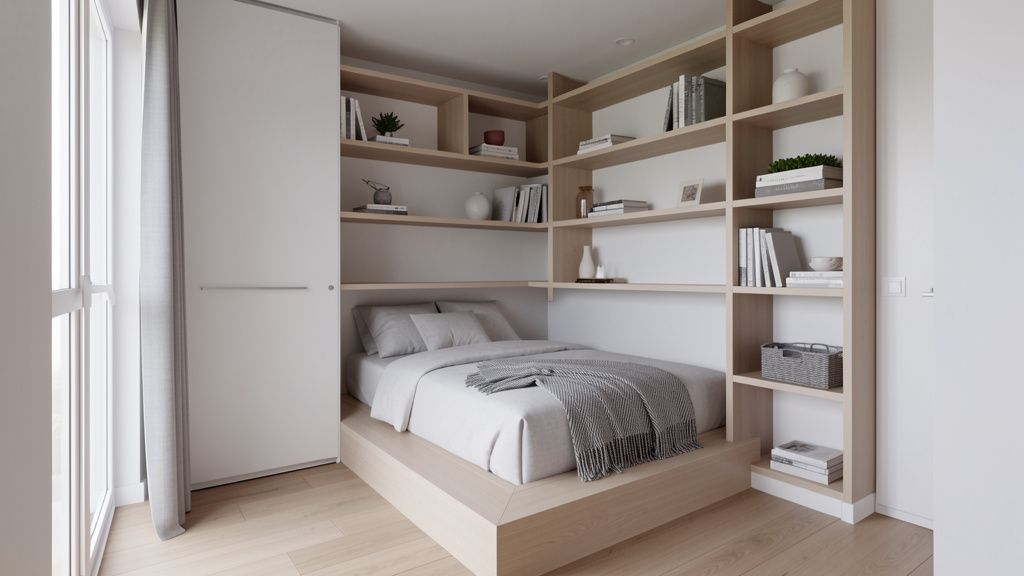
Transform tight quarters into a serene sanctuary with our step-by-step system that prioritizes restorative sleep while unlocking hidden storage potential—no renovation required.
Imagine sinking into bed after a long day, surrounded not by visual chaos but by intentional calm. Your small bedroom isn’t a storage battlefield—it’s a carefully calibrated ecosystem where every item has purpose, every surface supports peace, and sleep quality remains uncompromised. This isn’t wishful thinking. By merging spatial psychology with sleep environment principles, you can thoughtfully organize without undermining the restorative rest your body and mind need. This guide delivers actionable strategies informed by environmental design research and real-world small-space adaptations, revealing how intentional storage choices support smoother transitions into rest.
Introduction
Small bedrooms present a universal design paradox: the very space meant for deep restoration often accumulates life’s accumulating objects. Clothing rests on chairs, books colonize nightstands, and under-bed zones become forgotten territories. Research consistently identifies environmental factors—particularly visual clutter and spatial disorganization—as contributors to delayed sleep onset and fragmented rest. A cluttered visual field can activate low-grade cognitive vigilance, subtly interfering with the physiological shift toward relaxation. This isn’t merely about aesthetics; it’s about creating conditions where rest can flourish. When storage solutions prioritize convenience over calm, they may unintentionally compromise the room’s primary purpose.
This guide reframes the challenge entirely. Instead of asking “Where can I squeeze in more storage?” we begin with the foundational question: “How does this solution protect and enhance my sleep environment?” Developed through synthesis of spatial ergonomics principles, sleep environment research, and adaptable implementation across diverse living situations—from studio apartments to historic homes with unique constraints—this framework offers a holistic methodology. You’ll discover how vertical space can be harnessed without creating visual weight, how furniture choices influence nightly routines, and why the placement of a single basket shapes your wind-down ritual. Whether navigating rental restrictions, budget considerations, or uniquely shaped layouts, this system provides scalable pathways to transform constraint into catalyst for intentional living. The goal isn’t maximal storage—it’s meaningful storage that serves your well-being first.
The Sleep-First Storage Framework: Three Pillars for Harmonious Space
Forget fragmented tips and inspiration-heavy hacks that ignore human behavior. The Sleep-First Storage Framework operates on three interdependent pillars designed to work with your natural rhythms, not against them. This isn’t about cramming more in; it’s about designing storage that actively supports relaxation, reduces evening decision fatigue, and honors the sanctuary of your sleep zone. Each pillar addresses a common friction point in small-bedroom organization: visual overwhelm, functional friction, and environmental disruption. Implemented together, they create a self-reinforcing system where organization feels intuitive and rest feels accessible.
Pillar 1: Zone Optimization – Mapping Your Room for Calm and Function
Zone optimization begins by moving beyond the idea of the bedroom as a single-purpose container. Instead, we thoughtfully divide the space into three functional zones, each with clear purpose and psychological boundaries. This approach draws from environmental psychology, where defined zones can reduce mental load and support context-specific behaviors. When your surroundings signal “this area is for rest,” the transition into sleep often feels more natural.
The Sleep Sanctuary Zone (Protected Core):
This zone encompasses the bed plus a generous radius around it. Nothing stored here should trigger work-related thoughts, financial reminders, or visual busyness. Nightstands hold only sleep-supportive items: a current book (not a towering stack), a glass of water, perhaps a small essential oil diffuser with a calming scent. Consider placing phones outside this zone to minimize blue light exposure and reduce the temptation of late-night scrolling. Visually, this area benefits from openness. If using under-bed storage, ensure contents remain fully concealed behind solid panels or opaque bins. Open slats revealing stored items directly beneath your head may create subtle visual tension. For beds against walls, maintaining clear floor space on the accessible side supports a feeling of ease upon waking.
Why this matters: Environmental cues within your peripheral field during pre-sleep hours can influence relaxation. A clean sleep sanctuary zone signals safety to the nervous system, supporting the transition from alertness to rest.
Common friction point: Using the floor beside the bed as a “temporary” landing zone for tomorrow’s clothes. This habit introduces visual clutter precisely where your eyes rest while lying down. Solution: Install a discreet wall hook outside the sanctuary zone (e.g., on the back of the bedroom door) for next-day outfits.
Illustrative example: Someone living in a compact urban apartment placed their laundry hamper just outside the bedroom door. This small shift—moving the visual reminder of chores beyond the threshold—helped reduce pre-sleep mental clutter. The hamper remained accessible, but no longer occupied the rest environment.
The Active Storage Zone (Strategic Perimeter):
This zone occupies walls, closet interiors, and vertical spaces outside the sleep sanctuary. Here, storage earns its place through intentionality. Closets become optimized systems. Walls host closed cabinets or shallow shelves with doors. The guiding principle: If it’s visible, it should feel serene. Open shelving is permissible only if contents are uniformly contained (e.g., matching fabric bins) and harmonize with the room’s calming palette. Avoid displaying collections, paperwork, or brightly colored items here.
Implementation steps:
1. Measure thoughtfully: Note exact dimensions of closet interiors, wall spaces between windows/doors, and ceiling height. Include obstructions like baseboard heaters or outlets.
2. Categorize with clarity: Group belongings into: Daily Use (pajamas, bedtime book), Weekly Use (extra bedding), Seasonal (off-season clothing), and Archive (memorabilia).
3. Assign zones by frequency: Daily items live at waist-to-eye level. Seasonal/archive items go to less accessible areas (top closet shelves, under-bed).
4. Create visual buffers: A room divider, tall plant, or narrow bookshelf between zones can reinforce psychological separation.
Budget-conscious alternative: Tension rods inside closets create double hanging levels. Adhesive-backed hooks on the inside of closet doors maximize dead space for belts, scarves, or jewelry organizers—without permanent changes.
Renter-friendly note: Freestanding wardrobe units with fabric doors create a contained Active Storage Zone that moves with you. Position it to face away from the bed, presenting a calm facade toward the sleep area.
The Transition Zone (Critical Threshold):
Often overlooked, this narrow zone (typically 18–24 inches deep) runs along the path from the bedroom door toward the Sleep Sanctuary. Its purpose: facilitate a smooth psychological shift from “daily life” to “rest mode.” This is where you shed the day—literally and figuratively.
Essential elements:
– A small, stable surface (like a narrow console table or wall-mounted shelf) just inside the door for placing keys, glasses, or a phone upon entry.
– A dedicated spot for tomorrow’s outfit (using the door hook mentioned earlier).
– Soft, warm lighting controlled by a switch at the door, allowing you to illuminate the path without crossing the room in darkness.
– Optional: A small tray for evening skincare items if your routine happens in-bedroom.
Why transition zones matter: When we place work bags, coats, or devices directly beside the bed, we carry the day’s stimuli into our rest environment. The Transition Zone acts as a decompression space. Placing your phone on the entry table—not the nightstand—creates physical distance from digital stimulation. Hanging tomorrow’s clothes immediately reduces morning decision fatigue. This zone isn’t about storage capacity; it’s about behavioral design.
Illustrative contrast: Someone stored their work laptop on the nightstand “for quick morning access” and consistently struggled to unwind. Moving the laptop to a drawer in the Transition Zone eliminated the visual reminder of pending tasks. Over time, the evening wind-down felt noticeably smoother.
Pillar 2: Furniture Intelligence – Choosing Pieces That Earn Their Keep
In a small bedroom, every square foot of furniture footprint should justify its presence through multi-functionality, appropriate scale, and sensory compatibility. Furniture shouldn’t just hold things—it should actively support the room’s primary purpose: rest. This pillar moves beyond generic “buy a storage bed” advice to evaluate pieces through a sleep-centric lens. Scale matters; an oversized unit may offer storage but create visual weight that feels oppressive. Material choices influence air quality and acoustic comfort. Placement affects airflow and movement patterns critical to relaxation.
The Bed: Foundation of the Ecosystem
Your bed is the anchor. Prioritize comfort and sleep quality above all—never compromise mattress quality for storage capacity. However, the frame presents significant opportunity:
- Platform Beds with Drawers: Ideal for storing infrequently used items (extra pillows, seasonal bedding). Critical considerations:
- Drawer mechanism: Opt for full-extension, ball-bearing glides. Test smooth operation if possible.
- Clearance height: Ensure adequate under-bed clearance after mattress placement to accommodate standard rolling bins. Measure your mattress thickness first!
- Accessibility: Drawers should open smoothly without requiring you to move the entire bed. Avoid lift-up mechanisms if upper body strength is a concern.
-
Visual weight: Frames with slender legs (minimum 4 inches high) maintain sightlines and prevent a “heavy” feel. Light wood tones or matte finishes often recede visually better than dark, bulky frames.
-
Bed Risers: An affordable solution to create under-bed storage space. Use only with sturdy bed frames. Pair with uniform, labeled rolling bins. Tip: Felt pads under risers can prevent floor scratching and reduce noise.
- What to consider avoiding: Storage ottomans placed at the foot of the bed may obstruct the clearance needed for easy bed entry/exit and disrupt the visual flow of the Sleep Sanctuary Zone. If seating is needed, position a narrow bench against a wall outside the sanctuary zone.
Nightstands: Precision Tools, Not Clutter Traps
Standard nightstands often consume precious floor space while offering minimal functional storage. Reimagine this critical piece:
- Wall-Mounted Shelves: Install a floating shelf 2–3 inches above mattress height. Benefits:
- Frees floor space, enhancing perceived room size.
- Creates airiness around the bed.
- Prevents dust accumulation underneath.
- Installation note: Secure anchoring into wall studs is essential for safety. For plaster walls or rentals, explore heavy-duty toggle bolts rated for the intended load.
- Slim Carts on Locking Casters: A narrow utility cart offers tiered storage that tucks neatly beside the bed. Lock casters at night. Top tier holds bedtime essentials; lower tiers store books or journals. Easily rolled away for cleaning.
- Repurposed Solutions: A sturdy stool with a removable cushion top hides small items underneath. A short ladder shelf (positioned vertically in a corner) provides multiple levels without deep footprint.
- Critical measurement: Nightstand surface should align with or sit slightly below the top of your mattress for comfortable reach.
Why this detail matters: Reaching for water or a book should require minimal movement. Awkward positioning can disrupt drowsiness. Ergonomic considerations support seamless nighttime routines.
Budget path: Thrift stores often have small wooden crates or vintage suitcases. Sand, paint in a calming color, and add hairpin legs for a custom-height nightstand alternative.
Vertical Storage Units: Climbing Smartly
Tall storage is essential, but height alone isn’t enough. Evaluate units through three filters: stability, visual texture, and functional zoning.
- Stability is safety: Any unit over 30 inches tall must be secured to the wall with anti-tip straps. This is a critical safety measure, especially in homes with children or pets.
- Visual texture: Closed-front cabinets (with doors) create a calmer visual field than open shelving. If using open shelves:
- Limit to 2–3 shelves max within the Active Storage Zone.
- Use uniform containers (all wicker baskets, all fabric bins in one neutral color).
- Keep shelves thoughtfully curated—overcrowding feels chaotic; sparse shelves feel unfinished.
- Functional zoning within the unit:
- Top shelf: Archive items (in labeled bins).
- Middle shelves: Daily/weekly use items (folded sweaters, current books).
- Bottom shelf/drawer: Heavier items (shoes, luggage). Place a small tray here for items used only when leaving the room (wallet, keys).
Illustrative adaptation: Someone living in an older home with a sloped ceiling placed a narrow, tall bookshelf in the alcove where the ceiling peaked. The top shelf stored off-season items; the middle held books in matching cloth bins; the bottom housed a small hamper. The unit fit the architectural constraint perfectly, turning dead space into functional storage without crowding the main floor area.
Renter solution: Freestanding clothing racks with fabric covers provide closet-like storage without installation. Choose a slim profile and position against the longest wall. The fabric cover hides contents, maintaining visual calm.
The Fundamental Principle: Storage should serve your sleep, not sabotage it. If accessing storage disrupts your wind-down routine, creates visual noise in your sleep zone, or introduces physical hazards (tripping, unstable furniture), it fails the sleep-first test—no matter how much space it saves.
Pillar 3: Flow Preservation – Designing Movement for Relaxation
Flow preservation addresses the kinetic experience of your bedroom—the path your body takes from entry to bed, and how that movement influences your nervous system. Cluttered pathways, poor lighting placement, and awkward furniture arrangements create micro-frictions that accumulate throughout the day and may interfere with bedtime relaxation. This pillar applies principles from thoughtful environmental design to the residential bedroom. The goal: a space where movement feels intuitive, safe, and calming, especially during low-light conditions.
Mapping the Nighttime Pathway
Stand at your bedroom door after dark (safely!). Trace the path to your bed with your eyes closed, then open them. Note every potential friction point:
– Is the path clear of cords, rugs with turned-up edges, or stray items?
– Can you reach the light switch without stepping into the room?
– Is there adequate clearance (minimum 24 inches) on at least one side of the bed for easy entry/exit?
– Are frequently accessed items (water, book) within effortless reach while lying down?
Actionable refinements:
– Lighting choreography: Install a dimmable wall sconce on each side of the bed controlled by a switch at the door. This allows you to illuminate the path upon entry and extinguish lights from bed. Supplement with motion-sensor LED strips under the bed frame (facing inward) that provide a soft, ground-level glow for nighttime movement—bright enough to see obstacles, dim enough to preserve relaxation. Avoid overhead lights as the primary nighttime source; their downward glare can feel alerting.
– Rug strategy: Place small, low-pile rugs on both sides of the bed. Ensure they have non-slip pads underneath. Avoid large area rugs that break up the floor plane and create tripping hazards at edges.
– Cord management: Use adhesive cord clips to route charger cables along furniture legs or baseboards. Never let cords drape across walkways. For essential devices (white noise machine), tuck cords tightly against the wall.
Why flow matters: Environments requiring complex navigation (stepping over objects, searching for switches) can increase pre-sleep mental load. Smooth, predictable movement pathways signal safety to the subconscious, supporting physiological readiness for rest.
Common oversight: Placing a full-length mirror directly across from the bed. While useful for dressing, seeing your reflection unexpectedly in low light may trigger a mild startle response. Position mirrors on closet doors (facing inward) or on walls not visible from the pillow.
Acoustic and Airflow Considerations
Storage choices directly impact two invisible but critical sleep factors: sound and air movement.
- Acoustic dampening: Hard surfaces (bare walls, wood shelves, glass doors) reflect sound. Introduce soft textures strategically:
- Line the back of open shelves with felt or corkboard.
- Choose fabric bins over plastic tubs for shelf storage.
- Hang a small, thick tapestry or quilt on the wall opposite the bed.
- Place a narrow bookshelf filled with books (natural sound absorbers) against a shared wall.
- Airflow preservation: Never block heating/cooling vents with furniture or storage units. Maintain clearance around vents. Avoid placing tall storage directly in front of windows, which impedes cross-ventilation. For under-bed storage, choose low-profile bins that don’t obstruct natural air circulation beneath the bed frame—a critical zone for temperature regulation.
Insight: The ideal bedroom temperature for sleep supports a natural drop in core body temperature. Blocking airflow can trap heat near the bed, potentially disrupting this process. Strategic storage placement supports thermal comfort as actively as your thermostat setting.
Budget acoustic refinement: Repurpose an old wool blanket. Stretch it over a tension rod mounted inside a closet to create a soft, sound-absorbing back panel. It’s removable, washable, and effective.
Deep Dive: Conquering Every Storage Zone Without Compromising Comfort
Having established the foundational framework, we now translate theory into tangible action across every square inch of your small bedroom. This section provides specific, implementable strategies for each storage zone, complete with product-agnostic specifications, safety considerations, and adaptations for unique constraints. Forget vague suggestions—here, you’ll find precise measurements, material considerations, and step-by-step implementation guides designed to eliminate guesswork and prevent common pitfalls. Each solution is evaluated against our core sleep-first criteria: Does it preserve visual calm? Does it support effortless routines? Does it enhance, rather than hinder, the room’s primary purpose?
The Vertical Frontier: Walls and Doors as Prime Real Estate
Walls represent the most underutilized asset in small bedrooms. When leveraged intentionally, vertical space adds significant storage without consuming precious floor area. However, haphazard shelving creates visual chaos. The key is intentional verticality—installing storage only where it serves a clear purpose and maintains visual harmony.
Floating Shelves: Precision Over Quantity
– Ideal placement: Above a desk (if bedroom doubles as office), beside the bed only if wall-mounted and minimal, or in a narrow gap beside a closet. Avoid installing shelves directly above the pillow zone—items may feel psychologically “heavy.”
– Critical specs:
– Depth: 8–10 inches max. Deeper shelves encourage clutter accumulation.
– Length: Match to wall section (e.g., between window trim and door frame). Avoid running shelves floor-to-ceiling on a main wall—it can create a visually oppressive effect.
– Spacing: Vertical distance between shelves should be 12–15 inches to accommodate books or small bins without crowding.
– Installation essentials:
– Stud mounting is essential for shelves holding meaningful weight. Use a reliable stud finder. Mark stud centers.
– For plaster/lath walls: Use toggle bolts rated for the shelf’s intended load. Drill carefully.
– Level meticulously. A crooked shelf feels visually unsettling.
– Styling for calm: Place only a few curated items per shelf. Group by color family or texture. Use small baskets on shelves to corral remotes or skincare—keeping surfaces clear. Avoid using shelves for active paperwork or “to-do” items.
– Renter alternative: Heavy-duty adhesive hooks can support very lightweight floating shelves if weight limits are strictly observed. Test on an inconspicuous area first. Best for minimal items: a single small plant, a framed photo.
Over-the-Door Organizers: Maximizing Invisible Space
The back of the bedroom door is pure storage potential—especially for renters. But not all organizers suit every situation.
– Shoe organizers: Choose clear-pocket styles with reinforced tops. Avoid flimsy fabric that sags. Use pockets for:
– Beyond shoes: Scarves rolled vertically, rolled belts, small accessory trays (for jewelry, hair ties), travel-sized toiletries.
– Tip: Place a small silica gel packet in one pocket to absorb moisture.
– Hanging closet organizers: For rooms with minimal closet space, a multi-pocket organizer hung on the door stores folded sweaters or accessories. Ensure the door can still close fully.
– Critical caution: Never hang organizers on fire-rated doors (common in apartment buildings). Check your lease. If unsure, avoid. Also verify the door swings inward—if it opens into the room, an organizer may block the path.
– Safety note: Ensure the organizer’s weight doesn’t prevent the door from latching securely. Test the latch after installation.
Wall-Mounted Desks/Folding Tables: The Work-Life Separator
For bedrooms doubling as home offices, a wall-mounted desk is transformative—but only if designed for rapid transition to sleep mode.
– Mechanism matters: Choose a drop-leaf or folding mechanism that locks securely in both open and closed positions.
– Placement: Mount on the wall farthest from the bed. When folded up, the surface should present a clean, flat facade (painting it the wall color aids integration).
– Essential accessory: Install a small, shallow shelf above the folded desk to hold a lamp and a single decorative object. When the desk is down, this shelf holds office supplies; when up, it maintains visual continuity.
– The shutdown ritual: Pair the desk closure with a specific action: “When I fold this desk, my workday is complete.” This behavioral cue strengthens the psychological boundary between work and rest.
– Budget build: Mount a sturdy wooden board on heavy-duty folding brackets. Add a strip of magnetic tape along the front edge to hold small metal items when closed.
Under-Bed Brilliance: Hidden Storage That Stays Out of Sight
Under-bed space is notoriously misused—either ignored entirely or filled with chaotic, inaccessible bins. When optimized, it becomes a silent powerhouse for seasonal and low-frequency storage. Success hinges on three factors: accessibility, containment, and climate awareness.
Measuring for Success: The Essential First Step
Grab a tape measure. Remove bedding. Measure:
1. Height from floor to bottom of bed frame (not mattress).
2. Height from floor to bottom of mattress (if frame has slats).
3. Length and width of the accessible space (account for bed legs or frame obstructions).
Example: A standard bed frame might offer 10 inches of clearance. A 6-inch thick mattress sits on slats 4 inches above the frame base, leaving only 6 inches of usable space. Rolling bins must be ≤5.5 inches tall to slide smoothly.
Bin Selection Guidance: Matching Container to Content
| Content Type | Ideal Bin Type | Critical Features | Consider Avoiding |
|———————–|————————————|—————————————————|——————————————–|
| Off-season clothing | Breathable bags inside rigid bins | Label clearly; add cedar blocks or lavender sachets | Storing vacuum bags directly under bed (traps moisture in some climates) |
| Extra bedding/pillows | Flat, lidded plastic bins | Smooth-rolling casters; uniform size; opaque | Clear bins (contents visible = visual clutter) |
| Memorabilia/archives | Acid-free archival boxes | Sturdy construction; label exterior | Cardboard boxes (attracts pests, degrades) |
| Shoes (off-season) | Individual fabric shoe boxes | Stackable; breathable material | Plastic shoe boxes (traps odor/moisture) |
Why opaque bins support calm: Even if neatly organized, seeing contents creates subconscious visual processing. Solid-color bins (white, beige, charcoal) disappear visually under the bed, preserving the Sleep Sanctuary Zone’s tranquility. Label bins clearly on the end facing the room’s edge for easy identification.
Moisture awareness: Place silica gel desiccant packs inside bins storing fabric items. In humid climates, consider a small battery-operated dehumidifier pod designed for enclosed spaces. Check quarterly.
Accessibility refinement: Attach adhesive-backed hook-and-loop tape strips to the front of bins and the bed frame. This prevents bins from sliding out accidentally while allowing smooth access.
Bed Frame Modifications for Enhanced Access
– Rolling casters: If your bed frame lacks them, add heavy-duty furniture casters (rated for appropriate weight). This allows you to roll the entire bed slightly for deep cleaning or bin access. Crucial: Use locking casters and engage locks immediately after positioning.
– Bed skirts with access panels: Traditional bed skirts hide bins but make access difficult. Opt for a tailored bed skirt with a discreet closure at the foot of the bed. This provides full concealment while allowing quick bin retrieval.
– Renter-friendly: Place uniform rolling bins directly under the bed without a skirt. Choose bins in a color matching your flooring to minimize visual disruption.
Closet Mastery: Doubling Capacity in Confined Spaces
A small closet is not a limitation—it’s an opportunity for precision engineering. Standard closet rods waste valuable vertical space. By implementing layered systems, you can often significantly increase usable capacity without expanding the footprint. This section provides a step-by-step implementation guide.
The Closet Audit: Empty, Assess, Strategize
1. Empty completely. Yes, everything. This is essential.
2. Clean surfaces. Wipe shelves, vacuum corners. A clean slate supports intentional decisions.
3. Measure precisely:
– Interior width, depth, height
– Distance from floor to existing rod
– Location of shelves, obstructions (pipes, vents)
4. Categorize contents: Sort items into: Keep (and wear regularly), Keep (seasonal), Donate/Sell, Discard. Be thoughtful. If you haven’t worn it in many months (excluding special occasion items), consider releasing it.
5. Analyze usage patterns: Which items do you reach for daily? Which are buried? Design the system around actual behavior.
Layered Hanging System: The Double-Rod Technique
– Ideal for: Closets ≥ 24 inches deep and ≥ 84 inches tall.
– Implementation:
– Install a second rod below the existing rod.
– Top rod: Hang longer items (dresses, coats). Height: 68–72 inches from floor.
– Bottom rod: Hang shorter items (pants, skirts). Height: 40–42 inches from floor.
– Critical: Ensure adequate clearance between rods to prevent garment bunching.
– Hardware specs: Use closet rods rated for appropriate weight. Mount brackets securely into wall studs. For drywall-only mounting, use heavy-duty toggle bolts.
– Hanger uniformity: Switch to slim, non-slip hangers. They save space per garment compared to bulky hangers. Uniform hangers create visual order and prevent clothes from sliding off.
– Renter solution: Tension rods installed horizontally inside the closet can create a temporary second hanging level. Ensure the rod is tight against the closet walls and test stability before loading. Best for lightweight items.
Shelf Optimization: From Chaos to Calm
– Shelf dividers: Install vertical dividers on shelves holding folded items. This prevents stacks from toppling and creates defined compartments. DIY option: Cut cardboard covered in contact paper to size.
– Shoe storage:
– Heeled shoes: Hang an over-the-door clear pocket organizer inside the closet door.
– Flat shoes: Use stackable shoe racks that slide under hanging clothes. Choose racks with open fronts for visibility.
– Maximize depth: Place shoes heel-to-toe rather than side-by-side.
– Accessories:
– Belts/scarves: Hang on multi-loop hooks mounted on the closet side wall.
– Jewelry: Install a small pegboard section (renter-friendly with adhesive strips) or use drawer dividers in a dedicated shelf bin.
– Hats: Use stackable hat boxes or mount hooks on the top shelf underside.
The Door: Often-Wasted Real Estate
– Over-the-door organizer: As mentioned earlier, but inside the closet door. Ideal for small items: socks rolled vertically, underwear folded in compartments, ties.
– Hooks: Install 2–3 sturdy adhesive hooks on the inside of the door for robes, bags, or next-day outfits.
– Caution: Ensure the door closes fully without the organizer/hooks catching on clothing. Test before loading.
Lighting the Closet: Safety and Function
Poor closet lighting leads to frustration.
– Battery-operated LED motion sensor lights: Stick inside the closet (top shelf front edge, sides). They illuminate automatically when the door opens. Choose warm-white bulbs to avoid harsh glare.
– Adhesive under-cabinet lights: Mount along the front edge of shelves for targeted task lighting.
– Avoid: Stringing extension cords into closets—fire hazard and tripping risk.
The Nightstand Niche: Beyond the Basic Surface
The area beside the bed demands special consideration. It must support bedtime rituals without introducing clutter or visual stress. Standard nightstands often fail this test. Here are sleep-optimized alternatives evaluated for function, footprint, and psychological impact.
Floating Shelf Nightstand: A Streamlined Option
– Dimensions: 16–18 inches wide x 8–10 inches deep x 1.5 inches thick.
– Height: Top surface 24–27 inches from floor (aligns with standard mattress height).
– Installation: Securely anchored into two wall studs. Use a level. For added safety, install an L-bracket underneath.
– Styling protocol:
– Top surface: One item only (current book) OR a small tray holding:
– Book
– Glass of water (use a coaster)
– Single essential oil roller
– Avoid placing phone, laptop, or paperwork here.
– Below shelf: Install a small, discreet hook for hanging reading glasses case or a silk sleep mask.
– Psychological benefit: The open space beneath reduces visual weight, making the room feel larger. The minimalist surface prevents decision fatigue at bedtime.
Mobile Cart Solution: Flexibility Without Sacrifice
– Ideal cart specs: 3-tier, max width 14 inches, locking casters, stable frame.
– Tiered organization:
– Top tier: Bedtime essentials (book, water glass on coaster)
– Middle tier: Current reading stack (max 3 books), journal, pen
– Bottom tier: Small lidded bin for items used only when leaving room (phone charger, lip balm)
– Nighttime ritual: Before bed, roll cart slightly away from bed (6 inches) to create clear floor space. Lock casters. In the morning, roll it back. This physical action reinforces the transition between sleep and wake states.
– Why it works: Provides more storage than a shelf while maintaining mobility. Easily moved for cleaning. The defined tiers prevent surface clutter.
Repurposed Objects: Character with Function
– Vintage suitcase: Stack two small suitcases (secured together). Top becomes surface; interior stores pajamas or extra blankets. Sand rough edges, add new clasps if needed.
– Tree stump slice: Sanded smooth, sealed with food-safe oil. Provides organic texture. Place a small woven basket on top to hold essentials, keeping the wood surface clear.
– Wall-mounted pipe shelf: Industrial pipes + reclaimed wood shelf. Mount securely. The open design feels airy.
– Critical check: Whatever you choose, ensure edges are smooth, height is appropriate, and it feels stable. Wobbling furniture creates subconscious unease.
Multi-Functional Furniture: The Swiss Army Knife Approach
Multi-functional furniture is valuable in small-space living, but poor choices lead to compromised comfort. The key is selecting pieces where the primary function (sleeping, sitting) remains uncompromised, and the secondary function (storage) integrates seamlessly. Avoid solutions that feel flimsy or require complex maneuvers.
Ottomans and Benches: Seating That Stores
– Ideal placement: At the foot of the bed only if the room allows ample clearance. In smaller rooms, position against a wall outside the Sleep Sanctuary Zone.
– Non-negotiable features:
– Lift-top lid with slow-close hinges (prevents finger pinching)
– Sturdy frame
– Comfortable cushion
– Casters only if intended to be moved frequently (lockable)
– Smart storage uses:
– Extra throw blankets
– Board games or puzzles (if bedroom doubles as relaxation space)
– Off-season footwear (in breathable fabric bags)
– Avoid: Storing heavy items that make lifting the lid difficult.
– Visual integration: Choose upholstery in a solid, calming color that complements your bedding. Avoid bold patterns that draw the eye.
Storage Beds: Beyond the Basic Platform
– Drawer configuration matters:
– Side drawers: Easier access but require clearance on both sides of bed. Ideal for rooms where bed is centered.
– Foot drawers: Accessible from the end of the bed. Better for beds against a wall. Ensure drawers open fully without hitting nightstands.
– Material considerations:
– Solid wood frames offer durability.
– Engineered wood (plywood core) is lighter and often more affordable. Check for low-emission certifications if air quality is a concern.
– Consider avoiding: Particleboard frames with thin veneers—they may warp under weight.
– Mattress compatibility: Confirm the storage bed frame is designed for your mattress type. Some frames require specific slat spacing.
– Budget path: Purchase a standard platform bed frame and add under-bed rolling bins. Often more cost-effective than integrated drawer systems, with greater flexibility.
Fold-Down Desks and Wall Beds: When Space is Extremely Limited
– Murphy beds (wall beds):
– Best for: Studios or bedrooms < 100 sq ft where daytime function is critical.
– Critical considerations:
– Requires professional installation into wall studs.
– Needs clear floor space equal to bed size for lowering.
– Integrated desk or shelf units maximize utility when bed is stored.
– Sleep quality note: Ensure the mattress is high-quality. Thin Murphy bed mattresses often compromise comfort. Many systems accommodate standard mattresses.
– Psychological tip: Choose a cabinet front that matches your wall color or features calming artwork. When closed, it should feel like intentional decor.
– Fold-down desks:
– Mount securely into studs. Test weight capacity.
– Pair with a wall-mounted monitor arm and under-desk keyboard tray to keep surface clear when folded.
– Install a small magnetic strip beside the desk for holding small tools.
– Shutdown ritual: Wipe surface clean, fold up, and place a small decorative object on the closed surface to signal “work complete.”
Navigating Real-World Constraints: Solutions for Renters, Tight Budgets, and Unique Layouts
Theory meets reality in the complexity of actual living situations. Building codes, lease agreements, budget limitations, and architectural quirks demand adaptable strategies. This section provides targeted solutions for common constraints, ensuring the Sleep-First Framework remains accessible regardless of your circumstances. Each solution prioritizes reversibility, safety, and psychological well-being alongside storage capacity.
For Renters: Non-Permanent Solutions That Won’t Cost Your Deposit
Rental restrictions shouldn’t mean living in chaos. With strategic choices, you can create significant storage gains while protecting your security deposit. The mantra: Work with the space, not against it.
Adhesive Solutions: Choosing Wisely
– Adhesive strips/hooks:
– Know the limits: Check weight ratings per strip. Double the strips for safety margin.
– Surface prep is critical: Clean area thoroughly. Let dry completely. Apply strip firmly. Wait before hanging item.
– Removal protocol: Pull tab straight down slowly. Heat with hairdryer on low if residue remains.
– Best uses: Lightweight floating shelves (under 5 lbs), small hooks for robes.
– Avoid: Using on textured walls, fresh paint (<30 days old), or in high-humidity areas.
– Removable wallpaper/contact paper:
– Transform the inside of closet doors or the back of bookshelves with calming patterns.
– Use on the front of rolling bins for a cohesive look.
– Test first: Apply a small piece in an inconspicuous area. Wait 48 hours. Remove to check for damage.
– Tension rods:
– Beyond curtains: Create instant shelving in closets (place rod horizontally between walls, rest a sturdy board on top).
– Hang a second rod below existing closet rod for double hanging space.
– Support a shower caddy on the closet rod for small accessories.
– Critical: Measure closet width precisely. Rod must be slightly longer than the space to create secure tension. Test stability before loading.
Freestanding Systems: Your Portable Arsenal
– Clothing racks with covers: Choose slim-profile racks. Drape with a neutral-colored fabric cover to hide contents and maintain visual calm. Position against the longest wall.
– Modular cube storage:
– Use with fabric bins (not open cubes) to contain items.
– Position horizontally as a low room divider between sleep and work zones.
– Add casters for mobility. Secure to wall with anti-tip strap even if freestanding—safety first.
– Nesting tables: Store under bed or in closet when not in use. Pull out as needed for extra surface area.
– Over-door organizers: As detailed earlier—ideal for shoes, accessories, toiletries. Ensure door closes fully.
Lease-Friendly Modifications Checklist
Before implementing any solution, ask:
– Does it require drilling, nailing, or screwing into walls/floors? (If yes, get written landlord permission)
– Will removal leave residue, holes, or damage? (Test adhesives first)
– Does it obstruct doors, windows, or vents? (Safety violation)
– Is it stable and secure? (Tip hazard = liability)
When in doubt, choose the reversible option. A slightly less efficient solution that keeps your deposit intact is always better than a “perfect” hack that costs you money and stress.
Budget Breakdown: Storage Solutions at Every Price Point
Organization shouldn’t require a second mortgage. Strategic spending—prioritizing high-impact, durable items while getting creative with low-cost solutions—delivers maximum return. This tiered approach ensures progress regardless of financial constraints.
Under $25: The Foundation Layer
– Repurposed containers: Clean glass jars for small items. Label with chalkboard tape.
– Cardboard box organizers: Cut cereal boxes to uniform heights. Cover with contact paper. Use to divide drawers or shelves.
– Tension rods: $8–$15. Create instant closet dividers.
– Adhesive hooks: $5 for a pack. Hang robes, bags, or lightweight baskets inside closets.
– Thrift store treasures: Visit local thrift stores weekly. Look for:
– Small wooden crates (sand and stack)
– Vintage suitcases (stack for nightstand alternative)
– Decorative trays (corral nightstand items)
– Pro tip: Follow thrift stores on social media—they often post “discount days.”
$25–$150: The Strategic Investment Layer
– Uniform hangers: $20–$40 for a set of slim hangers. Instantly increases closet capacity and creates visual order.
– Rolling under-bed bins: $15–$30 each. Buy 2–3 matching opaque bins. Measure clearance first!
– Modular cube organizer: Start small—a single unit with internal organizers. ~$60. Fully customizable.
– Bed risers: $15–$25 for a set of 4. Creates immediate under-bed storage space.
– Over-door organizer: $10–$20. Maximizes closet or bedroom door space.
– Floating shelf kit: $25–$40. Includes brackets, hardware, shelf. Install securely.
– Where to splurge: Invest in quality casters for mobile carts. Cheap casters wobble and break.
$150–$500: The Transformation Layer
– Platform bed with drawers: Prioritize solid construction and smooth drawer glides.
– Modular closet system: Start small—a single wardrobe unit with internal organizers. Fully customizable, renter-friendly (can disassemble and move).
– Quality ottoman with storage: Look for solid frame, high-density foam, slow-close lid.
– Wall-mounted folding desk: Frees floor space dramatically.
– Smart shopping: Wait for holiday sales. Check local marketplace apps for lightly used furniture—often significantly discounted.
Beyond $500: The Long-Term Value Layer
– Custom closet organization: Worthwhile if you own your home and plan to stay long-term. Focus on systems that maximize your specific needs. Get multiple quotes.
– Murphy bed system: Significant investment but transformative for studios or multi-use rooms. Prioritize systems with high-quality mattresses and smooth mechanisms.
– ROI consideration: In owned homes, these upgrades may increase property value. Document improvements.
The 80/20 Budget Principle:
Most visual and functional impact comes from a few key solutions. Focus spending on:
1. Uniform hangers (instant closet transformation)
2. Opaque under-bed bins (hides clutter, utilizes dead space)
3. One high-quality multi-functional piece (ottoman, storage bed)
The remaining solutions can be low-cost or DIY. Perfection is the enemy of progress—start where you are.
Shared Small Bedrooms: Strategies for Two (or More) People
Sharing a small bedroom amplifies storage challenges but also creates opportunities for collaboration. Success hinges on clear communication, defined personal zones, and systems that respect individual needs while fostering shared harmony.
Zone Division Without Walls
– Visual dividers: Use a tall bookshelf (filled with books for sound absorption), a room screen, or a curtain on a ceiling track to create soft boundaries. Position so each person has a defined “territory.”
– Color coding: Assign each person a subtle color for their storage bins or shelf labels (e.g., navy blue vs. charcoal gray). Prevents mix-ups without clashing aesthetics.
– Shared vs. personal zones:
– Shared: Center of room, main closet section for shared items (extra bedding, luggage).
– Personal: Areas immediately surrounding each bed. Each person controls their zone’s organization style.
Closet Co-Management System
– Divide vertically: One person uses left side/top rod; the other uses right side/bottom rod. Install a tension rod down the center for clear demarcation.
– Shared accessories zone: Dedicate one shelf or drawer for mutually used items. Use a labeled bin.
– Weekly reset ritual: Spend a few minutes together reorganizing the shared closet space. Prevents gradual encroachment and builds teamwork.
Nightstand Protocol
– Each person gets one designated surface.
– Establish a “no dumping” rule: Personal items stay within individual zones. Shared items have a designated home in the Transition Zone.
– Compromise example: If one person prefers a lamp and the other prefers clear space, use a wall-mounted swing-arm lamp that tucks away when not in use.
Communication Framework
Before implementing systems, discuss:
– What does “clutter” mean to each person?
– What are non-negotiable sleep needs? (Total darkness? Absolute quiet?)
– How will we handle disagreements about organization?
Create a simple written agreement: “We will keep the floor clear of clothing,” “Shared surfaces will be reset each morning.” Revisit quarterly.
Awkward Layouts: Working With Sloped Ceilings, Alcoves, and Odd Angles
Architectural quirks aren’t obstacles—they’re opportunities for bespoke solutions. The key is measuring precisely, embracing the shape, and designing storage that follows the room’s natural lines.
Sloped Ceilings (Attic Bedrooms)
– Zone mapping: Identify the area with full headroom. Reserve this for the bed. Place the head of the bed against the tallest wall.
– Under-eave storage:
– Custom-cut shallow shelves (max 10-inch depth) to fit the slope. Use for books or low-profile bins.
– Install a narrow bench with lift-top storage along the base of the slope. Perfect for extra blankets.
– Critical: Ensure shelves/benches don’t obstruct the pathway to the bed.
– Lighting strategy: Avoid ceiling fixtures that hang into the slope. Use wall sconces on the tall wall or battery-operated puck lights inside shelves.
– DIY tip: Trace the slope onto cardboard. Cut out the shape. Use this template to plan shelf placement.
Alcoves and Recessed Areas
– Measure meticulously: Note exact width, depth, height at multiple points. Alcoves are rarely perfectly rectangular.
– Custom-fit solutions:
– Build a window seat with storage underneath (if alcove contains a window). Add cushions for seating.
– Install floor-to-ceiling shelving unit specifically measured for the alcove. This creates a built-in look.
– Place a narrow desk or vanity table if depth allows (min 24 inches).
– Visual integration: Paint shelves or units the same color as the walls to make them recede. Add discreet LED strip lighting inside for ambiance.
– Renter adaptation: Use freestanding units that fit within the alcove dimensions. A narrow bookshelf can disappear visually into the recess.
Odd Angles and Non-Rectangular Rooms
– Furniture placement: Avoid forcing rectangular furniture into angular spaces. Instead:
– Float the bed away from walls to create balanced negative space.
– Use round or oval rugs to soften angular corners.
– Place a small, round nightstand in a tight corner—it fits better than a square one.
– Corner shelving: Install triangular floating shelves in acute corners. Ideal for small plants or a candle.
– Embrace asymmetry: Don’t try to “fix” the room’s shape. Arrange furniture to highlight the unique character. A reading nook in an angled corner with a floor lamp becomes a charming feature.
– Planning tip: Sketch the room to scale. Cut out paper shapes of your furniture. Move them around physically to test layouts. Free digital tools like Roomstyler offer virtual planning.
Avoiding Common Pitfalls: When Storage Solutions Backfire on Sleep
Even well-intentioned storage choices can undermine sleep quality through subtle physiological and psychological pathways. This section identifies critical failure points often overlooked, providing evidence-informed corrections to protect your restorative environment. Awareness transforms you from a passive organizer into an active architect of sleep health.
The Clutter Illusion: When “Organized” Still Feels Chaotic
You’ve labeled bins, color-coordinated hangers, and installed perfect shelving—yet the room still feels visually heavy. This is the clutter illusion: organization that addresses physical placement but ignores visual processing load. Open shelving filled with items, even neatly arranged, creates constant low-level cognitive engagement. Your brain registers each object, however briefly, preventing true mental decompression.
The Science of Visual Calm
Research in environmental psychology suggests that environments with high visual complexity can increase activity in brain regions associated with vigilance. In the bedroom, simplifying the visual field may support the neural downregulation associated with sleep onset. Closed storage isn’t just tidy; it can reduce visual stimuli that compete for attention.
Solutions That Work
– Prioritize closed storage: Cabinets with doors, bins with lids, wardrobes with fabric covers. When doors are closed, the visual field simplifies dramatically.
– The 70% Guideline: If using open shelves, keep them ≤70% full. Ample negative space between items reduces visual density. Group items by color family to create visual harmony.
– Strategic concealment: Place a decorative screen in front of a bookshelf at bedtime. Drape a lightweight throw over a storage ottoman. These simple actions signal “rest mode” to your brain.
– Real-world test: Take a photo of your bedroom. Convert it to grayscale. Does the image feel calm or busy? Grayscale removes color distraction, revealing true visual weight. Adjust accordingly.
Accessibility vs. Serenity: Striking the Right Balance
Storage must be accessible enough to encourage consistent use, yet distant enough to preserve the sleep zone’s sanctity. Placing daily-use items too far away leads to “floor dumping”—the habit of dropping clothes on chairs because retrieval feels burdensome. Conversely, keeping work materials within the Sleep Sanctuary Zone may sabotage relaxation.
The Proximity Principle
Behavioral insights confirm that reducing friction for desired behaviors increases their likelihood. Make supportive habits easy:
– Place tomorrow’s outfit on a hook in the Transition Zone (by the door), not on the bed.
– Keep pajamas in the top drawer of a dresser outside the Sleep Sanctuary Zone.
– Store the laundry hamper just outside the bedroom door.
Simultaneously, increase friction for disruptive behaviors:
– Charge phones outside the bedroom. If essential in-bedroom, place charger across the room—forcing you to get up to turn off the alarm.
– Keep work materials in a closed cabinet in the Active Storage Zone. The act of opening the cabinet creates a psychological boundary.
The Nightstand Trap
A crowded nightstand is a common accessibility-serenity failure. Limit surface items to three:
1. Current reading material
2. Water glass (on a coaster)
3. One calming object (small plant, essential oil roller)
Store everything else inside the nightstand (if it has drawers) or in a small basket under a floating shelf. The surface must feel clear to support mental clarity.
Material Matters: Choosing Storage That Supports Air Quality and Calm
Storage materials silently impact sleep environment quality through potential off-gassing, dust accumulation, and acoustic properties. Particleboard furniture, synthetic fabric bins, and plastic containers can degrade indoor air quality—a critical factor often ignored.
Material Awareness and Sleep Health
Volatile Organic Compounds (VOCs) emitted from some new furniture, adhesives, and finishes may irritate airways for sensitive individuals. The EPA notes that indoor VOC levels can sometimes exceed outdoor levels. While individual sensitivity varies, mindful material choices support a healthier sleep environment.
Material Selection Guidance
| Material Type | Sleep-Supportive Choice | Why It May Work Well | Consider Avoiding |
|———————|———————————-|—————————————————|——————————————–|
| Furniture | Solid wood (FSC-certified) | Minimal off-gassing potential; durable | Particleboard/MDF with certain adhesives |
| | Metal (powder-coated) | Stable; modern aesthetic | |
| Bins/Containers | Natural fiber (cotton, seagrass) | Breathable; may absorb sound | Thin plastic (traps moisture) |
| | Cardboard (recycled) | Biodegradable | |
| Upholstery | Organic cotton, linen, hemp | Breathable; minimal processing | Synthetic polyester (traps heat) |
| Finishes | Water-based, low-VOC stains | Reduced chemical emission potential | Oil-based finishes (higher VOC potential) |
Practical Implementation
– Air out new items: Unpack furniture or bins in a garage, balcony, or well-ventilated room for several days before bringing into the bedroom.
– Secondhand advantage: Vintage solid wood furniture has typically off-gassed completely. Sand and refinish with low-VOC products if desired.
– Dust mitigation: Choose closed storage over open shelving. Dust mites thrive in fabric items; store off-season clothing in breathable cotton bags. Vacuum under-bed areas periodically.
– Certification awareness: Look for GREENGUARD Gold certification (indicates low chemical emissions testing) on new furniture, especially beds and dressers.
Acoustic Material Choices
Hard surfaces amplify sound. Introduce soft textures strategically:
– Line the back of open shelves with corkboard or felt.
– Choose fabric bins over plastic tubs for shelf storage.
– Place a small wool rug beside the bed.
– Hang a tapestry on a shared wall.
These choices absorb ambient noise, creating a quieter sanctuary.
Your Questions, Answered
Q: How do I store off-season clothing in a small bedroom without it taking over?
A: Prioritize concealed, climate-appropriate storage. Vacuum compression bags work for synthetic fabrics (polyester jackets) but avoid them for delicate natural fibers like wool or down—they can damage fibers and trap moisture in humid conditions. Instead, use breathable cotton storage bags placed on the top shelf of your closet or in opaque under-bed bins. Label each bag clearly (“Winter Sweaters,” “Summer Linens”). For very limited space, rotate seasonally: store off-season items in a sealed bin in a closet outside the bedroom if available. If bedroom storage is your only option, dedicate one specific zone (e.g., the top shelf) exclusively for seasonal items and commit to swapping them during seasonal transitions. Always include cedar blocks or lavender sachets to deter moths and add a calming scent.
Q: Are platform beds with storage drawers practical for everyday use?
A: They excel for infrequently accessed items but can frustrate for daily use. Drawers on the side require clearance to open fully—problematic if the bed is against a wall. Foot drawers are more accessible but may interfere with nightstands. Test the mechanism: drawers should glide smoothly. Ball-bearing glides outperform basic rollers. For daily items (pajamas, current books), prioritize easier-access solutions like a slim cart beside the bed. Reserve bed drawers for extra bedding or memorabilia. If mobility is a concern, avoid lift-up storage mechanisms—they require significant upper body strength. Rolling under-bed bins offer similar capacity with easier access and are often more budget-friendly.
Q: I’m a renter and can’t drill holes. What are my best storage options?
A: Focus on freestanding, tension-based, and adhesive solutions with strict adherence to weight limits and surface prep. A narrow freestanding wardrobe with fabric doors creates a contained storage zone that moves with you. Inside closets, use tension rods to create double hanging levels or support shelves. Over-the-door organizers maximize door space for shoes or accessories—verify the door closes fully. For wall storage, heavy-duty adhesive hooks can support very lightweight floating shelves (under 5 lbs) if installed correctly on clean, smooth surfaces. Always test adhesives in an inconspicuous area first and follow removal instructions precisely. Most importantly: review your lease agreement for specific restrictions before proceeding.
Q: How can I make a small bedroom feel larger while adding storage?
A: The perception of space hinges on visual continuity and light flow. Choose storage furniture in light, neutral colors that match your wall tone—white, beige, or light oak recede visually. Avoid dark, bulky pieces. Opt for furniture with slender legs (minimum 4 inches high) to allow light to pass underneath, creating an illusion of more floor space. Install mirrors strategically: place a large mirror opposite a window to reflect natural light and create depth, but avoid positioning it where you see your reflection unexpectedly from bed. Maintain clear pathways—keep at least 24 inches of floor space visible around the bed. Finally, embrace vertical storage only where necessary; overcrowding walls with shelves makes ceilings feel lower. Sometimes removing one piece of furniture and replacing it with two narrower units improves flow more than adding storage.
Q: What’s the most overlooked storage spot in a small bedroom?
A: The space above the bedroom door is frequently ignored but highly functional. If ceiling height allows (minimum 8 feet), install a shallow shelf (6–8 inches deep) mounted securely above the door frame. Use it for items accessed infrequently: luggage, gift wrap. Ensure the shelf is anchored into studs and doesn’t obstruct the door’s swing. Similarly, the narrow gap beside the bed—often wasted—is perfect for a slim rolling cart (12 inches wide) that tucks neatly out of the pathway. Another hidden gem: the inside of closet doors. Over-the-door organizers or adhesive hooks maximize this vertical plane for belts, scarves, or small accessories without consuming shelf or floor space. Always measure twice and prioritize safety—never overload overhead storage.
Q: How do I organize a closet that’s only 24 inches deep?
A: Standard hangers consume nearly the entire depth. Switch immediately to slim, non-slip hangers—they save space per garment, effectively gaining you more hanging capacity. Install a second tension rod below the existing rod to create double hanging levels for shorter items (shirts, pants). Use the back of the closet door for an over-the-door organizer holding shoes or accessories. For shelves, install vertical dividers to keep folded stacks neat. If the closet is extremely narrow, consider whether replacing the swinging door with a sliding solution (if landlord permits) could save swing space—this reclaimed floor area might accommodate a narrow shelf outside the closet. Remember: uniformity creates perceived order. Matching hangers and contained bins make even a tiny closet feel intentional.
Q: Can too much storage actually harm sleep quality?
A: Yes—if it introduces visual clutter, disrupts airflow, or creates accessibility friction. Open shelving filled with items, even neatly organized, provides constant visual stimulation that may delay sleep onset for some. Storing rarely accessed items under the bed can accumulate dust over time, impacting air quality for sensitive individuals. Overstuffing closets impedes airflow, potentially trapping heat and moisture. The goal isn’t maximal storage density; it’s intentional storage that supports calm. Prioritize closed solutions (cabinets, lidded bins) to hide contents. Keep the Sleep Sanctuary Zone (3-foot radius around bed) visually clear. Ensure all storage allows for adequate air circulation—maintain space around vents and avoid blocking windows. Regularly audit: if a storage solution causes stress (“I should organize that”) or physical friction (“It’s too hard to reach”), simplify it. Sleep quality always trumps storage capacity.
Q: What materials should I avoid for bedroom storage to protect sleep quality?
A: For those sensitive to indoor air quality, consider avoiding particleboard, MDF, or plywood furniture with certain adhesives, especially in poorly ventilated rooms. Steer clear of plastic storage bins for fabric items—they trap moisture, promoting mildew. Thin synthetic fabric bins may generate static. Instead, choose solid wood, powder-coated metal, or natural fiber containers (cotton, seagrass, bamboo). For new furniture, check for GREENGUARD Gold certification, which verifies low chemical emissions testing. If purchasing secondhand particleboard furniture, sealing exposed edges with low-VOC shellac may reduce off-gassing potential. Always air out new items in a well-ventilated area for several days before bringing them into the bedroom. When in doubt, opt for vintage solid wood pieces—they’ve typically off-gassed completely.
Q: How do I maintain this system long-term without it falling apart?
A: Sustainability comes from integrating micro-habits into existing routines. Implement the “One-Minute Reset”: each night before brushing teeth, spend 60 seconds returning items to their homes—tomorrow’s clothes to the door hook, books to the shelf. Schedule a “Seasonal Sweep” during daylight saving time changes: empty under-bed bins, rotate clothing, wipe down shelves. Involve everyone who uses the room in a brief weekly reset. Most importantly, design forgiveness into your system: if a solution isn’t working after two weeks (e.g., the under-bed bins are too hard to access), change it. Organization should reduce stress, not create it. Keep a small “donate” bin in the closet—when it’s full, take it to donation. Progress, not perfection, sustains long-term success.
Q: Is it worth investing in custom closet organization for a small bedroom?
A: For renters or those on tight budgets, modular systems offer significant benefit at lower cost and can be disassembled and moved. For homeowners planning to stay long-term, custom organization can maximize every inch—but only if designed around your specific needs. Before investing:
1. Audit your current closet for a few weeks. Note pain points.
2. Get multiple quotes. Ask designers to justify every component.
3. Prioritize adjustable features (movable shelves, multiple rod heights) over fixed configurations.
Often, simple upgrades yield dramatic results: replacing bulky hangers with slim ones, adding shelf dividers, or installing a second rod. Start with these low-cost fixes. If frustration persists after optimized use, then consider custom solutions. Remember: the most expensive system fails if it doesn’t align with your actual habits.
Q: How does lighting placement affect both storage usability and sleep quality?
A: Lighting serves dual purposes. For storage usability, task lighting is essential: battery-operated LED puck lights inside closets or under shelves eliminate shadowy corners, making item retrieval effortless. For sleep quality, avoid bright, cool-white overhead lights before bed—they may suppress melatonin production for some. Instead, layer warm-white light sources: a dimmable wall sconce by the bed for reading, a motion-sensor LED strip under the bed frame for safe nighttime navigation, and a switch at the door to control the main light. This choreography supports both function (finding your socks) and physiology (supporting natural wind-down). Never use blue-light-emitting devices as bedside lighting—opt for warm, dimmable sources that support relaxation.
Q: What’s the single most impactful change I can make tonight?
A: Clear the floor within a 3-foot radius of your bed. Remove clothing piles, stray shoes, books, or bags. Place a small basket just outside this zone (e.g., by the door) for items needing relocation tomorrow. This single action reduces visual clutter precisely where your eyes focus while lying down, lowers pre-sleep mental load, and creates physical space for calm movement. Pair it with moving your phone charger outside the bedroom (or across the room) to minimize blue light exposure. These two micro-changes address common sleep-disrupting habits with immediate effect. You may notice easier sleep onset within a couple of days. Start here—momentum builds from small wins.
Conclusion and Your Next Step
Recap: The Three Guiding Principles
After exploring small-bedroom strategy in depth, three principles emerge as foundational to lasting success:
1. Protect the Sleep Sanctuary Zone: Maintain a generous radius around your bed free of visual clutter, work-related items, and digital distractions. This supports the environmental conditions conducive to rest.
2. Choose Furniture with Intention: Every piece should justify its footprint through multi-functionality, appropriate scale, and sensory compatibility. Prioritize comfort and calm over sheer storage capacity.
3. Design for Flow, Not Just Function: Choreograph movement pathways, lighting, and accessibility to reduce friction and support your natural wind-down ritual. A space that feels effortless to navigate supports relaxation.
These pillars interlock. Zone optimization complements furniture intelligence. Flow preservation reinforces protected zones. Together, they form a resilient system where organization serves well-being.
The 24-Hour Rule
Knowledge without action remains potential. Within the next 24 hours, complete one tangible step:
Measure the height under your bed frame (not mattress).
Order one set of opaque, rolling under-bed bins sized precisely to fit that clearance.
Designate them for a single category: off-season clothing or extra bedding.
This action unlocks hidden space with minimal effort, provides immediate visual relief, and builds momentum. As the bins arrive, place them under the bed before filling them—experience the psychological shift of reclaimed space. Then, fill them deliberately. This tiny victory proves progress is possible and fuels further refinement. Do not wait for “perfect” conditions. Start where you are. Use what you have. Do what you can.
The Big Picture
Your small bedroom is not a limitation to overcome—it is a canvas for intentional living. In working within physical constraints, you’ve been gifted an opportunity to clarify what truly matters. Each storage decision becomes a conscious choice: Does this item support my rest? Does this system honor my time and energy? Does this environment reflect the peace I seek?
This framework extends beyond organization. It cultivates mindfulness. The act of placing tomorrow’s outfit on a hook becomes a ritual of preparation. Clearing the floor beside the bed becomes an act of self-respect. Choosing a closed cabinet over open shelves becomes a commitment to mental calm. These micro-choices accumulate into a profound shift: your bedroom transforms from a storage container into a sanctuary of restoration.
You now hold a comprehensive system adaptable to diverse real-world scenarios. Return to sections as needed. Adapt strategies to your unique constraints. Celebrate small victories. Remember: the goal isn’t a magazine-perfect room. It’s a space that consistently supports your deepest rest, night after night. That is the true measure of success. You have everything you need to begin.
Explore Our Complete System:
The Minimalist Closet: A Step-by-Step Guide to Curating Your Wardrobe | Bedroom Lighting Design for Relaxation and Function | Creating a Calming Color Palette for Restful Sleep | DIY Under-Bed Storage Projects for Beginners | The 10-Minute Daily Reset: Habits for a Clutter-Free Home | Small Apartment Storage Hacks That Actually Work | Understanding Sleep Hygiene: Beyond the Mattress