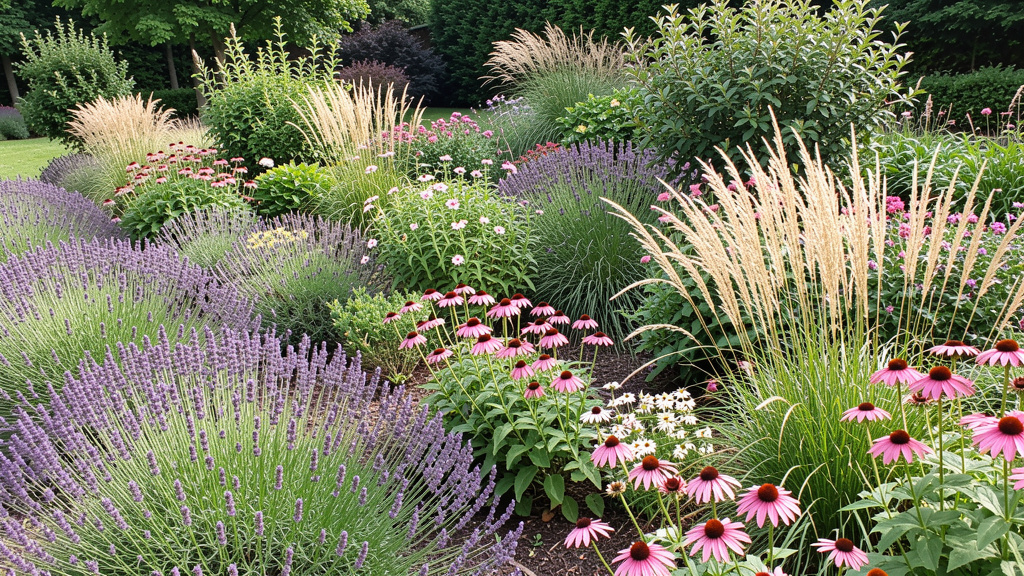
Move beyond fleeting blooms. Discover a systematic approach to designing a perennial garden that evolves with grace, minimizes maintenance, and delivers multi-season interest without replanting.
A truly successful perennial garden is not merely a collection of long-lived plants; it is a carefully orchestrated ecosystem designed for resilience and continuous visual appeal across years and decades. Unlike annual beds requiring complete replanting each season, a thoughtfully designed perennial border matures with complexity, depth, and character. This guide presents a framework developed from observed patterns in enduring gardens across diverse climates and styles—from historic English borders to contemporary prairie-inspired landscapes—transforming the complexity of plant selection and placement into an intuitive, joyful process. Whether starting with bare soil or revitalizing an existing bed, you will learn to build a garden that tells a living story through every season, requiring less intervention over time while offering exponentially greater reward.
Introduction: Beyond the Seed Catalog Dream
Walk into any garden center in late spring, and you’ll encounter a symphony of color—peonies bursting with ruffled petals, delphiniums reaching skyward, daylilies glowing in sunset hues. It’s easy to fill a cart with these momentary stars, only to return home and face bare patches in July, skeletal remains by September, and a confusing jumble of foliage with no clear structure. This disconnect between catalog fantasy and garden reality frustrates gardeners at every experience level. The root cause isn’t poor plant choices or inadequate care; it’s the absence of a holistic design philosophy honoring the full lifecycle of perennial plants.
Based on observed patterns in enduring gardens across diverse climates and styles, the most resilient and visually compelling perennial gardens consistently apply four foundational principles. These gardens acknowledge that perennials are dynamic participants in an evolving ecosystem. They breathe with the seasons, accommodate wildlife, respond to weather patterns, and gracefully age. A hosta planted today may form a substantial mound over several years; a single clump of switchgrass can seed a naturalistic drift that dances in autumn breezes. True perennial garden design embraces this temporal dimension—it plans not just for next month’s bloom, but for the garden’s character five, ten, or twenty years from now.
This framework encourages moving beyond “low-maintenance” as the primary goal. Instead, it reframes maintenance as meaningful engagement—pruning becomes sculpting, dividing becomes sharing abundance, weeding becomes mindful observation. When design aligns with natural plant behaviors and site conditions, labor transforms from chore to connection. You’ll spend less time fighting nature and more time witnessing monarchs on milkweed, listening to bees hum in lavender, or watching morning light filter through ornamental grasses dusted with frost. This is the enduring promise of perennial gardening: a partnership with living systems that deepens in beauty and significance with every passing season. Let’s build that foundation together.
The Four-Pillar Framework: Engineering Beauty That Endures
At the heart of every timeless perennial garden lies an invisible architecture—a set of interconnected principles guiding every decision from soil preparation to plant selection. Forget rigid rules or fleeting trends. This framework operates like a gardener’s compass, providing direction without restricting creativity. It acknowledges that your garden exists within a unique context: your specific light patterns, soil composition, climate zone, water availability, and personal rhythms. By anchoring your design in these four pillars, you create a resilient system where plants support each other, seasonal transitions feel intentional, and perceived “problems” become opportunities for deeper understanding.
The Fundamental Principle: A perennial garden is not built in a season—it is grown over a lifetime. Its true beauty emerges not from perfect blooms, but from the harmonious relationship between plant, place, and gardener.
Pillar 1: Site Symphony – Composing With Your Garden’s Unique Voice
Before selecting a single plant, become a student of your space. Most garden challenges stem not from poor plant choices, but from overlooking the site’s inherent conditions. This pillar transforms you from a plant collector into a landscape listener. Spend two full weeks observing your intended garden area at different times of day and under varying weather conditions. Carry a small notebook. Sketch light patterns. Note where moisture collects after rain. Feel the soil texture. This foundational observation prevents years of frustration and cultivates deep site awareness.
Decoding Light: Beyond “Full Sun” or “Shade”
Sunlight is dynamic, not static. A spot receiving six hours of direct sun in June may be fully shaded by July as deciduous trees leaf out. Use a sun calculator app or simply mark observations hourly:
– True Full Sun (6+ hours direct sun): Essential for peonies, lavender, Russian sage, coneflowers. Critical nuance: In warmer zones (7-10), intense afternoon sun can stress plants that thrive in northern full sun. Here, “morning sun with afternoon shade” often better suits heat-sensitive perennials like astilbe or bleeding heart.
– Partial Sun/Partial Shade (3-6 hours): The most versatile zone. Hostas with gold variegation need more light to maintain color; deep green/blue hostas tolerate heavier shade. Common mistake: Planting sun-loving coreopsis in dappled shade under a maple tree—it will stretch weakly toward light and produce few flowers.
– Full Shade (<3 hours direct sun): Not a limitation but an opportunity. Focus on foliage texture and subtle blooms: hellebores (Lenten rose), ferns (Japanese painted fern, lady fern), foamflower (Tiarella), and Solomon’s seal. Practical insight: “Dry shade” under mature trees (like Norway maples) presents significant challenges. Amend soil generously with compost, select drought-tolerant shade specialists like epimedium or barrenwort, and apply 2 inches of mulch to conserve moisture. Avoid disturbing critical tree roots.
Soil: The Unseen Foundation
Soil is a living ecosystem, not just a growing medium. Grab a handful after a light rain:
– Sandy Soil: Crumbles instantly. Drains rapidly but struggles to retain nutrients. Solution: Amend generously with compost (approximately 30% by volume) and coconut coir to improve water retention. Ideal for drought-tolerant natives like butterfly weed (Asclepias tuberosa) or yarrow (Achillea).
– Clay Soil: Forms a sticky ball. Poor drainage can suffocate roots, though it holds nutrients well. Solution: Never work clay when wet. Amend with compost and gypsum following package guidance. Consider raised beds (6-8 inches high) for improved drainage. Thrives with moisture-loving plants: Joe-Pye weed (Eutrochium), cardinal flower (Lobelia cardinalis), or Siberian iris.
– Loam (The Balanced Zone): Crumbles softly, holds shape briefly. Rare in new developments but achievable through consistent amendment. Supports a wide range of perennials.
– pH Considerations: While hydrangeas famously shift color with pH, many perennials have preferences. Lupines and bleeding heart often prefer slightly acidic soil (pH 6.0–6.8); lavender and clematis favor neutral to alkaline conditions (pH 7.0+). Test soil pH with an affordable kit. Contextual cue: If rhododendrons or blueberries grow wild nearby, soil is likely acidic. If lilacs thrive naturally, it’s likely alkaline.
Microclimates: Your Secret Design Tools
Every yard contains hidden pockets of unique conditions:
– South-facing foundation walls: Create heat-retaining zones. May support marginally hardy plants in cooler regions.
– Low spots or north sides of structures: Capture cold air (“frost pockets”). Exercise caution with early-blooming or tender species.
– Wind tunnels between buildings: Can desiccate foliage. Use as natural barriers for wind-sensitive plants like delphiniums.
– Urban settings: Gardens in dense urban areas often experience slightly warmer conditions than rural counterparts. Local observation is key.
Practical application: In gardens with cool, damp conditions under tree canopies, embracing the site by selecting shade-adapted plants such as hellebores, ferns, and hakonechloa grass can transform a challenging area into a serene, low-maintenance woodland garden. This approach not only reduces the need for supplemental watering but also creates a unique aesthetic that celebrates the site’s natural character.
Water Wisdom: Working With, Not Against, Nature
Observe drainage patterns after rainfall:
– Poor drainage (standing water >4 hours): Consider installing a French drain or creating a rain garden with moisture-loving natives: swamp milkweed (Asclepias incarnata), turtlehead (Chelone), or blue flag iris (Iris versicolor).
– Slopes: Plant in contour rows (following the slope’s curve) to prevent erosion. Use deep-rooted plants like daylilies or ornamental grasses as living anchors.
– Drought-prone areas: Group plants with similar water needs (“hydrozoning”). Place thirstier plants near downspouts; use gravel mulch and drought-tolerant species (sedum, coreopsis, penstemon) on south-facing slopes.
Pillar 1 Cognitive Peak: Your site isn’t a blank canvas to be conquered—it’s a collaborator with its own wisdom. The most beautiful gardens don’t impose a vision onto the land; they reveal the land’s inherent potential.
Pillar 2: Structural Bones – Designing the Garden’s Permanent Framework
Imagine your garden in deep winter: skeletal stems dusted with snow, seed heads silhouetted against gray skies, evergreen foliage providing quiet anchors. This is the test of structural integrity. Most perennial gardens lose visual cohesion after the first frost because they rely solely on seasonal flowers. Pillar 2 builds the permanent architecture—the “bones”—that provide year-round interest and organize the garden’s composition. Think of it as the skeleton upon which seasonal “flesh” (flowers, foliage) is draped.
The Power of Evergreen Anchors
Evergreens provide critical winter structure and visual resting points:
– Small-scale anchors (for borders <10 ft): Dwarf boxwood (Buxus sempervirens ‘Suffruticosa’), blue star juniper (Juniperus squamata ‘Blue Star’), or compact holly (Ilex crenata ‘Soft Touch’). Place at corners or intervals to break up long lines.
– Mid-size anchors (for larger borders): Japanese pieris (Pieris japonica), mountain laurel (Kalmia latifolia), or dwarf conifers like ‘Blue Ice’ cypress. These create focal points visible through bare branches.
– Ground-hugging anchors: Bearberry (Arctostaphylos uva-ursi), creeping juniper (Juniperus horizontalis), or wintergreen (Gaultheria procumbens). Prevent soil erosion and maintain visual interest at the border’s edge year-round.
– Placement consideration: Position evergreens where they’ll be visible from key viewpoints (kitchen window, patio chair). Avoid planting directly behind deciduous shrubs that will obscure them in summer.
Architectural Perennials: Plants With Strong Silhouettes
These perennials earn their place through form, not just flowers. Their seed heads, stems, and winter skeletons are intentional design elements:
– Vertical Accents: Ornamental grasses provide essential structure. Feather reed grass (Calamagrostis x acutiflora ‘Karl Foerster’) holds upright plumes through winter. Switchgrass (Panicum virgatum ‘Shenandoah’) turns fiery red in fall, then bleaches to wheat-colored stems. Place toward the border’s back or middle for rhythm.
– Bold Foliage Forms: Hostas (choose large cultivars like ‘Sum and Substance’ for impact), ligularia (with dramatic kidney-shaped leaves), or Rodgersia. Their leaf shapes create visual “punctuation” amid finer textures.
– Sculptural Seed Heads: Leaving spent flower heads of coneflowers (Echinacea), black-eyed Susans (Rudbeckia), and globe thistle (Echinops) standing provides winter interest and wildlife value. Important exception: Remove diseased foliage (like powdery mildew on phlox) to reduce overwintering pathogens.
– Winter Interest Specialists: While redtwig dogwood (Cornus sericea) is a shrub, its brilliant stems offer exceptional winter color. For true perennials, consider sedum ‘Matrona’ (pink stems persist through winter) or baptisia (false indigo), whose charcoal-gray seed pods create subtle movement and sound in winter winds.
Pathways and Edging: Defining the Canvas
Structure extends beyond plants. Crisp edges and intentional pathways guide the eye and foot:
– Edging Materials: Steel edging creates sharp, modern lines that prevent grass invasion. Half-buried stones offer a naturalistic look. For cottage gardens, use low-growing plants like creeping thyme or mondo grass as “living edging.”
– Pathway Width: Minimum 18 inches for single-file access; 36+ inches for comfortable two-person passage. Curve paths gently to slow movement and reveal garden “rooms.”
– Surface Choices: Crushed gravel (¼ inch minus) compacts firmly, drains well, and provides satisfying texture underfoot. Stepping stones set in thyme invite interaction. Avoid smooth mulch paths—they wash away easily and feel temporary.
Layering for Depth: The Foreground-Midground-Background Technique
Apply landscape painting principles to your border:
1. Foreground (0–2 ft from edge): Low growers that invite close inspection. Examples: creeping phlox (Phlox subulata), dwarf iris (Iris reticulata), hens-and-chicks (Sempervivum), or ajuga. Pro tip: Repeat 3–5 of the same plant in drifts for cohesion.
2. Midground (2–4 ft): The “workhorse” layer where most flowering perennials live. Group plants in odd-numbered clusters (3, 5, 7) for natural rhythm. Examples: salvia, coreopsis, nepeta (catmint), or astilbe.
3. Background (4+ ft): Tall structural elements. Ornamental grasses, Joe-Pye weed, or delphiniums. Place against a fence, wall, or evergreen backdrop for maximum impact.
4. Vertical Layer (upward): Incorporate climbing plants on obelisks or trellises: clematis (choose Group 3 types like ‘Jackmanii’ for straightforward pruning), climbing roses (technically woody but perennial in behavior), or honeysuckle (Lonicera sempervirens).
Common structural consideration: Planting tall plants at the border’s front blocks views of shorter gems behind. Always design from back to front. Sketch your border on graph paper (1 square = 1 foot) before purchasing plants. Note mature widths—crowding invites disease and weak growth.
Color as Structure: Beyond Bloom Time
While Pillar 3 covers seasonal color progression, structural color provides year-round cohesion:
– Foliage Color Anchors: Repeat a single foliage color throughout the border. Example: Silver (Artemisia ‘Powis Castle’, Stachys byzantina ‘Helene von Stein’, Senecio cineraria) creates cool cohesion. Gold (Hosta ‘Guacamole’, Hakonechloa ‘All Gold’, Spirea japonica ‘Gold Mound’) warms shady areas.
– Stem Color: Redtwig dogwood (winter), purple smoke bush stems (summer), or copper-colored sedum stems (fall) add subtle structural color.
– Evergreen Hues: Mixing blue spruce, gold thread cypress, and deep green holly creates winter color depth.
Pillar 2 Cognitive Peak: A garden without bones is a sentence without punctuation—chaotic and exhausting to read. Strong structure doesn’t constrain beauty; it gives beauty meaning, rhythm, and rest.
Pillar 3: Seasonal Choreography – Weaving a Continuous Tapestry of Interest
This is where intention meets time. Pillar 3 transforms your structurally sound garden into a living calendar of sensory delight. Forget the “June gap” (that lull after spring bulbs fade) or the “August slump” (when heat wilts tender blooms). By intentionally sequencing plants for sequential bloom and multi-season interest, your garden offers compelling moments every month. This isn’t about cramming in every possible flower; it’s about curating a deliberate progression where one plant’s decline gracefully hands the spotlight to the next.
The Bloom Sequence Blueprint: A Month-by-Month Guide
(Note: Bloom times vary significantly by USDA zone and local climate. Adjust timing based on your region. Zone 5 reference used here as a general guide.)
Late Winter (February–March): Awakening
– Conditions: Bare soil, lingering snow, first warm breezes.
– Star Performers: Hellebores (Lenten rose)—bloom through snow with nodding flowers in white, pink, purple. Snowdrops (Galanthus) and winter aconite (Eranthis hyemalis) naturalize beautifully. Witch hazel (Hamamelis) offers spidery blooms and subtle fragrance.
– Design Tip: Plant hellebores where their downward-facing flowers can be viewed from above (near a path edge or slope). Pair with early-blooming crocus for cheerful contrast.
– Common Consideration: Avoid cutting back hellebore foliage in fall. Leave it—it protects flower buds and provides winter greenery. Remove only tattered leaves in late winter as new growth emerges.
Spring (April–May): The Grand Unfurling
– Conditions: Cool temps, lengthening days, soil warming.
– Star Performers:
– Early Spring: Dicentra (bleeding heart), brunnera (Siberian bugloss), epimedium.
– Mid-Spring: Peonies (Paeonia), iris (bearded and Siberian), alliums (ornamental onions).
– Late Spring: Baptisia (false indigo), salvia nemorosa ‘Caradonna’, catmint (Nepeta).
– Design Tip: Layer spring bulbs under perennials. Plant daffodils where daylilies will later hide their fading foliage. Tuck grape hyacinths (Muscari) among hosta crowns—their blue spikes complement emerging hosta leaves.
– Critical Nuance: The idea that peonies require ants to open buds is widely debated. Ants are attracted to nectar but aren’t strictly necessary for bud opening. However, peonies do need 6+ hours of sun and support cages installed before buds form. Plant eyes (buds) no deeper than 1–2 inches below soil surface—deeper planting may inhibit blooming. Regional note: In colder zones, plant slightly deeper (up to 2 inches) for crown protection; in warmer zones, shallower planting (1 inch) is often recommended.
Early Summer (June): Peak Abundance
– Conditions: Long days, warming soil, potential drought.
– Star Performers: Peonies (late varieties), delphiniums, lupines, repeat-blooming roses, coreopsis, geranium ‘Rozanne’ (blooms extensively).
– Design Tip: Create “color echoes.” If your delphiniums are deep blue, repeat that hue with salvia or nepeta nearby. Avoid rainbow chaos—limit your June palette to 3–4 harmonizing colors.
– Problem Solver: Delphiniums may flop in rain. Solution: Plant near sturdy neighbors (like ornamental grasses) for natural support, or use discreet pea-stake grids installed early in the season.
Mid-Summer (July): Heat-Defying Resilience
– Conditions: High heat, intense sun, potential drought stress.
– Star Performers: Coneflowers (Echinacea), black-eyed Susans (Rudbeckia), daylilies (Hemerocallis), phlox paniculata (choose mildew-resistant cultivars like ‘David’ or ‘Jeana’), Russian sage (Perovskia).
– Design Tip: Embrace colors that thrive visually in heat: oranges (Helenium ‘Moerheim Beauty’), reds (Monarda ‘Jacob Cline’), purples (Salvia ‘May Night’). Silver-foliaged plants (Artemisia, Stachys) reflect sunlight and cool the visual temperature.
– Critical Maintenance: Deadhead spent blooms regularly on phlox and monarda to reduce disease pressure and encourage rebloom. Water deeply at soil level (avoid wetting foliage) early in the morning.
Late Summer (August): The Golden Hour Garden
– Conditions: Humid air, softening light, first hints of fall.
– Star Performers: Joe-Pye weed (Eutrochium), ironweed (Vernonia), obedient plant (Physostegia), hardy hibiscus (Hibiscus moscheutos), sedum ‘Autumn Joy’.
– Design Tip: This period is critical for migrating monarch butterflies. Plant milkweed (Asclepias tuberosa for dry sites, A. incarnata for moist areas) alongside nectar sources like Joe-Pye weed. Create a “pollinator pitstop” visible from your patio.
– Budget Alternative: Instead of hardy hibiscus, consider rose of Sharon (Hibiscus syriacus)—a woody perennial shrub with similar large flowers, often available at accessible price points.
Autumn (September–October): The Second Spring
– Conditions: Crisp air, dramatic light, cooling soil.
– Star Performers: Asters (Symphyotrichum), goldenrod (Solidago—not the allergy culprit; ragweed is wind-pollinated), anemones (windflowers), ornamental grasses (switchgrass, miscanthus), sedum.
– Design Tip: Contrast textures intentionally. Place feathery asters next to bold sedum flower heads. Let grasses catch the low-angle autumn sun—their backlit plumes create ethereal glow.
– Debunking Myths: Goldenrod does not cause hay fever (its pollen is heavy and insect-pollinated). It’s a vital late-season nectar source. Choose well-behaved cultivars like Solidago ‘Little Lemon’ to avoid aggressive spreading in smaller gardens.
Late Autumn/Winter (November–February): The Quiet Beauty
– Conditions: Bare stems, frost, snow, skeletal elegance.
– Star Performers: Ornamental grasses (standing forms), seed heads of coneflowers and rudbeckia, redtwig dogwood stems, evergreen perennials (hellebores, bergenias), winterberry holly (Ilex verticillata—berries persist after leaves drop).
– Design Tip: Leaving many perennials standing through winter provides habitat for beneficial insects, food for birds, and stunning frost/snow catchers. Focus on leaving plants like coneflowers, rudbeckia, sedum, and ornamental grasses intact, while removing only diseased or aggressively self-seeding varieties.
– Mindful Practice: On a crisp December morning, walk your garden with hot tea. Notice how frost highlights the intricate architecture of a sedum seed head. This isn’t neglect—it’s appreciating a different kind of beauty.
Foliage: The Unsung Hero of Continuous Interest
Flowers come and go, but foliage provides the constant narrative thread. Master these foliage techniques:
– Texture Layering: Combine fine (ferns, maiden grass), medium (hosta, heuchera), and bold (ligularia, rodgersia) textures. Like musical notes, contrast creates harmony.
– Color Progression: Heuchera offers year-round color shifts: ‘Palace Purple’ emerges silver in spring, deepens to plum in summer, and glows burgundy in fall. Japanese forest grass (Hakonechloa) starts chartreuse, matures to gold, and turns apricot with frost.
– Variegation Strategy: Use sparingly as “light catchers” in shade. Too much variegation feels chaotic. A single ‘Silver Scrolls’ hosta can brighten a dark corner more effectively than multiple variegated plants.
Scent and Sound: Engaging All Senses
A truly immersive garden engages beyond sight:
– Fragrance Layers:
– Morning: Lily of the valley (Convallaria), nicotiana
– Evening: Moonflower (Ipomoea alba—annual vine), phlox paniculata, nicotiana
– All Day: Lavender, rosemary, catmint
– Sound Elements: Ornamental grasses rustle in breeze. Baptisia seed pods rattle. Leave hollow stems of joe-pye weed for subtle wind-chime effect. Place a bench where you can hear these subtle sounds.
The Succession Planting Approach
Create a personalized bloom calendar:
1. Take a photo of your garden each month for one year. Note gaps.
2. Identify 2–3 “gap months” needing more interest.
3. Research 2–3 plants per gap month suited to your site conditions.
4. Source plants in fall (often best selection) or early spring.
5. Plant with temporary bloom time markers until established.
Example Gap Solution:
– Problem: Garden looks bare in early April after crocus fade, before peonies bloom.
– Solution: Plant epimedium (barrenwort)—shade-tolerant, deer-resistant, with delicate spring flowers and evergreen foliage. Or add early-blooming perennial candytuft (Iberis sempervirens) for a cloud of white at the border’s edge.
Pillar 3 Cognitive Peak: Seasonal choreography isn’t about filling every moment with spectacle—it’s about honoring the garden’s natural rhythm, where rest is as meaningful as bloom, and anticipation deepens appreciation.
Pillar 4: The Maintenance Rhythm – Cultivating Partnership, Not Perfection
This pillar reframes maintenance as rhythmic partnership with natural cycles. True sustainability emerges when care aligns with plant biology and seasonal patterns. Instead of weekly “chores,” adopt practices that work with nature’s timing. This transforms gardening from a battle against weeds into a mindful dialogue with living systems. The goal isn’t a sterile, weed-free monoculture; it’s a resilient, biodiverse ecosystem where “weeds” become indicators, pests become teachers, and soil becomes a thriving community.
The Seasonal Maintenance Calendar: Working Smarter, Not Harder
Late Winter (February–March): The Gentle Awakening
– Core Tasks:
– Cut back ornamental grasses and tall perennials before new growth emerges (use hedge shears for grasses; tie stems with twine first for neat removal).
– Remove only damaged or diseased foliage from semi-evergreens (heuchera, hellebores).
– Apply slow-release organic fertilizer (like Espoma Plant-Tone) as soil thaws.
– Divide overgrown clumps of daylilies, hostas, or ornamental grasses just as “eyes” (buds) appear.
– Why This Timing Matters: Cutting too early exposes crowns to late frost. Cutting too late damages new shoots. Late winter is generally the optimal window, though timing varies by climate zone.
– Tool Tip: Use bypass pruners (not anvil type) for clean cuts that heal quickly. Disinfect blades with a 10% bleach solution between plants if disease was present last year.
– Mindset Shift: View this not as “cleaning up,” but as making space for new life. Each cut stem is an invitation for growth.
Spring (April–May): Nurturing Growth
– Core Tasks:
– Apply 2–3 inches of shredded hardwood mulch after soil warms (mulching cold soil delays spring growth). Keep mulch 2 inches away from plant crowns to prevent rot.
– Install supports before plants need them: peony rings, discreet bamboo stakes for delphiniums, or twiggy “pea sticks” for floppy perennials like asters.
– Water deeply (approximately 1 inch per week) if rainfall is insufficient, especially during bud formation.
– Hand-pull weeds when soil is moist—they come out roots and all.
– Critical Insight: Mulch serves multiple purposes: it moderates soil temperature, conserves moisture, suppresses weeds, and feeds soil life as it decomposes. Avoid dyed mulches or rubber mulch—they may leach compounds and don’t nourish soil.
– Budget Method: Use shredded fallen leaves from last autumn as free, nutrient-rich mulch. Or obtain arborist wood chips (often available via community programs)—they break down slower than bagged mulch but significantly improve soil structure over time.
Early Summer (June): Supporting Peak Performance
– Core Tasks:
– Deadhead spent blooms regularly on reblooming plants (salvia, coreopsis, geranium ‘Rozanne’).
– Pinch back mums and asters in early June to encourage bushier growth and more flowers (cut stems back by one-third).
– Monitor for pests: Check phlox undersides for powdery mildew; inspect roses for aphids.
– Water deeply in early morning during heatwaves.
– Organic Pest Strategy:
– Aphids: Spray with strong water jet or encourage beneficial insects like ladybugs.
– Slugs: Place shallow dishes of beer at soil level, or sprinkle diatomaceous earth around vulnerable plants (reapply after rain).
– Important: Avoid broad-spectrum pesticides—they harm beneficial insects like lacewings and parasitic wasps that naturally control pests.
– Time-Saver: Group plants with similar deadheading needs. Tend to the “salvia cluster” in one session rather than scattering efforts.
Mid-Late Summer (July–August): Embracing Resilience
– Core Tasks:
– Continue deadheading where beneficial.
– Cut back “leggy” plants like catmint or salvia by half after first bloom to encourage fresh growth and flowers.
– Water deeply but less frequently to encourage deep roots (better drought tolerance).
– Collect seeds from heirloom varieties (like opium poppies or cleome) for next year, if desired.
– Heat Stress Response: If plants wilt midday but perk up by evening, do not water. This is normal transpiration. Water only if wilting persists into evening. Overwatering in heat can cause root issues.
– Mindful Observation: Sit quietly in your garden at dusk. Notice which flowers attract the most pollinators. Which plants look vibrant despite heat? This observation informs future plant choices.
Autumn (September–October): Preparing for Rest
– Core Tasks:
– Plant new perennials! Fall is often ideal—cool air reduces transplant shock while warm soil encourages root growth.
– Divide spring-blooming perennials (peonies, oriental poppies) after they finish flowering.
– Leave many perennials standing for winter interest and wildlife habitat.
– Apply compost tea or liquid kelp fertilizer to support root health before dormancy.
– Clean and oil tools before storing.
– Critical Consideration: To cut back or not?
– Cut Back: Diseased foliage (phlox with mildew), plants prone to aggressive self-seeding (foxglove, hollyhock), or messy growers (bee balm).
– Leave Standing: Coneflowers, rudbeckia, sedum, ornamental grasses, asters. Their seed heads feed birds; hollow stems shelter overwintering beneficial insects.
– Soil Love: Spread 1–2 inches of compost over the entire bed. Earthworms and soil organisms will incorporate it over winter—no digging required.
Winter (November–January): The Quiet Stewardship
– Core Tasks:
– Embrace restraint. Resist the urge to “tidy” unnecessarily.
– On mild days, observe wildlife using your garden (chickadees eating coneflower seeds, sparrows nesting in grasses).
– Review photos and plan next year’s additions.
– Order seeds and bare-root plants during winter sales.
– Philosophical Shift: Winter isn’t dormancy—it’s transformation. Roots continue subtle growth. Buds form for spring. Insects shelter. Your restraint is active care.
– Exception: After heavy, wet snow, gently brush accumulation off evergreen branches to prevent breakage. Use an upward sweeping motion with a soft broom.
Soil Health: The Invisible Foundation
Healthy soil supports healthy plants and reduces long-term maintenance. Adopt these practices:
– Minimal Soil Disturbance: Avoid deep digging of established beds. Disturbing soil can disrupt beneficial fungal networks (mycorrhizae) that help plants absorb nutrients. Plant by digging only individual holes.
– Compost is Essential: Top-dress beds with 1 inch of finished compost each spring and fall. It feeds soil microbes, improves structure, and suppresses disease. Make your own in a simple bin (layer greens/browns) or source locally.
– Cover Crops for Bare Soil: If expanding your garden, plant crimson clover or winter rye in unused areas over winter. Incorporate lightly in spring for added organic matter and nitrogen.
– Soil Testing: Every 2–3 years, send a sample to your local cooperative extension service (typically low cost). They provide precise amendment recommendations—avoid guessing with lime or sulfur.
Water Wisdom Revisited: Efficient Hydration
- Drip Irrigation: Install a simple system with soaker hoses under mulch. Delivers water directly to roots, reduces evaporation significantly, and prevents foliar diseases. Timer attachments automate watering.
- Rain Barrels: Connect to downspouts. Even modest rainfall yields substantial free, chemical-free water. Use for new plantings or during dry periods.
- Watering Deeply: Check depth with a trowel—water should penetrate 6–8 inches. Shallow watering encourages weak surface roots.
Embracing “Good Enough”: The Anti-Perfection Mindset
A leaf with a tiny hole isn’t failure—it’s evidence of life. A slightly crooked stem adds character. Research in horticultural therapy suggests that gardens with natural variation and “imperfections” can feel more inviting and reduce human stress compared to highly manicured landscapes—they feel alive, forgiving, and authentic. When you spot a “flaw,” ask: “Does this harm the plant’s health or the garden’s function?” If not, consider letting it be. This mental shift conserves energy for meaningful tasks and deepens your connection to the garden’s wild heart.
Pillar 4 Cognitive Peak: Maintenance is not control—it is conversation. Each pruning cut, each handful of compost, each moment of observation is a word in an ongoing dialogue with the living world. Listen closely, and your garden will teach you everything you need to know.
Navigating Common Frictions: Solutions for Real-World Gardens
Even with a solid framework, challenges arise. These aren’t failures—they’re opportunities to deepen your understanding. Below are frequent considerations with actionable, nuanced solutions grounded in ecological principles.
“My Garden Looks Bare in Early Spring!”
This is a common observation. Solution: Strategic Early-Season Interest.
– Bulb Layering: Plant small bulbs within perennial clumps:
– Snowdrops (Galanthus) among hellebores
– Crocus in front of emerging daylilies
– Allium ‘Drumstick’ behind hostas (their fading foliage hides bulb leaves)
– Early Perennials: Add epimedium (barrenwort)—shade-tolerant, deer-resistant, with delicate spring flowers and evergreen foliage. Or candytuft (Iberis sempervirens) for a low, spreading cloud of white bloom at the border’s edge.
– Temporary Fillers: Tuck in a few cold-tolerant annuals like pansies or violas in bare spots. They’ll fade naturally as perennials emerge. Budget tip: Start seeds indoors 6–8 weeks before last frost date.
“Deer/Rabbits Browse My Plants!”
Accept that no plant is 100% deer-proof (hungry animals may sample almost anything), but these strategies significantly reduce damage:
– Plant Selection: Prioritize plants with strong scents (lavender, salvia, nepeta), fuzzy leaves (lamb’s ear, stachys), or known unpalatability (foxglove, hellebores, daffodils). Rutgers University maintains a searchable deer-resistant plant database by region.
– Physical Barriers:
– Budget: Apply repellents like liquid fence (rotten egg solids) every 1–2 weeks; reapply after rain.
– Mid-range: Install 4-foot chicken wire fencing around vulnerable beds (rabbits can’t jump high; deer often avoid small enclosed areas).
– Long-term: Plant a thorny perimeter hedge (Rosa rugosa, certain barberries) to deter entry.
– Companion Planting: Interplant vulnerable plants with strong-scented deterrents. Place lavender between hostas; surround daylilies with catmint.
– Critical Insight: Animal behavior adapts. Rotate deterrent methods seasonally. What works in spring may be less effective in fall when natural food sources dwindle.
“I Don’t Have Time for Constant Deadheading!”
Choose perennials known for extended bloom or minimal deadheading needs:
– Top Low-Maintenance Bloomers:
– Geranium ‘Rozanne’ (blooms extensively with minimal deadheading)
– Coreopsis ‘Zagreb’ or ‘Moonbeam’
– Salvia nemorosa ‘Caradonna’ or ‘May Night’
– Nepeta ‘Walker’s Low’ (catmint)
– Sedum ‘Autumn Joy’
– Heuchera (coral bells)—primarily grown for foliage
– Strategic Acceptance: Allow some plants to go to seed. Coneflowers and rudbeckia feed birds; their seed heads add winter interest. Deadhead only plants prone to disease (phlox) or aggressive self-seeding (foxglove) if that’s a concern in your garden.
“My Soil is Challenging—Clay/Sand/Rocky!”
Work with your soil’s inherent qualities:
– Clay Soil Strategy: Amending heavy clay soil with compost and selecting moisture-loving native plants such as Joe-Pye weed, swamp milkweed, and blue flag iris can improve soil structure over time. As organic matter increases, earthworm activity often enhances drainage naturally. This approach shifts perspective from fighting the soil to working with its nutrient-holding capacity.
– Sandy Soil Strategy: In fast-draining soils, mixing coconut coir and compost improves water retention. Selecting drought-tolerant Mediterranean natives like lavender, yarrow, and Russian sage, combined with gravel mulch, creates a thriving low-water garden.
– Rocky Slope Solution: Instead of extensive rock removal, incorporate stones as design features. Plant creeping thyme or sedum between stones. Use rocks to create terraced planting pockets. Choose shallow-rooted alpines like dianthus or aubrieta.
“My Garden Looks Untidy by Late Summer!”
This is often a design consideration, not a maintenance failure:
– Structural Reinforcement: Add more architectural plants (ornamental grasses, sedum, baptisia) whose forms hold up through fall. They provide visual “scaffolding” when softer perennials fade.
– Strategic Cutting Back: In early July, cut back one-third of your asters and mums by half. They’ll bloom later than uncut plants, extending the season and preventing all flowers from fading simultaneously.
– Reframe Perception: Late summer is peak pollinator activity. What may appear “messy” to humans is a bustling ecosystem. Place a bench nearby and observe the activity—monarchs on milkweed, bees in echinacea. Reframe “untidiness” as “abundance.”
“I’m Overwhelmed by Plant Choices!”
Simplify with the “Rule of Threes”:
1. Choose 3 Focal Points: One architectural grass, one bold foliage plant, one long-blooming perennial. Example: Karl Foerster grass + ‘Sum and Substance’ hosta + Geranium ‘Rozanne’.
2. Repeat Each 3+ Times: Plant in drifts (groups of 3, 5, or 7) for cohesion. Avoid “one of everything” randomness.
3. Limit Your Palette: Select 3 core colors for your border (e.g., purple, silver, white). Choose plants that fit this scheme.
– Pro Tip: Start small. Design and plant just one 4×8 foot section thoughtfully. Expand outward in subsequent years. A small, well-designed garden brings more joy than a large, chaotic one.
Your Questions, Answered
Q: How do I know if a perennial is invasive in my area?
A: Plant invasiveness is highly region-specific. Always consult your local cooperative extension service, native plant society, or state department of natural resources—they maintain authoritative, region-specific lists of plants to avoid. For example, while purple loosestrife (Lythrum salicaria) is sold in some nurseries, it’s banned in many states for choking wetlands. Similarly, butterfly bush (Buddleia) can be invasive in Pacific Northwest ecosystems. When in doubt, choose native alternatives: swap butterfly bush for native buttonbush (Cephalanthus occidentalis) or regionally appropriate milkweed (Asclepias).
Q: Can I plant perennials in containers long-term?
A: Yes, with important considerations. Choose compact cultivars (dwarf daylilies, ‘Blue Ice’ cypress) and use containers at least 16 inches deep/wide. Critical: Select plants rated for two zones colder than your area (e.g., zone 5 plants for zone 7 container) because roots lack ground insulation. Use quality potting mix (not garden soil), ensure drainage holes, and water more frequently than in-ground plants. Overwinter containers in an unheated garage, against a protected wall, or bury pots in the ground for added root protection.
Q: Why aren’t my peonies blooming?
A: Common reasons include: 1) Planted too deep—eyes (buds) should be no more than 1–2 inches below soil surface; 2) Insufficient sun—peonies generally need 6+ hours of direct sun; 3) Immaturity—peonies often take 2–3 years to establish and bloom reliably. Avoid high-nitrogen fertilizers, which promote foliage over flowers. If divided recently, blooming may pause for a season. Regional note: Planting depth recommendations can vary slightly by climate zone—consult local resources.
Q: How do I divide overgrown perennials without harming them?
A: Timing and technique matter. Spring-blooming perennials (peonies, oriental poppies) are typically divided in fall; summer/fall-blooming types (daylilies, hostas, coneflowers) in early spring. Steps: 1) Water plant thoroughly 24 hours prior. 2) Dig entire clump carefully. 3) Use two garden forks back-to-back to gently pry apart sections (minimizes root damage vs. knife). 4) Replant divisions immediately at original depth. 5) Water deeply and provide temporary shade from hot sun for about a week. Discard woody centers; keep vigorous outer sections.
Q: Are native plants always better for perennial gardens?
A: Not universally, but they offer significant ecological advantages. Natives co-evolved with local pollinators and wildlife, often requiring less water, fertilizer, and pest control once established. However, “native” is hyper-local—a plant native to California may not suit New York. Research plants native to your specific ecoregion via the National Wildlife Federation’s Native Plant Finder. Thoughtfully blend natives with well-behaved non-natives (like peonies or hostas) for personal expression. Avoid plants labeled “aggressive” or “spreads rapidly” unless contained intentionally.
Q: How much should I water newly planted perennials?
A: Critical establishment period: Water deeply every 2–3 days for first 2 weeks (soil moist 6 inches down). Then gradually reduce to once weekly for 2–3 months. After the first full growing season, most established perennials need supplemental water only during prolonged dry periods (2+ weeks without significant rain). Test soil: Insert finger 2 inches deep—if dry, water; if damp, wait. Morning watering reduces evaporation and fungal risk.
Q: Can I design a perennial garden in full shade?
A: Absolutely! Shift focus from flowers to foliage texture, form, and subtle blooms. Essential plants: Hostas (choose varieties by light tolerance—gold needs more light than blue), ferns (Japanese painted fern, lady fern), hellebores (Lenten rose), foamflower (Tiarella), Solomon’s seal, and astilbe (for partial shade with morning sun). Add structure with dwarf boxwood or Japanese forest grass (Hakonechloa). Use light-colored mulch (shredded bark) and pale stones to brighten the space. Incorporate reflective elements: a small mirror on a fence, white-painted bench.
Q: What’s a common consideration for beginners?
A: Overplanting. It’s tempting to fill every inch, but perennials grow! Check mature width on plant tags and space accordingly. A plant listed as 2 feet wide needs approximately 2 feet of space. Crowding causes poor air circulation (inviting disease), competition for nutrients, and frequent division needs. Start with fewer plants spaced properly—you can always fill gaps later with divisions or annual accents.
Q: How do I attract pollinators without attracting aggressive wasps?
A: Focus on nectar-rich flowers that appeal to bees and butterflies: coneflowers, milkweed, salvia, and native asters. Avoid highly fragrant, sugary flowers like buddleia near seating areas. Provide a dedicated water source away from patios: a shallow dish with stones for landing. Never leave sugary drinks or fruit scraps outdoors. Remember: most solitary wasps in gardens are beneficial predators that control pests—observe before reacting.
Q: Is fall or spring better for planting perennials?
A: Fall is generally advantageous for most regions (zones 4–8). Warm soil encourages root growth while cool air reduces transplant shock. Plants establish strong root systems over winter for vigorous spring growth. Ideal planting window: 6 weeks before first average hard frost. Spring planting works well too, especially for plants prone to winter heaving (like some salvias) or in very cold zones (1–3). Avoid planting during summer heat unless absolutely necessary—and provide shade and extra water if you do.
Q: How do I keep my garden looking intentional in winter?
A: Embrace winter as a distinct season with its own beauty. Leave structural plants standing: ornamental grasses, sedum seed heads, coneflowers. Add subtle human touches: a single strand of warm-white solar fairy lights woven through redtwig dogwood branches, a rustic bench dusted with snow, or a cluster of decorative pots with wintergreen branches. Place a bird feeder visible from your window—watching chickadees and cardinals brings life to the quiet landscape.
Q: What perennials are consistently avoided by deer?
A: No plant is 100% deer-proof during severe food scarcity, but these are frequently avoided due to scent, texture, or unpalatability: lavender, Russian sage, catmint (nepeta), yarrow (achillea), foxglove (digitalis—toxic, use caution with pets and children), hellebores, daffodils, ferns, and most ornamental grasses. Rutgers University’s New Jersey Agricultural Experiment Station publishes a reliable, frequently updated deer resistance rating scale (A=Rarely Damaged to D=Frequently Severely Damaged) searchable by plant name.
Conclusion and Next Step: Your Garden’s Living Legacy
You now hold a framework—not a rigid recipe, but a flexible philosophy for creating a perennial garden that deepens in beauty and meaning with each passing year. We’ve journeyed from listening to your site’s unique voice, to building enduring structural bones, choreographing seasonal interest with intention, and embracing maintenance as mindful partnership. Remember the core truth: a perennial garden is not a static object to be perfected, but a dynamic relationship to be nurtured. Its character—the slightly crooked stem, the leaf nibbled by a caterpillar, the unexpected volunteer poppy—is not flaw. It is signature of life, evidence of a thriving ecosystem where you are a grateful participant.
Recap: The Three Anchors of Enduring Beauty
- Design With Time: Honor the full lifecycle of plants. Plan for winter structure as intentionally as summer blooms. Allow space for growth. Embrace succession.
- Align With Place: Your soil, light, and climate are collaborators, not obstacles. Choose plants that thrive in your conditions, not someone else’s catalog fantasy.
- Cultivate Rhythm, Not Rigidity: Adopt seasonal maintenance practices that flow with nature’s cycles. Release the pursuit of perfection. Find joy in the process.
The 24-Hour Rule: One Tiny Action to Begin Today
Within the next 24 hours, step into your garden space (or future garden space) at three different times: dawn, midday, and dusk. Stand quietly for just two minutes each time. Observe without judgment. Where does the light fall? Where does moisture collect? What sounds do you hear? What do you feel in that space? Carry a small notebook. Jot down one word for each visit: “warm,” “damp,” “peaceful,” “windy.” This simple act of presence is the most powerful design tool you possess. It grounds your future choices in reality, not aspiration. You are not just observing a plot of land—you are beginning a conversation.
The Big Picture: Your Garden in the Web of Life
As your perennial garden matures, its impact extends far beyond your property line. Those coneflowers feed migrating monarchs. Those native grasses shelter overwintering bees. That patch of clover fixes nitrogen for neighboring plants. Your garden becomes a node in a vast ecological network—a sanctuary for life in an increasingly fragmented world. In a culture of disposability, you are cultivating permanence. In a world of noise, you are creating space for quiet wonder. This is the profound legacy of perennial gardening: you are not just growing plants. You are growing habitat. You are growing beauty that endures. You are growing hope, one season at a time.
Explore Our Complete System:
Designing Pollinator Pathways: A Habitat Corridor Guide | Soil Alchemy: Transforming Dirt Into Living Gold | The Mindful Gardener: Cultivating Presence Among the Petals | Water-Wise Wisdom: Sustainable Hydration for Every Climate | Seasonal Journaling for Gardeners: Tracking Beauty Through the Year | Native Plant Pairings: Regional Guides for Ecological Harmony | The Art of Garden Editing: Knowing What to Keep and What to Release