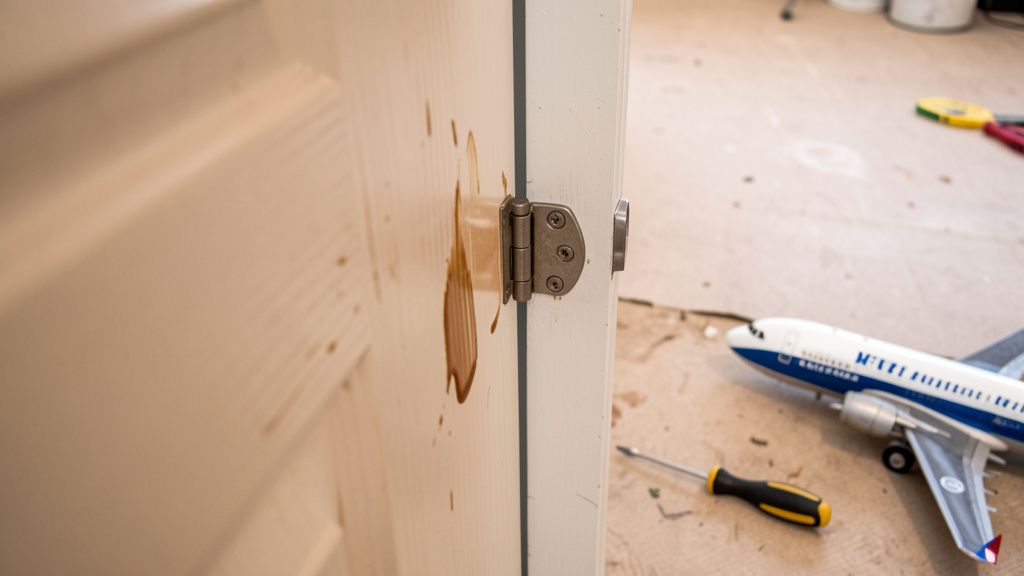
Stop battling with stubborn doors. This systematic, step-by-step framework helps you diagnose the root cause of common door issues and apply thoughtful, lasting repairs—empowering you to restore smooth, quiet operation with confidence.
Doors are the silent workhorses of your home—opening and closing countless times while enduring humidity shifts, temperature changes, and daily use. When they stick, squeak, or show damage, it’s rarely a random failure. These symptoms reflect predictable interactions between materials, environment, and mechanics. This guide moves beyond quick fixes to build your understanding of why issues occur. You’ll learn to observe clues—where binding happens, when a squeak emerges, what damage reveals—so you can respond effectively. Whether facing seasonal swelling near a bathroom, a hinge protesting after years of use, or visible wear from daily traffic, this resource provides adaptable strategies grounded in material behavior and practical repair principles. Properly maintained doors support home safety (ensuring reliable egress), security (maintaining latch engagement), and comfort (preserving seals against drafts).
Introduction: Understanding Why Doors Develop Issues
Every sticking point, squeak, or dent tells a story shaped by physics, material properties, and your home’s unique conditions. Wood naturally exchanges moisture with surrounding air. Metal components experience gradual wear from repeated motion. Foundations and framing shift subtly over time. These are not flaws but expected responses to environmental and mechanical forces. Yet many common remedies address only surface symptoms—“rub soap on the hinge” or “sand the edge”—without considering underlying causes. This often leads to temporary relief followed by recurrence, sometimes with added complications.
Observations across residential structures consistently show that persistent door issues trace back to three interconnected layers: environmental conditions (humidity, temperature, moisture exposure), mechanical components (hinges, latches, hardware), and structural context (frame alignment, wall stability). Overlooking any layer may limit repair effectiveness. This guide introduces a diagnostic lens used by experienced tradespeople: observe first, diagnose deliberately, then act. You’ll learn to read your door’s signals—seasonal patterns, localized friction points, gap inconsistencies—to choose the most appropriate response. Understanding the “why” behind each step not only resolves current concerns but also builds preventative awareness, extending your door’s functional life while supporting broader home performance.
The Root Cause Framework: Environmental, Mechanical, Structural
Before selecting tools, pause to diagnose. Every door behavior originates in one or more of these layers. Working through them sequentially prevents wasted effort and avoids compounding minor issues.
- Environmental Layer: Is the behavior tied to weather, season, or location? (e.g., sticks primarily during humid months, swells near a bathroom or exterior wall).
- Mechanical Layer: Is the issue centered on moving parts? (e.g., squeak localized to a hinge pin, latch catching unevenly, visible hardware wear).
- Structural Layer: Does the frame, wall, or foundation appear involved? (e.g., consistent binding at top and bottom corners, visibly uneven gaps around the perimeter).
Many well-intentioned repairs focus solely on the Mechanical layer (“I’ll oil the hinge!”) without checking whether Environmental swelling or Structural shifting is creating abnormal stress on that hinge. Lubricating a hinge strained by a warped door may quiet it temporarily, but the underlying pressure remains. This framework encourages patience: identify the primary contributor first. Often, layers interact—a seasonal humidity shift (Environmental) may exacerbate a slightly loose hinge (Mechanical), making diagnosis feel complex. Start with the most observable clue: When does it happen? Where is the contact? What changes with conditions? These details guide your next step.
Layer 1: Environmental Factors – Humidity, Temperature, and Location
Wood is hygroscopic—it absorbs and releases moisture relative to ambient humidity. Solid wood doors may expand noticeably across the grain during sustained high humidity; engineered woods (MDF, HDF) and hollow-core doors react less dramatically but are not immune. Temperature fluctuations cause minor expansion/contraction in metal hardware. Proximity to moisture sources (showers, sinks, exterior walls, basements) accelerates these effects.
- Diagnosis Clues: Issue appears or worsens seasonally (common in humid summer months or rainy periods), improves during drier seasons. Binding typically occurs along the latch-side edge or top edge. A hygrometer in the room consistently reads above 55% relative humidity during problem periods.
- Why It Matters: Sanding a swollen edge during high humidity without addressing moisture levels may create gaps when conditions dry. Environmental strategies focus on managing conditions and making minimal, targeted adjustments.
- Contextual Insight: Wood movement follows grain direction—expansion occurs primarily across the width, minimally along the height. This explains why doors commonly bind on sides or top but rarely along the full vertical edge unless other factors are present. Controlling indoor humidity (40–50% RH where feasible) through ventilation, exhaust fans, or dehumidifiers reduces seasonal stress on wood components.
Layer 2: Mechanical Wear – Hinges, Latches, and Hardware
Hinges, latches, strikes, and rollers endure repetitive motion. Over time, lubrication degrades, screws loosen, metal fatigues, or corrosion develops—especially in humid or exterior locations. This layer often manifests visible symptoms (squeaks, sticking at latch point), but it may be reacting to strain from Environmental or Structural layers.
- Diagnosis Clues: Squeak originates clearly from one hinge location. Door binds only when latch engages. Visible rust on hinge barrels or screws. Screws feel loose or spin without grip. Door feels unusually heavy or uneven during operation.
- Why It Matters: Forcing a misaligned door stresses hardware further. A single loose hinge screw can compromise the entire hinge’s function. Mechanical repairs benefit from systematic attention: check all screws, not just the obvious culprit.
- Contextual Insight: Hinge stress follows predictable patterns. The top hinge supports the door’s weight against gravity and often shows wear first. The bottom hinge experiences lateral forces during motion and may loosen more readily. Proactive tightening of all hinge screws during routine maintenance can prevent escalation.
Layer 3: Structural Context – Frame Alignment and Building Movement
Homes settle. Foundations respond to soil moisture changes. Framing shifts minutely under load. Door frames, anchored to studs, move with these shifts. Even small deviations (⅛ inch) can cause noticeable binding. This layer is frequently overlooked in quick-fix guides but is essential for persistent or gradually worsening issues.
- Diagnosis Clues: Binding occurs at non-adjacent points (e.g., top hinge corner and bottom latch corner). Gaps between door and frame are visibly uneven. Problem evolves slowly over months or years, not seasonally. Hairline cracks appear in wall finish near the frame.
- Why It Matters: Sanding the door to fit a shifted frame addresses only the symptom. If structural movement continues, repeated sanding compromises the door’s integrity. Recognizing when an issue may stem from building dynamics helps set realistic expectations.
- Contextual Insight: The “dollar bill test” offers a practical alignment check. Close the door on a bill at multiple perimeter points. Consistent, light resistance indicates good alignment. Significant variation (easy slip in some spots, strong pull in others) suggests frame irregularity. Documenting gap measurements over time helps distinguish seasonal fluctuation from progressive shift.
The Guiding Principle: Door behavior reflects an interaction of forces—moisture equilibrium, mechanical alignment, and structural context. Addressing the most influential layer first leads to more durable outcomes. Treating only the visible symptom may provide temporary relief but often misses the opportunity for lasting resolution.
Part 1: Addressing Sticking Doors—Seasonal Swells, Sag, and Frame Considerations
A door that sticks disrupts flow and may accelerate wear on finishes or hardware. Avoid forcing it closed, which can splinter wood, damage latches, or strip screws. Proceed methodically using the Root Cause Framework.
Step 1: Precise Diagnosis – Locate the Exact Binding Point
- How to Do It Correctly: Close the door slowly. Note precisely where contact occurs. Lightly mark the spot on the door edge with a pencil. Repeat 3–4 times to confirm consistency. Check binding at top third, middle, and bottom third. Inspect the jamb at the marked spot for wear patterns (darkened wood, scraped paint).
- Why This Step is Crucial: Targeted repair preserves the door’s seal and integrity. Sanding the entire edge removes unnecessary material, potentially creating drafts later. Binding at the top latch-side corner often signals humidity-related swell. Consistent binding along the full latch edge may indicate frame alignment. Bottom-corner binding frequently relates to sagging (loose hinges) or floor obstruction.
- Common Mistakes to Avoid: Assuming “it sticks on the side” without verification. Guessing the location. Forcing the door shut to “find the rub,” which creates misleading wear marks. Overlooking the top edge—critical for detecting warp or frame shift.
- Illustrative Example: A bathroom door sticks noticeably during and after showers. Pencil marking reveals consistent contact 6 inches from the top on the latch edge—a pattern aligning with localized humidity exposure. Minimal sanding only in that zone resolves operation. Sealing the sanded area helps moderate future moisture exchange. Had the entire edge been sanded, gaps might have appeared when humidity normalized, reducing energy efficiency.
- Counter-Example: Sanding an entire latch edge because the door “sticks on the side” may remove material where none was needed. If an underlying minor frame shift existed, this could worsen alignment gaps elsewhere, complicating future adjustments. Precision preserves options.
Step 2: Environmental Sticking (Humidity-Related Swell) – Minimal, Targeted Adjustment
- Tools & Materials: Medium-grit sandpaper (120 grit) on a sanding block (essential for flat edges), fine-grit paper (220 grit), pencil, carpenter’s square, tack cloth, matching finish (stain/paint), hygrometer, dehumidifier or improved ventilation (long-term support).
- How to Do It Correctly:
- Remove the door from hinges (see Part 2 for safe removal guidance). Working flat on sawhorses enables safer, more controlled material removal.
- Lightly sand only the marked binding area using long, even strokes with the wood grain. Check fit frequently by repositioning the door against the jamb (no need to fully rehang each time).
- Goal: Remove the absolute minimum material—often less than 1/32 inch. Test after every few strokes. Over-sanding creates gaps affecting seal and security.
- Smooth the area with 220-grit paper. Wipe clean with a tack cloth.
- Apply matching finish to the bare wood. Unsealed edges absorb moisture more readily, potentially accelerating future swelling at that spot.
- Address contributing conditions: Use a hygrometer to monitor room humidity. In moisture-prone areas (bathrooms, basements), ensure exhaust fans run adequately post-use; consider a dehumidifier if readings regularly exceed 55% RH.
- Why This Step is Crucial: Sanding while hung risks uneven edges or rounded corners. Removing the door ensures a square, flat edge. Sealing the repair is a critical step for longevity—it’s part of the solution, not an afterthought.
- Common Mistakes to Avoid: Sanding without a block (causing rounded edges). Aggressive material removal. Skipping the finish step. Ignoring humidity management, increasing recurrence likelihood.
- Adaptive Option (If Removal Isn’t Feasible): Use a hand plane with extreme caution. Set for a very fine cut. Clamp a straightedge guide to maintain a flat reference. Plane with the grain in light passes. This requires practice to avoid tear-out; a sanding block is generally more accessible for targeted work.
- Temporary Relief (Not a Fix): Rubbing a white candle, bar of soap, or paraffin wax along the binding edge reduces friction enough for short-term operation. Reapply as needed. Avoid oils or greases—they attract dust and grit, potentially damaging finishes over time.
Step 3: Mechanical Sticking (Sagging Door) – Hinge Security and Alignment
- Diagnosis Confirmation: Door binds at the bottom latch-side corner. Top of door shows a larger gap on the hinge side. Often accompanied by squeaking (typically at the top hinge).
- How to Do It Correctly:
- Tighten all hinge screws on both the door leaf and jamb leaf. Start with the top hinge. Use a screwdriver (not a high-torque drill) to avoid stripping. If screws spin loosely:
- Remove the loose screw.
- Insert 2–3 wooden toothpicks or a small sliver of wood (e.g., matchstick) dipped lightly in wood glue into the hole.
- Break flush. Allow glue to set slightly (5–10 minutes).
- Reinsert the screw. The wood fibers provide fresh grip.
- If tightening doesn’t resolve sag: Replace one screw per hinge on the jamb side (the part attached to the door frame) with a longer screw (2.5–3 inches). This screw reaches beyond the jamb wood into the structural stud behind, gently pulling the frame section back toward alignment. Important: Replace only one screw per hinge initially (often the top screw on the jamb leaf). Replacing all screws at once can over-constrain the hinge or crack the jamb.
- Test operation. If minor sag persists, repeat Step 2 on another hinge jamb screw.
- Tighten all hinge screws on both the door leaf and jamb leaf. Start with the top hinge. Use a screwdriver (not a high-torque drill) to avoid stripping. If screws spin loosely:
- Why This Step is Crucial: Sagging commonly stems from screws losing grip in the relatively soft jamb wood. Longer screws engage the structural framing, providing meaningful correction. Targeting jamb-side screws addresses frame positioning; door-side screws only secure the door to the hinge.
- Common Mistakes to Avoid: Tightening only the obviously loose screw. Using screws too short to reach framing. Over-tightening and cracking the wooden jamb. Replacing multiple screws per hinge simultaneously, causing misalignment.
- Illustrative Example: A kitchen door drags slightly on the threshold. Tightening all hinge screws provides minor improvement. Replacing the top screw on the middle hinge’s jamb leaf with a 3-inch screw engages the stud behind, shifting the latch-side jamb inward just enough to eliminate drag. The door operates smoothly without altering the door itself.
- Preventative Note: On heavier doors (solid core, exterior), installing longer screws in the jamb-side hinge locations during initial setup is a common professional practice to resist future sag.
Step 4: Structural Context (Frame Shift) – Assessment and Measured Response
- Diagnosis Confirmation: Uneven gaps around the perimeter. Binding at multiple non-adjacent points. Dollar bill test shows inconsistent resistance. Issue has progressed gradually over many months.
- How to Do It Correctly:
- Minor Variations (Gap differences under ⅛ inch): Shim hinges. Remove the door. Place thin shims (cardboard from a cereal box, specialized hinge shims) behind the hinge leaf on the jamb. To raise the bottom latch-side corner: add shim behind the top hinge on the hinge side. To lower the top latch-side corner: add shim behind the bottom hinge on the hinge side. Rehang, test, adjust incrementally. This subtly re-angles the door within the existing frame.
- Moderate Variations (Gap differences ⅛–¼ inch): May require minimal planing of the door edge after precise measurement. Remove door. Measure gap variation at top, middle, bottom. Mark the area conservatively. Use a hand plane set for fine cuts. Plane minimally. Rehang and test frequently. This permanently alters the door; proceed cautiously only if frame adjustment isn’t feasible.
- Significant Variations (Gap differences over ¼ inch, visible frame damage, wall cracks): Pause. This may indicate underlying foundation or structural movement. Document observations (photos, gap measurements). Consult a qualified contractor or structural professional for assessment. Attempting aggressive DIY corrections here risks compromising door function, safety, or the structure itself.
- Why This Step is Crucial: Hinge shimming is reversible and low-risk for minor alignment tweaks. Planing the door is a secondary option when frame correction isn’t practical. Recognizing the limits of DIY repair ensures safety and directs effort wisely.
- Common Mistakes to Avoid: Aggressively planing the door to fit a shifted frame without evaluating cause. Ignoring progressive shifts that could signal larger concerns. Using excessive shims that prevent the hinge from seating flat.
- Contextual Insight: In older homes with plaster walls, minor frame shifts from settling are relatively common; hinge shimming is often the most practical solution. In newer construction, significant shifts warrant investigation into potential causes like soil conditions or recent renovations.
Special Consideration: Warped Doors – Assessment and Realistic Options
Warping (a twist or bow across the door face) is often challenging to reverse, particularly in solid wood doors exposed to prolonged moisture imbalance. Hollow-core doors warp readily and are rarely repairable.
Assessment: Lay the door flat on a level surface. Check for gaps under edges. Sight down the face. Minor cupping (under ⅛ inch) might be addressable.
Conservative Approach (Minor Warp Only): For a door warped away from the hinges (concave on hinge side): Remove door. Place weights on high spots. Expose the concave side to controlled, gentle moisture (damp cloth covered with plastic for 24–48 hours), then allow slow drying under weights. Success is uncertain and carries risk of further damage. For most warped doors, especially exterior or security-critical ones, replacement is the most reliable path. Prevention—maintaining stable humidity, ensuring all edges were sealed during installation—is paramount.
Part 2: Silencing Squeaking Doors—Lubrication, Alignment, and Hardware Care
A squeak signals friction between metal parts. The right approach quiets effectively without creating mess or attracting debris.
Step 1: Identify the Squeak Source – Listen Precisely
- How to Do It Correctly: Have a helper slowly open and close the door. Place your ear near each hinge individually. The squeak will be loudest at the affected hinge. Note if it occurs only while opening, only while closing, or throughout the motion.
- Why This Step is Crucial: Targeted lubrication saves time and prevents unnecessary product application. A squeak only during closing might indicate slight misalignment increasing pressure on the hinge pin at that phase.
- Common Mistakes to Avoid: Spraying all hinges blindly. Assuming the middle hinge is always the culprit. Overlooking multiple squeaky points.
Step 2: Choosing an Appropriate Lubricant – Purpose Over Habit
Not all lubricants suit all situations. Selection depends on location, hinge condition, and desired maintenance frequency.
| Lubricant Type | Best Suited For | Key Characteristics | Considerations |
|---|---|---|---|
| Dry Lubricant (PTFE/Teflon) | Interior doors, low-dust environments | Leaves a dry film; resists dust/dirt accumulation | Less effective on heavily corroded hinges |
| Silicone Spray | General interior/exterior (check label) | Water-resistant; good penetration | Avoid near surfaces to be painted later |
| White Lithium Grease | Exterior doors, garages, high-load areas | Thick; adheres well; excellent weather resistance | Can attract dirt on interior doors; may drip |
| Graphite Powder | Antique doors, non-corrosive preference | Dry; traditional choice | Messy; can stain light finishes |
| Petroleum Jelly | Very temporary relief | Readily available | Melts in heat; attracts grime; not recommended |
| WD-40 | Loosening rust ONLY | Penetrates rust; displaces moisture | Not a lubricant—evaporates, leaves residue |
- Why This Step is Crucial: Using WD-40 as a lubricant is a common misstep. It is formulated to displace water and loosen corrosion, not to lubricate long-term. It can wash away existing lubricant and leave a residue that gums up. For most interior residential doors, a PTFE-based dry lubricant offers effective, clean operation. For exterior doors exposed to weather, white lithium grease provides durable protection. Always wipe the hinge area clean before applying new lubricant.
Step 3: Application Technique – Precision and Patience
- Standard Method (Pin in Place):
- Wipe hinge knuckles clean.
- Insert lubricant nozzle into the top of the hinge barrel.
- Apply 1–2 short bursts. Less is more.
- Immediately open and close the door 10–15 times to work lubricant down the pin.
- Wipe away excess from the hinge surface.
- Thorough Method (For Persistent Squeaks): Remove the Pin.
- Securely support the door (wedge under bottom edge or helper).
- Tap the bottom of the hinge pin upward gently with a nail set/punch and hammer. Work slowly; pins can be tight.
- Clean pin and inside knuckles with steel wool or brush.
- Apply a thin coat of appropriate lubricant to the pin.
- Reinsert pin from the top. Tap gently until seated. Test operation.
- Why This Step is Crucial: Cycling the door after application distributes lubricant fully. Removing the pin allows deep cleaning and precise application—the most reliable method for neglected or corroded hinges. Supporting the door prevents stress on other hinges.
- Common Mistakes to Avoid: Over-spraying. Skipping the cycling step. Forcing the pin without support. Reinserting the pin from the bottom (can cause misalignment).
- Temporary Option: Rubbing soap, candle wax, or graphite pencil lead on the visible pin area may offer brief relief. Cycle the door thoroughly. Understand this is short-term only.
Step 4: Supporting Factors for Quiet Operation
Lubrication addresses friction; these steps support longevity:
Secure Hardware: Tighten all hinge screws (see Part 1, Step 3). Loose hinges cause misalignment, increasing pin stress.
Corrosion Management (Exterior): After cleaning lubricated hinges, consider replacing severely rusted hinges with stainless steel or brass rated for exterior use. Regular lubrication with lithium grease helps prevent future corrosion.
Alignment Check: If the door binds and squeaks, resolve the binding first (Part 1). Forcing a misaligned door strains hinges, accelerating wear.
Worn Components: If the hinge barrel has visible side-to-side play, the internal bushing is likely worn. Replacement is the durable solution. Match hinge size, type (butt hinge), and finish. Replace one hinge at a time, using the old hinge as a template.
Part 3: Repairing Door Damage—Dents, Holes, Cracks, and Material Considerations
Repair strategy depends heavily on door material (solid wood, hollow core, steel, fiberglass), damage location, severity, and whether the door is interior or exterior. Prioritize safety: wear eye protection during sanding, chiseling, or tool use.
Repairing Dents and Dings (Solid Wood & Engineered Wood)
- Steam Method (Best for unfinished/lightly finished solid wood):
- Clean the dent area.
- Dampen a clean cloth; place over the dent.
- Apply a medium-heat iron (no steam) to the cloth for 10–15 seconds. Do not slide.
- Lift, check progress. Repeat gently. Moisture and heat can encourage compressed wood fibers to expand.
- Allow to dry completely (24 hours). Lightly sand. Refinish.
- How it works: Wood’s cellular structure can partially recover when rehydrated gently. Most effective on recent dents in solid wood; less reliable on deep dents, MDF, or heavily sealed surfaces.
- Wood Filler Method (Reliable for finished doors):
- Lightly sand the dent to roughen the surface for adhesion.
- For deep dents: Drill tiny relief holes (1/16″) at the dent base to improve filler grip.
- Apply appropriate filler (stainable for bare wood, paintable for primed/painted doors). Press firmly with a putty knife, slightly overfilling.
- Cure per product instructions.
- Sand smooth (start 150 grit, finish 220 grit), feathering edges into surrounding surface.
- Prime (if needed) and paint to match. For stained doors, use wood-tone filler sticks or carefully apply stain to the repair.
- Common Pitfall: Skipping surface prep before filling leads to poor adhesion. Over-sanding after filling creates a depression.
- Hollow-Core Door Dents: Challenging due to thin veneer over honeycomb core.
- Minor Dent: Inject minimal expanding foam through a tiny hole at the dent edge. Allow just enough expansion to lift the veneer. Wipe excess immediately. Patch hole with filler. High risk of over-expansion.
- Practical Approach: Accept minor dents or cover decoratively (kick plate, door guard, decal). Repair attempts often become more visible than the damage. Prevention (door stops, awareness) is highly valuable here.
Patching Holes (Hardware Removal, Impacts)
- Small Holes (Screw holes, minor impacts <1 inch):
- Clean debris.
- Fill with wood filler or epoxy putty. For screw holes needing reuse, pack a wood glue/sawdust paste, let dry, then re-drill a pilot hole.
- Sand smooth. Prime/paint.
- Medium Holes (Old lockset holes, 1–3 inches):
- Cut a wood plug (dowel) matching hole diameter, slightly longer than depth. Taper one end lightly.
- Apply wood glue to plug and hole.
- Tap plug firmly until flush or slightly proud.
- Cure 24 hours. Saw/chisel flush. Sand. Fill minor gaps. Prime/paint.
- Alternative: Use a hole repair kit with mesh patch and fast-setting epoxy.
- Larger Damage or Compromised Areas:
- Assess: Does damage affect security (lock area), weather sealing (exterior), or structural integrity? For hollow-core doors, large holes often make replacement more practical. For solid wood, repair may be feasible.
- Dutchman Repair (Solid Wood): Cut a matching wood patch (“Dutchman”) and a corresponding recess in the damaged area. Glue patch in place. Clamp. Sand flush. Creates a strong, discreet repair when executed carefully.
- Epoxy for Rotted Wood (Exterior): Remove all soft material. Inject wood consolidant epoxy into remaining fibers. Pack cavity with epoxy putty mixed with wood flour. Shape before cure. Sand. Prime/paint with exterior-grade products. Critical for restoring security and weather resistance.
- Replacement Consideration: If damage impacts latch security, weather sealing, or covers a significant portion of the door surface, replacement may offer better long-term value, safety, and performance.
Addressing Cracks and Splits (Solid Wood Doors)
- Hairline Cracks: Clean crack. Inject wood glue. Clamp tightly across the crack (use cauls—scrap wood blocks—to distribute pressure and protect the surface). Wipe excess. Cure 24 hours. Lightly sand. Fill any residual line with matching wood filler. Refinish.
- Larger Splits: Follow hairline steps. After gluing and clamping, reinforce from the non-visible side if accessible (e.g., interior side of an exterior door) with a small wood splint or discreet metal mending plate. Reinforcement is especially important for splits near hardware or edges.
- Preventative Insight: Cracks often initiate at stress points—near hardware holes, panel edges in raised-panel doors, or where the door contacts the stop molding. Ensuring proper clearance (Part 1) and avoiding forceful operation reduces stress. Maintaining stable indoor humidity (40–50% RH where possible) is a key preventative measure for solid wood doors.
Blending Repaired Areas – The Finishing Step
A repair’s success is often judged by the finish. Rushing this step makes repairs visible.
1. Surface Prep: Sand the repair area, feathering 2–3 inches into the surrounding finish. Wipe clean with a tack cloth.
2. Priming (Painted Doors): Apply spot primer to the repair. This seals the filler/wood and promotes uniform paint adhesion, preventing “flashing” (a visible sheen difference).
3. Painting: Use the exact same paint if possible (note batch numbers). Thin paint slightly (5–10%) for the first “spot” coat to improve flow and blending. Apply thin coats, feathering brush/roller strokes outward from the repair. Let dry. Lightly sand with ultra-fine grit (320+). Apply a second thin coat. For best results, repaint the entire door panel or full door if feasible.
4. Staining (Stained Doors): More challenging. Test stain on scrap first. Apply with the grain, blending outward. Gel stains can offer more control. Top with the same finish (polyurethane, varnish) in thin, even coats feathered at edges. Professional color matching services exist for critical repairs.
5. Final Check: Inspect repairs in natural daylight. Artificial light can hide flaws. Patience during curing and blending yields the most seamless result.
Advanced Scenarios: Exterior Doors, Historic Wood, and High-Traffic Areas
Standard approaches require thoughtful adaptation for demanding contexts.
Exterior Door Repairs: Prioritizing Weather Resistance
Exterior doors face sun, rain, temperature extremes, and moisture. Repairs must emphasize moisture exclusion and durability.
Sticking Due to Swell: Sanding is a last resort. First, verify weatherstripping isn’t compressed unevenly and check threshold alignment. If sanding is necessary, immediately seal the sanded edge with exterior-grade primer and paint or spar urethane. Unsealed wood absorbs moisture rapidly, worsening the issue.
Squeaking Hinges: Use corrosion-resistant lubricants (white lithium grease, marine-grade grease). Clean hinges thoroughly of old grease and corrosion before re-lubricating. Consider upgrading to stainless steel or brass hinges during repair—they resist rust significantly better than standard steel. Ensure hinge screws are long enough (3-inch) to anchor into the framing stud.
Damage Repair: Any breach is a potential moisture entry point. Repair meticulously:
* Wood Doors: Use epoxy-based wood fillers designed for exterior use (e.g., Abatron, Minwax High-Performance). They bond strongly and resist moisture better than standard fillers. Prime and paint all repaired areas with exterior-grade products. Pay close attention to the bottom edge and lock area—common failure zones.
* Steel Doors: Remove all rust (sand to bare metal). Apply rust-inhibiting primer, then touch-up paint (automotive touch-up paint often provides good color match and durability). Small dents may be pulled out with a dent puller kit before priming.
* Fiberglass Doors: Use fiberglass-specific repair kits (resin/hardener). Sand smooth, prime with a bonding primer for fiberglass, then paint with exterior latex.
Critical Verification: After any exterior door repair, test the weatherstripping seal. Close the door on a dollar bill at multiple points. You should feel consistent, moderate resistance when pulling the bill out. Weak spots indicate gaps where air and moisture can enter—adjust or replace weatherstripping as needed. A perfectly repaired door is compromised by a poor seal.
Historic or Solid Wood Door Repairs: Preservation Mindset
Antique doors (pre-1940s) may hold craftsmanship, rare wood, or historical significance. Aggressive repairs can diminish value.
Guiding Philosophy: “Do no harm.” Prioritize reversible, minimal-intervention repairs. Match original materials and techniques where possible. For doors of documented historical importance, consult a preservation specialist.
Sticking/Squeaking: Avoid sanding original surfaces. Focus on hinge adjustment (shimming, longer screws) and frame alignment. Lubricate hinge pins with traditional materials like beeswax or tallow—avoid modern sprays that may stain aged finishes. Tighten mortise hinges carefully; original screws may be fragile.
Damage Repair:
* Dents: The steam method is often preferred for solid wood to avoid introducing foreign materials. Patience is essential—multiple gentle applications may be needed.
* Holes/Cracks: Use reversible adhesives like hide glue for wood repairs. For fills, consider reversible materials (reversible epoxy, traditional gesso). Avoid modern fillers that are difficult to remove later. Ethical preservation practice often makes repairs detectable upon close inspection.
* Finishes: Avoid aggressive stripping. Clean gently with appropriate solutions (mild soap/water for painted surfaces; specialized cleaners for varnish). Consult a conservator for significant finish work. The goal is stabilization, not making the door “like new.”
Professional Guidance: For doors with intricate carvings, leaded glass, or verified historical significance, involve a professional conservator. Local historical societies can often recommend qualified specialists. Their expertise preserves both function and heritage value.
High-Traffic Area Doors: Durability and Proactive Protection
Doors in hallways, garage entries, or commercial settings endure heavy use. Repairs must be robust, and prevention is highly cost-effective.
Reinforce Hardware: Upgrade to heavy-duty hinges (ball-bearing hinges) rated for high-cycle use. Replace all jamb-side hinge screws with 3-inch structural screws during installation or repair. This significantly reduces sagging—the most common failure in high-use doors.
Impact Protection: Install commercial-grade kick plates (stainless steel, brass) on the push side at shin height. Add door edge guards (U-channel metal or heavy-duty plastic) to protect the latch-side edge from repeated impacts against the jamb. These inexpensive additions dramatically reduce dents and edge damage.
Latch and Strike Plate Upgrades: Replace standard strike plates with reinforced versions featuring longer screws (3-inch) that anchor into the stud. This prevents the strike plate from pulling loose under repeated forceful closing—a frequent issue in busy households. Consider upgrading to a heavy-duty latch mechanism.
Floor Clearance: Maintain adequate clearance (at least ½ inch) above flooring, especially over thresholds. Install durable, low-profile thresholds designed for high traffic. Add felt pads or rubber bumpers to the bottom edge of the door to minimize impact noise and threshold wear.
Maintenance Cadence:* Implement quarterly checks: tighten all hinge and strike plate screws, lubricate hinges with dry lube, inspect weatherstripping and edge guards for wear. Address minor issues immediately before they escalate.
The Preventative Maintenance Schedule: Sustaining Smooth Operation
Proactive care prevents many common issues. Integrating these simple tasks into your home routine builds familiarity and catches small changes early. Think of it as routine care for your home’s pathways.
Daily/As-Needed Awareness
- Listen: Notice new sounds—squeaks, changes in closing effort. Address promptly; small issues are simpler to resolve.
- Observe: Check for drafts around the perimeter (feel for air movement). Drafts may indicate failing weatherstripping or misalignment.
- Operate Gently: Avoid slamming doors. Encourage smooth, firm closing. Slamming stresses hinges, latches, and frames over time.
Monthly Quick Check (Approx. 2 Minutes Per Door)
- Visual Scan: Look for new dents, scratches, or signs of moisture (swelling, discoloration), especially on exterior and bathroom doors.
- Operation Test: Open and close the door. Does it move smoothly? Latch evenly? Listen for developing noises.
- Hardware Glance: Visually inspect hinges and latch for obvious looseness or corrosion.
Quarterly Deep Maintenance (Approx. 15 Minutes Per Door Group)
- Hinge Lubrication: Apply appropriate lubricant (PTFE dry lube for interior, lithium grease for exterior) to hinges. Cycle door 10 times. Wipe excess.
- Screw Tightening: Tighten all hinge screws and strike plate screws proactively. Use the toothpick/glue method on any screw showing slight looseness.
- Weatherstripping Inspection (Exterior/Conditioned Space Doors): Check for cracks, permanent compression (doesn’t spring back), or gaps. Clean tracks if applicable. Replace damaged sections promptly. Verify seal with the dollar bill test.
- Threshold Check (Exterior): Ensure threshold is secure, level, and seals tightly against the door bottom. Clear debris from tracks. Adjust if adjustable.
Bi-Annual Seasonal Review (Approx. 30 Minutes for Whole House)
- Humidity Awareness: Before summer humidity peaks, check hygrometer readings in problem-prone rooms (bathrooms, basements). Ensure exhaust fans or dehumidifiers are functional. Before winter heating season, note if indoor humidity drops significantly (below 30% RH), which can cause wood to shrink and create gaps.
- Alignment Check: Perform the dollar bill test on all exterior doors and problematic interior doors. Note any changes from previous checks. Address minor misalignments with hinge shimming before they cause binding.
- Finish Inspection: Check painted/stained surfaces on doors and frames for chips, cracks, or peeling—especially on exterior doors. Touch up immediately to prevent moisture intrusion. Pay close attention to bottom edges and lock areas.
- Hardware Review: Assess wear on latches, knobs, and edge guards. Plan replacements before failure occurs. Consider upgrading high-use doors to more durable hardware.
Annual Consideration (Optional)
- Frame Observation: Note any progression in gap unevenness or wall cracks near frames over the year. Document measurements if concerns exist.
- Security Verification: Ensure all exterior door locks engage fully into strike plates. Test deadbolts. Confirm strike plates are secured with long screws.
- Energy Efficiency Contribution: During broader home energy checks, note doors that feel drafty. Professionals can use thermal imaging to pinpoint leakage locations for targeted weatherstripping repair.
Why This Approach Works: It transforms door care from reactive troubleshooting into a manageable, predictable routine. Spending brief moments quarterly prevents hours of complex repairs later. It also deepens your understanding of your home’s patterns, making it easier to spot subtle changes that signal emerging needs. This systematic attention supports the longevity and performance of every door.
Your Questions, Answered
Q: My door sticks only in the summer. Should I sand it now or wait until winter?
A: Addressing the sticking during the season when it occurs (typically higher humidity in summer) is generally advisable. Sand minimally to achieve smooth operation under those conditions. Understand that a slight gap may appear when humidity drops in cooler months—this is often preferable to a door that cannot close during humid periods. Crucially, seal the sanded edge immediately with an appropriate finish to help moderate future moisture exchange. Pair this with humidity management strategies (exhaust fans, dehumidifier) to reduce the seasonal swing.
Q: Can I use cooking oil or butter to stop a squeaky hinge?
A: It is not recommended. While vegetable oils or animal fats may provide momentary lubrication, they can become rancid, sticky, and attract significant dust and grime over time. This mixture can create an abrasive paste that accelerates hinge wear and is difficult to clean thoroughly. Purpose-made lubricants (PTFE dry lube, silicone spray, lithium grease) are formulated for metal components and offer cleaner, longer-lasting performance.
Q: The screw holes in my door frame are stripped. Toothpicks didn’t hold. What’s next?
A: For stripped jamb holes, consider these options: 1) Plastic Wall Anchors: Insert a snug-fitting anchor into the stripped hole, then screw into the anchor. 2) Epoxy Fill: Pack the hole with two-part epoxy putty, insert the screw before it fully cures. 3) Wooden Dowel Plug: Drill out the hole slightly, glue in a tight-fitting hardwood dowel plug, let cure, then drill a new pilot hole. For critical hinges (top hinge on a heavy door), replacing the screw with a longer one (2.5–3 inches) that anchors directly into the structural stud behind the jamb is often the most reliable permanent solution.
Q: How do I know if my door is hollow-core or solid-core?
A: Knock gently on the door surface away from the edges. A hollow-core door typically produces a hollow, drum-like sound. A solid-core door (usually wood composite or particleboard) sounds denser and duller, similar to knocking on a table. Weight is another indicator: hollow-core doors are notably lighter (often 25–40 lbs); solid-core doors feel substantially heavier (60–100+ lbs). If visible at the top or bottom edge, hollow-core construction shows a thin wood veneer over a cardboard honeycomb grid; solid-core shows uniform material throughout.
Q: My exterior door has a small crack near the lock. Is this a security risk?
A: Even small cracks near the lock mechanism warrant attention. Moisture entering the crack can compromise the internal wood structure over time, potentially weakening the area where the deadbolt anchors—this affects both security and weather resistance. Repair promptly: clean the crack, inject wood consolidant epoxy if the wood feels soft, fill with an exterior-grade epoxy wood filler, sand smooth, and apply primer and paint. For cracks larger than ⅛ inch or showing signs of rot, consulting a professional is prudent to ensure structural integrity is restored.
Q: Can I fix a door that’s warped from water damage?
A: Severely warped doors, particularly from prolonged water exposure, are rarely repairable to a functional and safe standard. The wood fibers are often permanently distorted. Attempting to flatten it carries a high risk of cracking or further damage. For minor warping on a solid wood door, the controlled weight-and-moisture method might be attempted with caution, but success is uncertain with water-damaged wood. Replacement is usually the most reliable solution for warped exterior doors or doors critical to security. Equally important: identify and resolve the source of moisture to protect the new door.
Q: Why does my door only stick when it’s raining outside?
A: This strongly suggests moisture is influencing the door or frame. Rain significantly increases ambient humidity. Investigate: 1) Failed or compressed weatherstripping allowing moist air into the gap between door and frame. 2) Possible moisture intrusion near the frame (check exterior trim, flashing, threshold seal for leaks or poor drainage). 3) Localized humidity rise near the door due to poor drainage causing water to pool nearby. Addressing the moisture source is essential—sanding the door alone will not resolve the underlying dampness contributing to the swelling.
Q: Is it better to repair an old door or replace it?
A: Consider these factors: Repair may be suitable if: Damage is minor (small dents, loose hardware), the door has historical or architectural value, it is solid wood in otherwise good condition, or repair costs are significantly less than replacement. Replacement may be preferable if: Damage is structural (significant cracks, rot, severe warp), it is a hollow-core door with major damage, energy efficiency is poor (lacking weatherstripping, single-pane glass), security is compromised (weak lock area), or repair costs approach replacement value. For exterior doors, modern replacements often provide substantial gains in energy efficiency, security, and weather resistance that can justify the investment.
Q: How often should I lubricate door hinges?
A: Frequency depends on use and location. For interior doors in average-use homes: every 6–12 months. For high-traffic doors (hallways, garage entries): every 3–6 months. For exterior doors: every 3–4 months due to weather exposure. However, the most reliable indicator is the door’s operation—lubricate at the first sign of increased resistance, stiffness, or noise. Using a dry lubricant (PTFE) can extend intervals compared to oils, as it attracts less dust that causes friction.
Q: Can I adjust the door frame myself if it’s out of square?
A: Minor alignment tweaks using hinge shimming (as described in Part 1, Step 4) are generally DIY-appropriate for small gap variations. However, physically moving or “squaring” the entire door frame within the rough opening involves removing trim, potentially adjusting shims between the frame and studs, and carries risks of damaging drywall, trim, or the frame itself. Significant frame misalignment often relates to structural settling. For variations over ¼ inch, visible frame damage, or wall cracks nearby, consulting a qualified carpenter or contractor is recommended. They have the expertise and tools to assess the cause and implement safe, effective corrections.
Conclusion and Your 24-Hour Action Plan
You now have a comprehensive framework for understanding, diagnosing, and addressing common door issues—from seasonal sticking and persistent squeaks to visible damage. This knowledge shifts door maintenance from frustration to informed action. Remember the core approach: Observe carefully, diagnose the most influential layer (Environmental, Mechanical, Structural), then apply a targeted response. This prevents wasted effort and supports more durable outcomes. Sanding an edge without considering humidity may lead to gaps later. Lubricating a hinge strained by misalignment offers only temporary quiet. True effectiveness comes from seeing the interconnected factors.
Recap: Three Foundational Practices
- Precise Observation: Never assume. Mark binding points. Locate squeak sources. Identify damage type and material. Your repair strategy is only as sound as your diagnosis.
- Layered Response: Address the root contributor first. Manage environmental factors where possible. Secure and align mechanical components. Assess structural context for persistent issues. Combine approaches where layers interact (e.g., tighten hinges before lubricating a squeaky hinge on a sagging door).
- Preventative Awareness: Integrate simple maintenance habits. Install protective hardware proactively. Monitor indoor humidity. Operate doors with care. Prevention consistently saves time, effort, and resources compared to reactive repair.
The 24-Hour Rule: One Small, Meaningful Step
Within the next 24 hours, complete this single, focused action: Perform the “Dollar Bill Test” on one exterior door and one interior door you use frequently. Close the door on a dollar bill at the top, middle, and bottom of both sides. Note where the bill slips out easily (indicating a gap) or requires noticeable force to pull (indicating tight contact). Jot down your observations. This takes under five minutes but provides concrete, actionable insight about your door’s current alignment and seal. It transforms general awareness into specific knowledge—your foundation for deciding the next step, whether it’s tightening a screw, planning a humidity check, or simply noting baseline conditions.
The Broader Perspective: Doors Within Your Home’s System
Doors are not isolated elements. They interact dynamically with your home’s humidity levels, structural behavior, weather exposure, and daily living patterns. Thoughtful door care contributes to a home that feels more comfortable, secure, and efficient. Each smooth-close, quiet operation reflects attentive maintenance. By applying this systematic, root-cause-aware approach here, you cultivate a mindset valuable for many other home systems. You’ve built capability—not just for doors, but for understanding how your home works. Now, go experience the quiet satisfaction of a well-functioning door.
Explore Our Complete Home Maintenance System:
The Ultimate Guide to Weatherstripping Every Door and Window for Energy Savings | Mastering Door Hardware: Choosing Hinges, Locks, and Handles for Security & Style | Humidity Control Mastery: Protecting Wood Floors, Furniture, and Doors Year-Round | The Preventative Home Maintenance Calendar: Month-by-Month Tasks to Avoid Costly Repairs | Restoring Historic Woodwork: Gentle Techniques for Doors, Trim, and Windows