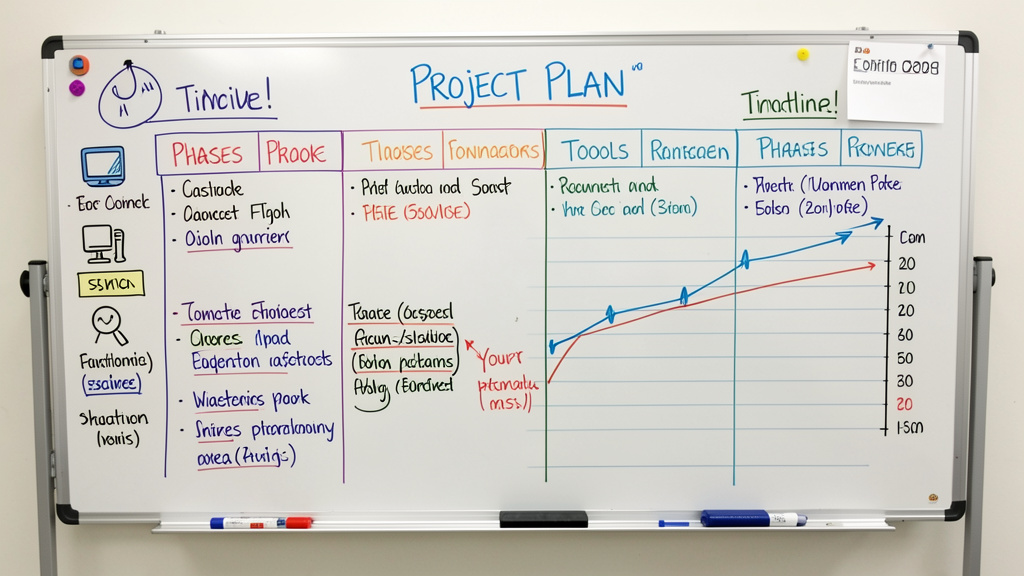
Stop Starting Over. Follow This Practical Framework to Transform Your Vague Ideas into Thoughtfully Executed Projects—With Clarity, Confidence, and Completion.
Tired of projects that stall after the initial spark fades? You clear a weekend, gather supplies with enthusiasm, and dive in—only to encounter an unexpected obstacle, lose momentum, or realize your vision doesn’t align with reality. This cycle of half-finished shelving units, postponed room refreshes, or abandoned garden plots ends today. This isn’t another generic checklist or static PDF. Inside, you’ll discover a phase-by-phase planning system distilled from widely recognized project management principles and thoughtfully adapted for home DIYers, garden transformations, renovation efforts, and personal initiatives. We break down how to define clear success criteria, anticipate potential hurdles before they arise, and build a flexible roadmap that evolves with your project—so you reach completion with greater ease, within your constraints, and with lasting satisfaction. No prior experience required. Just intention, adaptability, and forward motion.
Introduction: Why Projects Stall—and How Thoughtful Planning Creates Momentum
Every unfinished deck, half-painted wall, or dormant garden bed reflects a universal pattern: inspiration outpaced preparation. You felt the spark—a vision of ripe tomatoes in a sunlit plot, a cozy reading nook beneath the stairs, a backyard transformed into an evening sanctuary. You gathered tools, watched tutorials, perhaps purchased materials. Then reality intervened. A missing permit paused progress. Unexpected rain disrupted timing. A miscalculation left materials short. Frustration mounted. Motivation waned. The project quietly joined the archive of good intentions.
This pattern isn’t a reflection of capability. It’s a symptom of incomplete preparation. Research consistently shows that projects with deliberate planning phases tend to progress more smoothly than those launched on impulse alone. Inadequate scope definition and overlooked constraints frequently contribute to project challenges across many domains. While your backyard garden bed isn’t a corporate initiative, the underlying mechanics of execution share common ground. Clarity reduces confusion. Preparation builds resilience. A thoughtful process transforms overwhelm into manageable steps.
Drawing from established project management traditions—including frameworks reflected in PMBOK® Guide principles, iterative approaches, and lean thinking—this template distills professional structure into an accessible, adaptable system. We intentionally avoid corporate terminology, complex software dependencies, or abstract theory. Every step has been considered through real-world home and garden scenarios: navigating local requirements for a patio cover, creating a non-permanent organization system as a renter, coordinating a community park cleanup. This guide translates universal planning concepts into language grounded in lived experience. You’ll learn not just what to plan, but why each element matters, how to tailor it to your situation, and when to adapt without losing direction. This is planning designed for humans—not perfectionists. By the final section, you’ll possess a repeatable approach that builds confidence with every completed effort.
The Project Lifecycle Framework: Your Compass Through Completion
Projects are rarely linear sprints. They are dynamic journeys with distinct psychological and logistical phases. Skipping or rushing any phase often introduces compounding complications—delays, budget strain, or compromised satisfaction. Our four-phase framework—Ideation, Planning, Execution, and Closure—mirrors how experienced practitioners navigate complex initiatives, scaled thoughtfully for personal projects. This structure isn’t bureaucratic overhead; it’s a cognitive scaffold designed to reduce mental load, prevent oversights, and sustain motivation through inevitable challenges.
Think of this framework as guardrails on a winding road. They don’t slow your journey—they prevent costly detours. Each phase includes intentional checkpoints to catch misalignments early, conserve resources (time, energy, funds), and transform uncertainty into actionable clarity. You wouldn’t bake an intricate cake without reading the full recipe, gathering ingredients, and preheating the oven. Similarly, you wouldn’t begin a road trip without checking your vehicle, mapping your route, and packing essentials. Yet personal projects often launch without this foundational preparation. This framework gently corrects that imbalance.
The strength of this approach lies in honoring sequential integrity. Ideation without Planning remains a dream. Planning without Execution stays theoretical. Execution without Closure leaves loose ends. Closure without reflection misses valuable insight. By engaging fully with each phase, you cultivate momentum. Early phases require thoughtful effort but prevent exponentially greater effort later. Later phases leverage the clarity built earlier, making progress feel intentional and sustainable. This isn’t about adding steps—it’s about replacing reactive stress with proactive calm.
A Guiding Insight: Clarity established early significantly reduces complications later. Investing thoughtful time in preparation often prevents common setbacks, rework, and decision fatigue—whether your project spans two hours or two months.
Phase 1: Ideation – Clarifying Your Vision Into a Defined Goal
Before drafting tasks or purchasing materials, answer this foundational question with precision: What does “done” truly look like? Vague aspirations like “fix up the backyard,” “organize the garage,” or “make the living room cozier” lack measurable criteria, making progress difficult to track and completion subjective. This phase cultivates specificity—the most reliable antidote to project drift. It transforms emotional desire (“I want a nicer space”) into observable reality (“I will install two 4×8 ft cedar raised beds with drip irrigation, planted with tomatoes and basil, with first harvest targeted by early June”).
Step 1: Define the Project Goal Using the SMART-ER Method
Move beyond basic SMART goals (Specific, Measurable, Achievable, Relevant, Time-bound). Our enhanced SMART-ER approach adds two vital dimensions for real-world application: Evaluated and Reviewed. This transforms a static statement into a dynamic success metric.
- Specific: Eliminate ambiguity. Instead of “Build a deck,” state: “Construct a 10-foot by 12-foot ground-level cedar deck with pressure-treated framing, featuring integrated bench seating along the 12-foot side, positioned adjacent to the kitchen door.” Specificity implicitly answers who, what, where, when, and why.
- Measurable: Define observable completion criteria. “Deck surface area: 120 sq ft. Bench dimensions: 8 ft long x 18 inches deep. Completion confirmed by photo showing all structural elements installed.” Measurability removes subjectivity.
- Achievable: Conduct a realistic assessment. Do you have (or can reasonably access) the needed skills, time, budget, physical capacity, and permissions? If local regulations require permits for structures over a certain size, verify feasibility before finalizing scope. If your budget is $500 but materials cost $1,200, scope adjustment is needed. Achievability anchors vision in reality.
- Relevant: Connect to deeper purpose. Why this project, now? Examples: “Creates safe outdoor space for family gatherings this summer,” “Increases gardening capacity to support seasonal eating,” “Reduces daily stress caused by disorganization.” Relevance sustains motivation during challenging moments and aids prioritization.
- Time-Bound: Establish clear parameters. “Site preparation begins April 1. Framing completed by April 15. Final staining finished by May 10.” Include buffer explicitly (more in Phase 2). Avoid dates disconnected from dependencies (“Must finish by Memorial Day” ignores weather risks or material lead times).
- Evaluated: Define how success will be verified beyond completion. “Success criteria: 1) Deck surface level (verified with 4-ft level), 2) All visible fasteners are corrosion-resistant screws, 3) Total documented cost within budget range, 4) Household members confirm bench height is comfortable.” Evaluation creates objective victory conditions.
- Reviewed: Schedule a formal checkpoint before final completion. “On May 5, conduct progress review: Verify framing alignment, confirm stain sample match, reconcile expenses. Adjust timeline if weather caused delays.” Review builds adaptability.
Why this step matters: Without granular definition, every subsequent decision becomes debatable. Is pressure-treated pine acceptable instead of cedar? Your “Relevant” (aesthetic preference) and “Evaluated” (durability needs) criteria provide objective guidance. This step prevents scope drift—the gradual expansion of project boundaries—before it gains momentum. It creates a shared reference point for all involved (including your future self during moments of doubt).
Common pitfall to avoid: Setting deadlines based solely on desire rather than dependency analysis. “I want it done by my birthday” may ignore curing times for concrete, drying times for finishes, or seasonal constraints like regional frost dates for gardening. Anchor timelines to conditions where possible (“after last historical frost date,” “once permit is approved”) and build explicit buffer for variables beyond your control.
Illustrative example: Maria felt overwhelmed by her “start a vegetable garden” idea. Using SMART-ER, she refined it: “Install four 4×8 ft raised beds using untreated cedar boards in the east-facing backyard section by May 1. Beds filled with soil mix (60% topsoil, 30% compost, 10% coconut coir). Planted with determinate tomatoes (4 plants), bell peppers (4 plants), leaf lettuce (direct sow), and basil (2 plants). Success = first lettuce harvest by June 10, total documented cost under $350. Reviewed on April 20: Confirm soil mix proportions, verify seedling health.” This clarity enabled her to research construction techniques in February, calculate exact soil volume (192 cubic feet), order seeds in January, and schedule soil delivery for late April. The project shifted from vague aspiration to actionable plan.
Step 2: Conduct a Stakeholder Alignment Session
“Stakeholder” simply means anyone impacted by, influential to, or invested in the project’s outcome. For home projects, this includes household members, neighbors (if noise, visibility, or access is affected), landlords (for renters), or even your future self who will maintain the result. Unspoken expectations are a frequent source of mid-project friction. This step surfaces them early with respect.
How to approach it:
1. Identify stakeholders: List everyone affected. For a deck: You (project lead), partner, children (potential users), neighbor (adjacent property), local authority (permit considerations).
2. Note perspectives: For each, consider: What do they hope for? What concerns might they have? What influence do they hold? Example: Partner prefers low-maintenance materials; neighbor has newborn and is sensitive to early noise; child imagines space for a small slide.
3. Facilitate a brief alignment conversation: Schedule 10–15 minutes. Share your SMART-ER goal clearly. Ask open questions: “Does this match your understanding?” “What’s your primary concern?” “Is there anything critical I haven’t considered?” Listen without defensiveness.
4. Document key inputs: Capture agreements. “Partner approved budget range; requested composite railing for safety. Neighbor requested no power tool use before 9:00 AM on weekends. Child’s slide idea noted for future consideration.” This becomes part of your project reference.
Why this step matters: Discovering your partner envisioned string lights after purchasing deck boards creates rework and strain. Learning your neighbor has specific noise sensitivities allows proactive scheduling, preserving goodwill. Early alignment transforms potential friction into shared understanding. It prevents the “I thought you were handling that” dynamic.
Adaptable approach: No time for a formal meeting? Send a concise message: “Quick alignment: Planning a simple ground-level deck (sketch attached), targeting completion by May 10. Budget range ~$2,000. Key details: Cedar frame, composite railing, bench seating. Any concerns, must-haves, or constraints? Please reply by Friday.” For solo projects, conduct a “self-interview”: Write potential objections your future stressed self might raise (“Will this be hard to maintain?” “Does this fit the home’s style?”) and address them now.
Step 3: Draft the One-Page Project Charter
This document serves as your project’s anchor—a single reference capturing Phase 1 outputs. It answers fundamental questions about why this project exists and what success means. Print it. Keep it visible. When uncertainty arises mid-project (“Is this railing height necessary?”), the charter provides pre-agreed, objective guidance. It protects against impulsive decisions made during stressful moments.
Template for your One-Page Project Charter:
| Charter Element | Your Project Details |
|---|---|
| Project Title | [Clear name: e.g., “East Garden Vegetable Beds”] |
| SMART-ER Goal | [Paste your refined goal statement] |
| Key Stakeholders & Input | [Names/roles + agreements: e.g., “Partner: Approved budget range; prefers drip irrigation”] |
| Success Criteria (Evaluated) | [3–5 observable measures: e.g., “1. Four beds installed level. 2. Soil mix verified per recipe. 3. First harvest documented by June 10. 4. Total cost reconciled within range.”] |
| Top 3 Constraints | [Time: “Plant before regional frost risk”; Budget: “Approx. $350”; Scope: “No permanent structures requiring permits”] |
| Initial Identified Considerations | [3–5 potential items: e.g., “1. Late spring frost risk. 2. Soil delivery timing. 3. Physical effort during assembly.”] |
| Project Lead | [Your name—primary point for scope/budget decisions] |
| Planned Start Date | [When active work begins] |
| Target Completion Date | [Final “done” date, including buffer] |
Why this step matters: The charter creates psychological safety. It externalizes decisions made during calm planning—shielding you from reactive choices during execution. It serves as a communication tool for anyone assisting (“Refer to charter for scope details”). For recurring efforts (annual garden prep), it becomes a template to refine year-over-year.
Common oversight: Skipping the charter for “small” projects. A room refresh charter takes minutes but prevents disagreements about finish sheen (“I thought we agreed on eggshell”), furniture movement responsibilities, or acceptable disruption levels. The time invested scales inversely with project complexity—the smaller the project, the faster the charter, yet the proportional value remains high. Written alignment holds power, even with yourself.
Practical tip: Maintain a “Project Reference Folder” (physical or digital). File each completed charter with final photos and reflection notes. Over time, this becomes a personalized knowledge base, revealing patterns in your planning strengths and growth areas.
Phase 2: Planning – Building Your Actionable Blueprint
Ideation defines the destination; Planning maps a realistic route. This is where many resources fall short—they offer fragmented task lists without context, dependencies, or contingency. Our approach integrates scheduling, resource awareness, risk consideration, communication, and verification into one cohesive, living plan. Rushing this phase often leads to rework or frustration. Investing deliberate time here transforms execution from chaotic reaction to confident action. Remember: The plan is your strategic companion—not a rigid contract.
Step 1: Create the Work Breakdown Structure (WBS)
Move beyond overwhelming linear to-do lists. The Work Breakdown Structure (WBS) hierarchically decomposes the entire project scope into manageable, logically grouped components. It starts broad and drills down until tasks feel achievable—typically representing 2 to 8 hours of focused effort per lowest-level item. This isn’t busywork; it’s cognitive offloading. By externalizing every component, you free mental energy for execution. For the vegetable garden project:
- Level 1: Install Four Raised Garden Beds
- Level 2: Site Preparation
- Level 3: Clear vegetation from 16×8 ft area
- Level 3: Level ground with rake
- Level 3: Mark bed footprints with stakes and string
- Level 2: Bed Construction
- Level 3: Cut cedar boards to size (8 cuts per bed x 4 beds)
- Level 3: Assemble bed frames with corner brackets
- Level 3: Position and level all four beds
- Level 2: Soil & Planting
- Level 3: Calculate and order soil mix (192 cu ft)
- Level 3: Receive and distribute soil into beds
- Level 3: Plant seedlings/seeds per regional timing
- Level 2: Irrigation Setup
- Level 3: Layout drip tubing paths
- Level 3: Connect tubing to timer and spigot
- Level 3: Test system for coverage
Why this step matters: The WBS functions as a visual scope map that helps prevent drift by demanding granularity. “Build garden beds” is vague; “Cut eight 8-foot cedar boards to 4-foot lengths using miter saw” is actionable. It reveals often-overlooked tasks: “Contact utility locator (811) before digging,” “Rent soil tamper,” “Order seeds weeks before planting date,” “Purchase work gloves.” This granularity supports accurate estimation and exposes dependencies early.
How to approach it:
– Start analog: Use sticky notes on a wall or large paper. Tasks shift and group naturally. Digital tools can feel restrictive initially.
– Decompose until comfortable: Stop when tasks feel manageable to you. If “Assemble bed frames” causes uncertainty, break it further. Avoid over-decomposing simple actions (“Open soil bag”).
– Verify completeness: Perform a “mental walk-through.” Stand at the future site. Imagine starting with nothing. What is the absolute first physical action? What follows? Continue until complete. Ask: “What tools/materials are needed for this specific task?” Missing items signal missing tasks.
– Include non-construction tasks: Procurement (“Order soil delivery”), administration (“Submit permit inquiry”), cleanup (“Dispose of packaging”), verification (“Check bed level with spirit level”).
Common pitfall: Over-detailing early, exciting tasks (“Research cedar suppliers” becomes 10 subtasks) while under-detailing later, tedious ones (“Fill beds with soil” remains vague). Balance detail across all phases. Also, remember “soft” tasks: “Watch tutorial on drip irrigation,” “Take progress photo.”
Tool suggestion: Free and accessible options work well. Physical: Sticky notes, whiteboard, sketchpad. Digital: Google Docs (hierarchical bullets), Draw.io (free diagram tool), or Word outline view. Avoid complex software initially—simplicity encourages use. The output matters more than the tool.
Step 2: Sequence Tasks and Identify Dependencies
Not all tasks can happen simultaneously or in any order. Dependencies define logical workflow. Ignoring them causes idle time (“Ready to plant but soil hasn’t arrived”), rework (“Stained deck before installing railing—now restain around posts”), or safety concerns (“Framed deck before confirming footing cure time”). Mapping dependencies builds realism and efficiency into your timeline.
Types of dependencies to recognize:
– Finish-to-Start (Most Common): Task B cannot start until Task A is complete. Example: “Pour concrete footings” (Task A) must finish before “Set deck posts” (Task B). Critical for structural logic and workflow.
– External Dependencies: Tasks reliant on factors outside your direct control. Examples: “Receive soil delivery” depends on supplier schedule; “Pour footings” depends on dry weather; “Begin framing” depends on permit response. These require special attention.
How to approach it:
1. List all lowest-level WBS tasks from Step 1.
2. For each task, ask: “What absolutely must be complete before I can start this?” Be thorough. “Cut boards” requires “Boards delivered.” “Plant seedlings” requires “Soil in beds” AND “Regional frost risk passed.”
3. Map simply: Draw arrows between sticky notes. Or create a table:
| Task | Must Wait For (Dependency) | Dependency Type |
|---|---|---|
| Mark bed footprints | Site cleared and leveled | Finish-to-Start |
| Order soil mix | Bed dimensions finalized | Finish-to-Start |
| Receive soil delivery | Order placed + supplier lead time | External |
| Distribute soil into beds | Soil delivered + beds assembled | Finish-to-Start |
| Plant seedlings | Soil in beds + verified frost date passed | Finish-to-Start + External |
| Test drip irrigation | Tubing installed + connected to water | Finish-to-Start |
Why this step matters: Dependency mapping transforms your WBS from a static list into a dynamic workflow. It reveals the Critical Path—the longest sequence of dependent tasks determining the project’s minimum duration. Delays here affect the entire timeline. For garden beds: Site Prep → Bed Construction → Soil Delivery/Distribution → Planting. If soil delivery is delayed, planting shifts. Non-critical tasks (like painting bed exteriors) may have “float” (flexible timing). Identifying the critical path focuses your attention where it matters most.
Real-world insight: A DIYer began tiling a bathroom backsplash before confirming new vanity dimensions. The vanity arrived overlapping the tile edge—requiring demolition, new tiles, and rework. A brief dependency check (“Order vanity before finalizing tile layout”) would have prevented hours of frustration and material waste. Dependencies reflect physical or logical constraints—not suggestions.
Adaptable approach: For small projects (<10 tasks), simply number tasks in strict chronological order on your WBS. Add notes: “Task 5: Install railing (MUST wait 48h after Task 4: Deck surface installed for adhesive cure).” Minimal effort captures significant value.
Step 3: Estimate Durations and Resources Realistically
Optimism bias commonly affects estimation—we envision ideal conditions: perfect weather, no interruptions, instant skill mastery. Evidence-based estimating counters this bias. It replaces hopeful guessing with researched, documented assumptions.
How to approach it—The Three-Point Estimate Technique:
For each task, define three time estimates:
– Optimistic (O): Best-case scenario. Everything proceeds smoothly. (e.g., “Dig six post holes: 2 hours”)
– Pessimistic (P): Realistic obstacles occur. Rocky soil, brief rain, needing to re-dig one hole. (e.g., “Dig six post holes: 8 hours”)
– Most Likely (M): Realistic scenario with minor hiccups. (e.g., “Dig six post holes: 4 hours”)
Calculate weighted average: Estimated Time = (O + 4M + P) / 6
Example: (2 + 44 + 8) / 6 = 26 / 6 = 4.3 hours → Round up to 5 hours*.
This formula weights the “Most Likely” scenario while acknowledging uncertainty. Always round up to the nearest practical increment. Document assumptions visibly: “Estimate assumes soft soil; add time if rocky,” “Estimate includes time to review tutorial.”
Resource Estimation Framework:
For each task, note:
– Materials: Quantities, specifications, sources. “12 cedar 2x12x8 ft boards,” “4 bags exterior wood screws (2.5 inch).”
– Tools: Owned vs. needed to borrow/rent. “Circular saw (owned),” “Post-hole digger (rental option).”
– Skills/Knowledge: “Review ‘How to Square a Layout’ video,” “Practice knot tying for trellis.”
– Support: “Self + 1 helper for lifting heavy bags,” “Contact utility locator 3 days prior to digging.”
Template for Task Estimation Log:
| WBS Task | Optimistic (O) | Most Likely (M) | Pessimistic (P) | Calculated Estimate | Materials Needed | Tools Required | Key Assumptions |
|---|---|---|---|---|---|---|---|
| Cut cedar boards | 1 hr | 2 hrs | 4 hrs | 2.2 hrs → 3 hrs | 12 boards | Miter saw, tape measure, safety glasses | Boards pre-delivered; saw blade sharp |
| Assemble one bed frame | 30 min | 45 min | 90 min | 50 min → 1 hr | 4 boards, 8 brackets, screws | Drill, screwdriver bit | Brackets pre-sorted; helper available |
| Distribute soil (all beds) | 1 hr | 2 hrs | 3 hrs | 2 hrs → 2.5 hrs | 192 cu ft soil mix | Wheelbarrow, shovel, gloves | Soil delivered curbside; dry conditions |
| Plant seedlings | 45 min | 1.5 hrs | 2.5 hrs | 1.4 hrs → 1.75 hrs | Seedlings, trowel, markers | Watering can | Seedlings acclimated; soil moist |
Why this step matters: Realistic estimates prevent burnout, budget strain, and disappointment. They set accurate expectations. Documenting assumptions creates context—if an assumption proves false (e.g., soil delivered wet), you can adjust logically rather than feeling discouraged. This process builds self-trust.
Common pitfall: Estimating only “active hands-on” time and ignoring critical passive durations. “Pour concrete footings” includes mandatory cure time (24–48 hours) before next steps. “Paint walls” includes drying time between coats. Always note passive durations separately: “Task: Pour footings. Active Time: 1 hour. Cure Time (Critical Path): 48 hours.”
Adaptable approach: Focus estimation effort on Critical Path tasks and higher-uncertainty items. For non-critical tasks, use rough ranges (“1–2 hours”). For time-constrained planners: Multiply initial gut estimate by 1.5x for unfamiliar tasks, 1.25x for familiar ones. This simple buffer accounts for common optimism bias.
Step 4: Build the Master Timeline (Simplified Visual Schedule)
A timeline transforms sequenced, estimated tasks into a visual schedule. It answers “When will what happen?” and reveals potential bottlenecks, resource conflicts, and milestone opportunities. You do not need complex software. Clarity and accessibility are the goals.
How to approach it:
1. List tasks in dependency order (from Step 2).
2. Assign dates based on duration estimates (Step 3), your availability (e.g., “Weekend work only”), and external constraints (e.g., “Soil delivery available Tues/Thurs”).
3. Highlight the Critical Path visually (bold text, colored marker). These tasks have minimal flexibility—delays here affect completion.
4. Insert explicit buffer time: Add 15–20% of total active work time as contingency. Place buffer strategically: after weather-dependent tasks, before milestone reviews, after vendor-dependent steps. Label it clearly: “Buffer: Weather Contingency,” “Buffer: Permit Response Wait.” This prevents buffer from being silently consumed by scope adjustments.
5. Define milestones: Key completion points worthy of recognition. “Milestone 1: Site Prepared (April 10),” “Milestone 2: Beds Constructed (April 20),” “Milestone 3: Planted & Irrigated (May 1).” Milestones break the project into psychologically manageable segments and provide natural celebration points.
6. Include stakeholder touchpoints: “Share progress photo with partner on April 15,” “Confirm soil delivery date with supplier on April 5.”
Simple Timeline Table Example (Garden Beds Project):
| Date Range | Tasks (Critical Path in bold) | Milestone / Buffer | Lead |
|---|---|---|---|
| Apr 1 – Apr 5 | Research suppliers, finalize design, submit soil order | Buffer: Order processing | You |
| Apr 6 – Apr 9 | Clear site, level ground, mark footprints | You | |
| Apr 10 | Receive soil delivery (External Dep) | Milestone: Site Ready | You |
| Apr 11 – Apr 14 | Cut boards, assemble all four beds | You + Helper | |
| Apr 15 | Distribute soil into beds | Milestone: Beds Ready | You |
| Apr 16 – Apr 17 | Layout drip irrigation tubing | Buffer: Weather | You |
| Apr 18 | Connect system, test for leaks | You | |
| Apr 19 | Plant seedlings (After frost date) | Milestone: Planted! | You |
| Apr 20 | Final cleanup, document success | Project Complete | You |
Why this step matters: Visualizing the timeline exposes hidden conflicts. You might see two tasks scheduled simultaneously requiring your full attention. It ensures logical flow: soil delivery before distribution, planting after soil is placed. It communicates progress transparently. Most importantly, explicit buffer time reduces anxiety—you expect minor delays, so they don’t trigger panic or rushed decisions.
Tool suggestion: Analog: Wall calendar with colored markers (red for critical path, green for milestones). Digital: Google Sheets/Excel (simple tables), Google Calendar (dedicated “Project” calendar), or Trello (lists for “This Week,” “Next Week”). Choose the tool you’ll consistently use. A slightly updated analog timeline beats a perfect digital chart abandoned after day one.
Common pitfall: Packing the timeline too tightly with zero buffer, creating a “fragile plan” that fractures at the first hiccup. Or hiding buffer within task estimates (“I’ll say digging holes takes 6 hours instead of 4”), which erodes trust in your own estimates. Explicit, labeled buffer is professional and psychologically freeing. Also avoid scheduling focused tasks during known interruption periods (school pickup, dinner prep).
Step 5: Develop the Consideration Plan (Proactive Awareness)
Challenges are not pessimistic “what-ifs.” They are foreseeable elements of any endeavor. Every project encounters obstacles. The difference between frustration and resilience lies in preparation. Proactive consideration planning is a hallmark of thoughtful execution. This isn’t fear-based thinking; it’s empowerment. By anticipating potential hurdles, you transform possible disruptions into manageable events.
How to approach it—The 4-Step Protocol:
1. Identify: Brainstorm potential considerations. Categorize for completeness:
– Technical: “Soil too compacted to dig post holes,” “Deck frame alignment,” “Drip tubing kinks.”
– Resource: “Lumber delivery delayed,” “Helper unavailable,” “Rental tool issue.”
– External: “Unexpected rain,” “Permit inquiry delay,” “Supplier stock issue.”
– Personal: “Fatigue during repetitive tasks,” “Learning curve on new technique.”
– Quality: “Finish appearance,” “Plant health post-planting.”
Ask: “What could make achieving each success criterion more challenging?” Review your WBS—what tasks feel uncertain?
- Assess: Rate each consideration on two dimensions (scale 1–5):
- Probability: How likely? (1 = Unlikely, 5 = Very Likely)
-
Impact: If it occurs, effect on timeline, resources, or satisfaction? (1 = Minor, 5 = Significant)
Focus planning effort on Higher Probability + Higher Impact items. Don’t ignore low-probability/high-impact items (e.g., safety concerns), but allocate proportionate attention. -
Create Response Strategies: For prioritized items, define a specific action before it happens:
- Avoid: Change the plan to eliminate the consideration. Example: Consideration = “Digging near underground line.” Avoidance = “Contact utility locator (811) 3 business days before digging. Mark lines. Adjust layout to avoid marked areas.”
- Mitigate: Reduce probability or impact. Example: Consideration = “Fatigue during soil distribution.” Mitigation = “Use wheelbarrow in smaller batches,” “Schedule helper,” “Take short breaks.”
- Transfer: Shift responsibility where appropriate. Example: Consideration = “Electrical component for deck lights.” Transfer = “Consult licensed electrician for that portion.” (Know your limits!)
-
Accept: Acknowledge and monitor. Example: Consideration = “Minor surface scratches on cedar.” Acceptance = “Keep fine-grit sandpaper on-site for touch-ups. Note as ‘acceptable character’ per success criteria.”
-
Assign Awareness & Triggers: Who monitors this? What is the early sign (“trigger”) it’s emerging? Example: Consideration = “Soil delivery delayed.” Owner = You. Trigger = “No confirmation email 24 hours before delivery.” Response = “Contact supplier; identify backup option.”
Consideration Log Example (Integrated into Project Plan):
| Consideration Description | Prob | Impact | Strategy | Specific Action Plan | Owner | Trigger |
|---|---|---|---|---|---|---|
| Late spring frost risk | 3 | 4 | Mitigate | 1. Monitor 10-day forecast starting Apr 20. 2. Keep frost cloth accessible. 3. If frost predicted, cover beds evening prior. |
You | Weather app shows temp <36°F |
| Soil delivery delay beyond Apr 12 | 2 | 5 | Mitigate + Accept | 1. Confirm order & date with supplier Apr 5. 2. Identify backup supplier. 3. If delayed >2 days, use backup. |
You | No delivery confirmation by Apr 10 |
| Fatigue during soil handling | 4 | 3 | Mitigate | 1. Use wheelbarrow; partial loads. 2. Lift with legs. 3. Take 5-min break every 30 mins. 4. Ask helper to assist. |
You | Feeling fatigue in lower back |
| Incorrect drip tubing connectors | 3 | 3 | Avoid | 1. Take photo of spigot to store. 2. Buy connectors and adapters. 3. Test fit before full install. |
You | Opening irrigation kit |
Why this step matters: When a consideration arises (and it likely will), you won’t freeze. You’ll calmly execute the pre-planned response, minimizing disruption. This builds confidence. It shifts mindset from “Why is this happening?” to “I anticipated this; here’s my response.” Consideration planning isn’t about predicting the future—it’s about building resilience for whatever unfolds.
Illustrative example: During a kitchen backsplash project, a planner identified “adhesive setting quickly in warm room” as a consideration. Mitigation plan: “Work in small sections (2 sq ft max); keep damp cloth nearby; start from top down.” When adhesive began skinning faster than expected on a warm afternoon, they executed the plan: switched to smaller sections, used the cloth efficiently, and completed the section without flaws. Pre-planned response turned potential frustration into smooth adjustment.
Adaptable approach: For small projects, focus solely on the Top 3 considerations. Write them on a sticky note attached to your charter: “1. Rain → Cover work area. 2. Wrong finish color → Test sample first. 3. Tool issue → Know hardware store hours.” Minimal effort captures core benefit: proactive thinking.
Step 6: Finalize Communication and Documentation Plan
How will progress be tracked? How will updates be shared? Where will receipts, manuals, and photos be stored? Deciding this before work begins prevents friction and creates a valuable reference. This plan ensures nothing is overlooked and transforms the project into a learning opportunity.
Elements to define:
– Progress Tracking Method: What constitutes “done” for a task? Options: Physical checklist on clipboard, digital app (Google Keep), weekly photo journal, simple journal entry (“Apr 10: Completed bed assembly for Beds 1 & 2”).
– Stakeholder Communication Protocol: How and when will updates be shared? “Text partner a progress photo Sunday evening,” “Notify neighbor 24 hours before noisy work,” “Share completion photo in family group.” Set expectations upfront to avoid uncertainty.
– Document Repository: Designate one location for all project artifacts. Physical: “Project folder” with charter, receipts, permits, manual copies. Digital: Dedicated folder in Google Drive/Dropbox named “2024_GardenBeds_Reference” containing scanned receipts, photos, supplier contacts, manual PDFs. Critical: File items as you go, not at the end.
– Decision Log: A simple running record of key choices. Template: “Date | Decision | Reason | Impact.” Example: “Apr 12 | Used backup soil supplier | Primary supplier delayed | +$15 cost, no timeline impact.” Prevents “Why did we do it this way?” later and informs future projects.
– Photo Protocol: Commit to specific photos: “Before” site shot, “During” key phases (framing, soil distribution), “After” completion, close-ups of details (irrigation connection). Invaluable for troubleshooting, sharing results, and memory.
Why this step matters: Prevents communication gaps (“I thought you were ordering the soil!”). Creates a single source of truth for budget reconciliation (“Where’s that receipt?”). The decision log and photo archive become your personalized “lessons learned” resource. For projects requiring future maintenance (decks, irrigation), this documentation is essential years later. It also provides concrete evidence of accomplishment—powerful for motivation.
Common pitfall: Assuming you’ll “remember everything.” Human memory is fallible, especially under project stress. Or scattering documentation across phone photos, emails, and receipts—making retrieval difficult later. Centralization is essential.
Practical tip: At project start, take a “Day 1” photo holding your printed charter. It symbolizes commitment and creates a meaningful before-and-after narrative. For shared projects, this photo becomes a cherished memory of collaboration.
Phase 3: Execution – Navigating the Journey With Intention
Planning is inert without thoughtful execution. This phase is where preparation meets reality. Execution isn’t about rigidly adhering to the plan—it’s about using the plan as a compass while navigating terrain. It’s where momentum builds, adaptability is practiced, and quality is cultivated. The goal is consistent, sustainable progress—not heroic, burnout-inducing sprints. This phase leverages the clarity built earlier to reduce decision fatigue and maintain focus. Remember: The plan is a guide, not a prison. Flexibility within framework is key.
Step 1: Launch with a Kickoff Moment
Don’t just start working. Create a deliberate transition from planning to action. This ritual signals commitment. For solo projects: Stand at the project site. Review your one-page charter. Visualize the completed project and how it will feel. State your first task clearly: “Today, I will clear and level the 16×8 ft area.” For shared projects: Gather briefly (5 minutes). Review the goal, today’s focus, safety reminders, appreciation for participation. This mental reset aligns focus, energizes action, and honors the preparation work. Skipping this step often leads to aimless tinkering.
Step 2: Implement Daily and Weekly Rhythms
Consistency compounds. Establish simple, sustainable rhythms to maintain momentum without overwhelm.
- Daily Execution Protocol:
- Each Morning (2 mins): Identify the ONE critical task for today aligned with the critical path. (“Today: Assemble all four bed frames.”) Gather all materials and tools needed before starting. Eliminates mid-task interruptions.
- During Work: Focus on the task. Use a timer for 25–50 minute focused intervals if prone to distraction. Take short breaks. Prioritize well-being: Wear appropriate gear (gloves, eye protection), stay hydrated, use proper body mechanics.
-
End of Session (3 mins): Update progress tracker (“Bed Frames: 3/4 complete”). Note any observations in your log. Write down the very next physical action for tomorrow (“Tomorrow: Attach corner brackets to Bed 4”). This “next action” technique eliminates morning decision fatigue.
-
Weekly Review Protocol (15 mins, Sunday evening):
- Celebrate: Acknowledge one specific win (“Beds are assembled and level!”).
- Review: Compare actual progress to timeline. What was accomplished? What wasn’t? Why? (Analyze kindly—without judgment.)
- Assess: Check budget log against receipts. Any considerations emerging? Review upcoming week’s tasks and dependencies.
- Adapt: Adjust next week’s plan if needed. Move milestones realistically. Add buffer if delays occurred. Update consideration log with new insights.
- Prepare: Confirm any external dependencies (e.g., “Call soil supplier Monday to confirm delivery window”).
Why this rhythm works: Daily focus prevents overwhelm by narrowing attention to the immediate next step. Weekly reviews catch deviations early before they become significant. Celebrating wins reinforces positive behavior and sustains motivation through tedious phases. This structure creates psychological safety—you always know what to do next and have a built-in mechanism to course-correct.
Step 3: Navigate Changes Thoughtfully (The Scope Consideration Protocol)
Scope evolution is common. A neighbor suggests adding trellises. You see a different bracket design. Your partner asks, “Could we adjust the bench depth?” Handle changes systematically to avoid impulsive decisions that cascade.
The 4-Step Protocol:
1. Pause: Do not act immediately. Say, “That’s an interesting idea. Let me assess the impact before we decide.” Creates space for rational evaluation.
2. Assess Impact: Refer to your charter and plan. Ask:
– Scope: How does this change the original goal and success criteria?
– Timeline: What tasks are added/modified? Effect on critical path and completion?
– Resources: Additional material, tool, or support needs?
– Alignment: Does this still serve the original “Relevant” purpose?
3. Decide Consciously: Based on assessment:
– Approve: If impact is acceptable and aligns with core goal. Document the change.
– Decline: If impact is too high or misaligned. Explain kindly using charter criteria: “Adding trellises would shift us past the planting window and exceed our resource range. Let’s note it for future consideration.”
– Defer: “This is a great idea for next season’s expansion. Let’s add it to the ‘Future Ideas’ list.”
4. Update and Communicate: If approved, formally update your WBS, timeline, budget log, and charter. Communicate changes: “We’ve approved adding trellises. New completion date is May 15. Resource range increases by approximately $40. Here’s the updated plan.”
Example in Action: During deck railing installation, you discover hidden fasteners create a cleaner look but cost more and add time. Assessment: Resource buffer remains available; timeline has buffer; success criteria include “clean aesthetic.” Decision: Approve. Update documentation. Notify partner. This conscious process prevents impulsive choices or scope expansion that jeopardizes core goals.
Why this process matters: It transforms change from a threat into a managed variable. It empowers you to say “no” confidently (protecting the project) or “yes” with full awareness (enhancing value). It maintains stakeholder trust through transparency. Most importantly, it preserves your original vision from gradual erosion.
Step 4: Prioritize Well-Being and Quality Checkpoints
Execution quality and personal safety are non-negotiable. Cutting corners to save time often creates future issues, hazards, or dissatisfaction. Integrate well-being and quality seamlessly into your workflow.
- Well-Being First:
- Pre-Work: Review task-specific considerations (from log). Ensure gear is accessible (gloves, eye protection). Verify tool condition. Clear work area.
- During Work: Follow tool guidance. Use clamps instead of hands. Lift with legs. Take breaks to avoid fatigue-induced errors. For tasks beyond your skill or comfort (electrical, major structural, gas lines), pause and consult a qualified professional. This isn’t failure—it’s wisdom. Your safety and home’s integrity are worth the investment.
-
Emergency Prep: Know location of first-aid supplies, fire extinguisher, and emergency shutoffs. Have phone accessible.
-
Quality Gate Checkpoints:
After completing each major WBS component (Level 2), pause and verify against success criteria before proceeding. Cheaper and easier than fixing errors later. - After Bed Assembly: “Are all four beds level? (Check with 4-ft level). Are corners square? (Measure diagonals—should be equal). Are brackets secure?” Address now.
- After Soil Distribution: “Is soil evenly distributed to correct depth? (Use marked stick). Is landscape fabric properly placed?” Adjust before planting.
- After Irrigation Setup: “Run system for 5 minutes. Check all connections for leaks. Verify water reaches all areas evenly.” Repair immediately.
Why checkpoints matter: Fixing a misaligned post before attaching deck boards takes minutes. Fixing it after requires significant rework. Quality gates build pride in craftsmanship and ensure the final result meets your documented standards. They transform “good enough” into “I’m proud of this.”
Step 5: Adapt Gracefully to Setbacks (The Pivot Mindset)
Obstacles will occur. Weather delays. Tool issues. Unexpected site conditions. How you respond determines project resilience. Adopt a “pivot mindset”—view setbacks as information, not failure.
When a setback occurs:
1. Pause and Breathe: Acknowledge frustration without judgment. Take three deep breaths. Panic clouds judgment.
2. Refer to Your Consideration Log: Did you anticipate this? Execute the pre-planned response. This builds confidence—you prepared for this moment.
3. Re-sequence Work: Can you work on a non-dependent task while waiting? Rain delay? Cut lumber under cover, organize tools, review the irrigation tutorial. Supplier delay? Prep planting trays indoors. Maintain momentum where possible.
4. Communicate Proactively: Inform stakeholders promptly: “Soil delivery delayed until Thursday. No impact on planting date—we have buffer. Will update Friday.” Transparency builds trust; silence breeds uncertainty.
5. Adjust the Plan Realistically: Update your timeline. Move milestones. Reallocate buffer. Avoid cramming missed work into remaining days—this causes errors and strain. A thoughtfully adjusted project that meets core criteria is a success. A rushed project that compromises quality is not.
6. Reframe the Narrative: Instead of “This is ruined,” ask: “What can I learn? How does this make the final result stronger?” A delayed planting date might mean healthier seedlings. A tool issue might lead to discovering a better technique.
Illustrative resilience example: A planner’s deck project encountered hard soil making post holes difficult with rented equipment. Instead of forcing it (risking injury/tool damage), they paused. Consulted their consideration log (“Soil condition” was noted). Mitigation plan included “Consult local hardware store expert.” They visited, described the issue, and learned about alternative foundation options suitable for hard soil. They adjusted the WBS (“Install alternative foundation system” replaced “Dig post holes”), updated the timeline (+2 days), and communicated the change. The project resumed with a stronger foundation. The setback became a documented learning point.
Remember: Flexibility is strength. The goal is a successfully completed project meeting your core success criteria—not rigid adherence to an initial timeline. Your ability to adapt calmly is a skill that compounds with every project.
Phase 4: Closure – Securing Completion and Cultivating Insight
Most projects end with relief, quick cleanup, and immediate shift to the next task. This misses a critical opportunity. Closure formalizes completion, captures valuable insight, and provides psychological satisfaction. Skipping closure leaves projects feeling “unfinished,” erodes confidence, and guarantees repeated oversights. This phase transforms a single project into a stepping stone for growing capability. It’s where experience becomes wisdom.
Step 1: Conduct the Final Verification
Do not declare completion based solely on initial impression (“It looks done!”). Objectively verify against your charter’s success criteria. Create a simple checklist derived directly from your charter:
- [ ] Scope Verification: Every task in the final WBS is complete. Walk the site. Check off each item. No “almosts” or “I’ll finish that later.”
- [ ] Quality Verification: Does the result meet all documented success criteria? Use tools: Level for flatness, tape measure for dimensions, functionality tests (does irrigation cover all beds?). Be objective.
- [ ] Resource Reconciliation: Gather receipts. Total actual expenses. Compare to planned range. Document variance and reason (“+$35: Chose higher-grade soil amendment”). File all receipts in your project folder.
- [ ] Stakeholder Confirmation: Get explicit feedback from key stakeholders. “Does this meet your expectations?” Capture agreement verbally or via message. Prevents future misunderstandings.
- [ ] Documentation Complete: All photos taken (before, during, after). Decision log finalized. Manuals/warranties filed. Project folder organized.
Why this step matters: Verification provides clear evidence of accomplishment. It closes psychological loops, reducing lingering uncertainty. Resource reconciliation builds awareness for future projects. Stakeholder confirmation ensures shared satisfaction. This step transforms subjective “I think it’s done” into objective “It is complete per our agreement.” It is the hallmark of thoughtful completion.
Step 2: Execute the Project Reflection (The “Insights Captured” Session)
This 15–20 minute reflection is used by skilled practitioners across fields to turn experience into actionable wisdom. Conduct it within 48 hours of completion while details are fresh. Approach with curiosity, not judgment. Focus on process, not people.
Guiding Questions for Your Reflection:
– What Went Well? (Celebrate! Be specific.)
“Ordered soil early—delivery arrived exactly on schedule.”
“Weekly photo journal kept me motivated during slower phases.”
“Contacting utility locator prevented hitting a sprinkler line.”
-
What Could Be Refined? (Be honest and specific. Avoid self-criticism.)
“Underestimated time to cut cedar boards—blade was dull; added 90 minutes.”
“Didn’t account for soil settling time; had to wait an extra day before planting.”
“Forgot to buy plant markers; improvised with popsicle sticks.” -
What Will I Apply Next Time? (Actionable commitments.)
“Sharpen or replace saw blade before cutting tasks.”
“Add ‘settling/drying time’ as explicit line item in timeline for soil steps.”
“Include ‘buy plant markers’ as first task in Soil & Planting phase.”
How to Conduct It:
– Solo Project: Journal the answers concisely. File it in your project folder titled “Reflection_2024_GardenBeds.”
– Shared Project: Gather stakeholders for a positive-focused 15-minute chat. Start with “What’s one thing you’re proud of?” Use a whiteboard to capture points. Focus on “we” language (“How can we refine the process?”) not blame. End with appreciation.
Why this step matters: Without reflection, experience is just time passed. With reflection, every project makes you a more capable planner and executor. Patterns emerge: “I consistently underestimate cutting time,” “I forget small hardware items.” You build a personalized improvement plan. This is how capability continuously deepens. It transforms “I completed that project” into “I learned from that project and am better equipped for the next.”
Step 3: Archive Documentation and Acknowledge Completion
- Archive Thoughtfully: File the complete project package: Charter, WBS, Timeline, Consideration Log, Resource Reconciliation, Reflection Notes, Photos, Receipts, Manuals. Use consistent naming: “YYYY_ProjectName_CompleteReference.” Store physically (labeled binder) or digitally (cloud folder). This archive is invaluable for future reference (warranty claims, maintenance, repeating the project) and pattern recognition across projects.
- Acknowledge Intentionally: Do not skip this. Completion deserves recognition. Take a “finished” photo. Share it with supportive stakeholders. Do something enjoyable tied to the project: “Enjoy first coffee on the new deck,” “Harvest and eat the first lettuce,” “Host a small gathering in the organized space.” Acknowledge your effort: “I planned thoughtfully, adapted when needed, and completed this project. I am capable.”
- Share Your Insight (Optional but Powerful): Post a before/after photo in a relevant community (Nextdoor, gardening forum) with one key tip you learned. Helping others reinforces your own learning and builds community.
Why acknowledgment matters: It provides psychological closure, releasing mental energy tied to the project. It reinforces positive behavior—your brain links project completion with reward, increasing motivation for future endeavors. It builds self-efficacy: tangible evidence that you can set a goal and achieve it. This compounds into confidence that extends far beyond DIY projects. Acknowledgment is not frivolous; it is essential maintenance for your motivation.
Navigating Common Frictions: When Reality Meets the Plan
Even thoughtful plans encounter resistance. These friction points are universal—they do not indicate personal shortcoming. Addressing them directly with practical strategies transforms frustration into forward motion. This section provides empathetic, actionable responses to frequent challenges reported by project planners.
“I Don’t Have Time for All This Planning!”
Perspective: Planning creates time. A brief planning session prevents hours of rework, confusion, or stalled progress. The perceived “time cost” of planning is often an illusion; the actual time cost lies in unproductive struggle. Start minimally: For any project, spend exactly 7 minutes on the Core Three:
1. Goal: “Refresh bathroom accent wall with specific paint color.”
2. Success Criteria: “Smooth finish, protected trim/floor, completed Saturday.”
3. Top Consideration & Response: “Risk: Paint drips on floor. Response: Use drop cloths + painter’s tape on baseboards.”
This minimal investment creates immediate clarity and prevents common pitfalls. For larger projects, break planning into 15-minute daily chunks over a week. Monday: Draft charter. Tuesday: Build WBS. Wednesday: Sequence tasks. The cumulative time is less than one afternoon of directionless work. Remember: You will spend time on the project. Planning ensures that time is spent purposefully.
“My Project Is Too Small for a Formal Process.”
Reframe: Scale the depth, not the framework. The mental model remains valuable regardless of size. Painting a single door:
– Goal: “Refresh front door with semi-gloss white, completed Saturday afternoon.”
– WBS: Remove hardware → Light sand → Wipe clean → Apply primer → Paint (2 coats) → Rehang hardware.
– Consideration: “Humid weather delays drying → Check forecast; choose dry day; use fan for airflow.”
This structured thinking prevents missed steps (forgetting to remove the handle) and sets realistic expectations (“Two coats mean I need 4+ hours between coats”). The framework adapts like a zoom lens—wide for complex projects, tight for simple ones. The core discipline—define success, anticipate considerations, verify completion—is universally applicable. A 5-minute mental run-through using this lens elevates even the smallest task from haphazard to intentional.
“I Get Overwhelmed by the Details in the Plan.”
Solution: Implement the “Next Action Only” protocol. After planning, cover the entire plan except the very next physical step. Your only job is to complete that one action. At the end of each work session, write down the next single action required (e.g., “Call hardware store to confirm cedar plank availability,” “Measure exact width of door frame”). This reduces cognitive load to zero. Trust the plan you built during calm preparation—it exists to serve you in moments of doubt. Additionally, use timeboxing: “I will work on this project for exactly 25 minutes today.” Short, focused bursts prevent overwhelm and build momentum. Completion of one small action creates motivation for the next. Progress, not perfection, is the goal.
“Unexpected Issues Always Arise—Why Bother Planning?”
Insight: Planning isn’t about predicting the future with 100% accuracy; it’s about building resilience and reducing the impact of surprises. A plan with documented considerations, buffer time, and response strategies expects the unexpected. When a rainstorm delays deck work, you don’t panic—you execute your pre-planned response (“Work on cutting lumber under the garage overhang today; reschedule footings for Thursday”). The plan is a living document. Update it as you learn. This mindset shift—from “My plan failed” to “My plan helped me adapt”—reduces stress significantly. Planning provides the stability to navigate uncertainty calmly. It transforms you from reactive to responsive.
“I Lose Motivation Halfway Through.”
Strategy: Engineer motivation into the process. First, break the project into “micro-wins” with visible completion points. Instead of “Finish deck,” aim for “Complete railing installation today.” Celebrate each micro-win immediately (a favorite snack, a checkmark with flourish, a text to a supportive friend). Second, reconnect to your “Why” from the charter. Post it visibly: “This deck creates safe play space for my granddaughter’s visits.” Third, use progress tracking that provides visual feedback—a checklist where you physically check boxes, a progress bar drawn on paper. Fourth, schedule work during your peak energy times (morning person? Work then.). Finally, if motivation dips severely, switch to a different non-dependent task (if possible) to maintain momentum. Momentum begets motivation. Starting is often harder than continuing.
“I’m Afraid of Failing or Making Mistakes.”
Reframe: Mistakes are not failures—they are data points and learning opportunities. Every skilled maker has stories of errors that taught them more than perfect successes. Build “learning buffers” into your plan: “First board is a practice cut.” “Test paint color on scrap wood.” “Install one section of irrigation before committing to full layout.” Give yourself explicit permission to learn. Document observations in your reflection not as flaws, but as “Insights for Next Time.” Shift your self-talk: Instead of “I messed up,” try “I discovered what doesn’t work, which brings me closer to what does.” This growth mindset reduces the paralyzing fear of imperfection. Remember: Completed projects with character build more confidence than perfect plans left unrealized. Action, with compassion for the learning process, is the antidote to fear.
Your Questions, Answered
Q: How do I adjust this template for a very small project, like repainting a single room?
A: Scale the depth, not the foundational steps. For a room repaint: Goal = “Refresh master bedroom walls with specific paint color (eggshell), completed within one weekend.” Success criteria = “Zero paint on trim/ceilings, furniture protected and returned by Sunday 6 PM, smooth finish verified in daylight.” Top considerations = “1. Paint drips on floor → Response: Use canvas drop cloths + tape baseboards. 2. Color doesn’t match expectation → Response: Buy sample pot, paint 2×2 ft section, live with it 24 hours before committing.” WBS = “1. Move furniture to center + cover, 2. Patch/spackle holes, 3. Sand patches, 4. Tape trim/ceilings, 5. Prime patches, 6. Cut in edges, 7. Roll walls (coat 1), 8. Dry 4+ hours, 9. Roll walls (coat 2), 10. Dry overnight, 11. Remove tape, 12. Clean brushes, 13. Move furniture back.” Timeline = “Saturday AM: Prep + prime. Saturday PM: Coat 1. Sunday AM: Coat 2. Sunday PM: Cleanup.” This takes minutes to draft but prevents common pitfalls. The core framework—define goal, anticipate considerations, verify completion—remains essential regardless of size. Never skip the charter; it’s your anchor.
Q: What if my project involves multiple people (family members, friends, volunteers)?
A: Clarify roles early using simple language. For each major task or phase, define:
– Doing: Who handles the hands-on work? (e.g., “You and Friend A: Assemble bed frames”)
– Approving: Who confirms the task is complete to standard? (e.g., “You: Verify beds are level and square”)
– Consulting: Who provides input before decisions? (e.g., “Partner: Confirms bed placement looks good from kitchen window”)
– Informing: Who needs progress updates? (e.g., “Neighbor: Text when noisy work begins/ends”)
Document this simply in your communication plan. Hold brief daily check-ins (3–5 minutes max): “Today’s focus: Soil distribution. You handle wheelbarrow, I’ll level soil. Check in at noon.” Use shared tools: A photo of the timeline on the fridge, a shared digital checklist. Most importantly, express specific appreciation: “Thanks for holding the boards steady—that made assembly so much smoother.” Clear roles prevent duplicated effort or dropped tasks; appreciation sustains engagement.
Q: How much buffer time should I realistically add to my timeline?
A: A practical, evidence-informed guideline is 15–20% of your total estimated active work time (not calendar days). For a project estimated at 25 hours of hands-on work, add 4–5 hours of explicit buffer. Distribute buffer strategically:
– Place larger buffers after tasks with high uncertainty (weather-dependent work, tasks requiring external vendors like deliveries or permits).
– Place smaller buffers before milestone reviews to allow for minor adjustments.
– Label buffer clearly in your timeline: “Apr 12–13: Buffer for soil delivery/weather.” This prevents buffer from being silently consumed by scope adjustments. Crucially, buffer is for unplanned delays, not for adding unplanned tasks. If a delay occurs, use the buffer. If no delay occurs, you finish early—a welcome outcome! Remember: Buffer is professional planning, not pessimism. It’s the difference between stress and serenity when reality intervenes.
Q: I’m terrible at estimating how long tasks will take. Any practical tips?
A: Leverage external references and break tasks down. First, search online: “[Your task] time estimate DIY” (e.g., “how long to build a raised garden bed”). Watch tutorials and note the creator’s stated time—then adjust upward for your first attempt (they’re experienced and edit out mistakes). Second, decompose tasks until they feel small: Instead of “Frame the deck,” estimate “Cut ledger board (20 mins),” “Attach ledger to house (45 mins),” “Set beam posts (60 mins).” Third, track your actual time on the first few tasks of a project. Use that data to calibrate estimates for remaining tasks. Fourth, use the Three-Point Estimate method described in Phase 2 (Optimistic, Most Likely, Pessimistic). When in doubt, round up—universal optimism bias means we consistently underestimate. Finally, consult someone with experience: “How long did it take you to dig six post holes in clay soil?” Their insight is more valuable than guessing.
Q: What’s the single most important element of project planning?
A: Defining unambiguous, measurable success criteria before starting any work. Without this, you cannot measure progress, make informed trade-offs when challenges arise, or know with certainty when you are truly “done.” “Make the backyard nicer” is subjective and leads to endless tweaking. “Install two 4×8 ft raised beds with drip irrigation, planted with tomatoes and basil, first harvest by June 10” is objective and actionable. This clarity informs every subsequent decision: material choices, time allocation, resource priorities. It prevents scope drift by providing a reference point for evaluating changes (“Does adding a trellis support our core goal of harvesting tomatoes by June 10?”). Invest thoughtful time here—it is the foundation upon which all other planning rests. Everything else flows from knowing exactly what “success” looks like.
Q: How do I handle a project that evolves significantly mid-way (e.g., I decide to expand the scope)?
A: Treat the evolution as a formal project adjustment, not an impulsive addition. Pause active work. Revisit Phase 1 (Ideation): Draft a revised SMART-ER goal reflecting the new vision. Revisit Phase 2 (Planning): Update the WBS, timeline, resource log, and consideration log to incorporate the change. Quantify the impact: How many additional hours? What’s the resource increase? How does it affect the completion date? Get explicit stakeholder alignment on the revised plan. Document the change: “Original scope: Four garden beds. Revised scope: Four beds + cucumber trellis system. Impact: +$65 resource range, +8 hours work, completion adjusted to May 18.” This formal reset prevents the original plan from becoming irrelevant and manages expectations transparently. It transforms scope expansion from chaotic derailment into a conscious, managed decision. If the impact is too great, defer the expansion to a “Phase 2” project after the original scope is complete and verified.
Q: Are there truly free tools you recommend for managing this process without complexity?
A: Absolutely. Avoid tool obsession—the best tool is the one you’ll use consistently. For documentation: Google Docs (charter, reflection), Google Sheets (timeline, resource log, consideration log—use tabs). For task management: Trello (free tier; create lists “To Do,” “Doing,” “Done” with cards for tasks), Google Tasks (simple checklist), or a physical notebook. For visual timelines: Draw.io (free online diagram tool for simple charts), or a photo of your hand-drawn timeline stored digitally. For communication: Shared digital checklist, group text thread. For photo documentation: Create a dedicated album in your phone’s Photos app named “ProjectName_Progress.” Start analog if digital feels overwhelming—a clipboard with printed charter and checklist at the project site is highly effective. The framework matters infinitely more than the tool. Master the process first; optimize tools later.
Q: How do I stay motivated when the project gets tedious or hits a snag?
A: Engineer motivation proactively. First, break work into “micro-wins” with immediate completion: “Today’s goal: Attach brackets to all four beds.” Celebrate each completion (checkmark, short break). Second, reconnect visibly to your “Why”: Post your charter’s “Relevant” statement where you’ll see it (“Creates safe play space for granddaughter”). Third, use progress tracking that provides visual feedback—a physical checklist you mark off, a progress bar you fill in. Fourth, pair tedious tasks with enjoyment: Listen to a podcast while sanding, play upbeat music while cleaning up. Fifth, when a snag hits, refer to your consideration log—executing a pre-planned response builds confidence. Sixth, if stuck, switch to a different non-dependent task to maintain momentum (rain delay? Organize tools). Remember: Motivation often follows action. Starting the next small step frequently reignites drive. Be kind to yourself—acknowledge the challenge, then take one tiny action.
Q: What if I realize halfway that the project isn’t feasible (budget, skills, time)?
A: This is not failure—it is intelligent adaptation and a sign of maturity. Pause. Reassess calmly against your original constraints in the charter. Explore options without judgment:
1. Scale Down: Achieve the core goal with reduced scope. “Build two beds now instead of four; add two next season.”
2. Pause: Secure additional resources (save more funds, take a workshop to build skills, wait for more available time) and formally schedule a restart date. Document the pause reason in your log.
3. Pivot: Redirect effort to a related, achievable project that serves the same core purpose. “Instead of a full deck, build a small patio with pavers.”
4. Stop: Cancel with intention. Document why clearly (e.g., “Budget constraint exceeded with no feasible adjustment”) and archive the project documentation for potential future reference. This intentional closure preserves mental energy and allows you to redirect focus to more viable endeavors without self-judgment. Choosing to stop thoughtfully is a valid and respected outcome.
Conclusion and Your Next Step
You now hold a flexible, human-centered framework for bringing any project—from the simplest refresh to the most meaningful transformation—from idea to satisfying completion. This system isn’t about perfection; it’s about progress with purpose. It replaces overwhelm with clarity, reactivity with intention, and isolation with connection to your deeper “why.”
- Recap: The three anchors of this approach are (1) defining unambiguous success before starting, (2) building adaptable plans with built-in buffer and consideration awareness, and (3) closing each project with verification and reflection to fuel future growth.
- The 24-Hour Rule: Within the next 24 hours, spend exactly seven minutes applying the Core Three to one project currently on your mind—no matter how small. Write down: (1) Your clear goal, (2) Your top success criteria, (3) One potential consideration and your response. This tiny action breaks inertia and builds immediate momentum.
- The Bigger Picture: Each project you complete using this approach strengthens a vital life skill: the ability to navigate complexity with calm intention. The confidence gained here extends far beyond your workshop or garden—it builds resilience for challenges in work, relationships, and personal growth. You are not just completing projects; you are cultivating capability.
Explore Our Complete System:
[The Thoughtful Homeowner’s Guide to Budget Awareness] | [Building DIY Confidence: Skill Progression Pathways] | [Seasonal Project Rhythms for Sustainable Momentum] | [From Setback to Insight: A Resilience Framework] | [Creating Your Personal Knowledge Library for Lifelong Projects] | [The Communication Toolkit for Shared Home Projects] | [Mindful Making: Integrating Well-Being into Every Project]