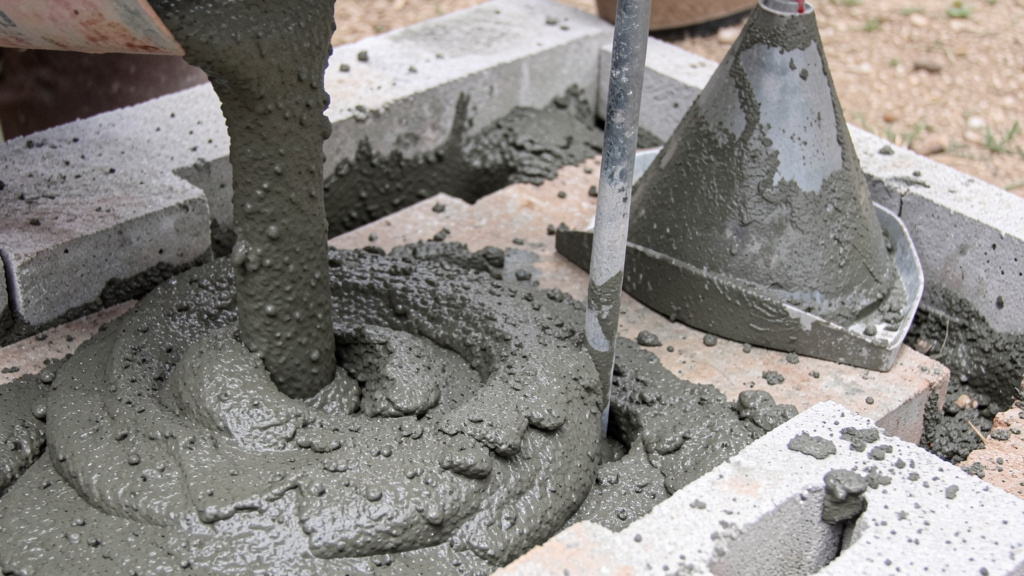
Move beyond guesswork with a systematic, adaptable approach to designing concrete mixes that align with project demands, environmental factors, and verified best practices—supporting durability, safety, and informed decision-making.
Concrete forms the foundation of countless structures worldwide, yet achieving appropriate strength for a specific application remains a frequent point of uncertainty. Many rely on simplified ratios passed through informal channels, only to encounter surface scaling, unexpected cracking, or reduced service life. Strength in concrete emerges not from a single “magic formula,” but from the thoughtful integration of material properties, environmental context, placement constraints, and curing protocols. This guide translates established engineering principles—referenced in publications from the American Concrete Institute (ACI) and ASTM International—into a clear, actionable workflow. Whether you’re preparing a garden pathway, a residential slab, or an artisanal element, you’ll gain insight into defining realistic strength targets, selecting compatible materials, adapting to field conditions, and verifying outcomes through practical observation. The methodology presented reflects widely documented industry knowledge, adapted for clarity and real-world applicability without overpromising results.
Introduction: Why Precision Matters in Mix Planning
Structural performance and longevity in concrete depend heavily on intentional design choices made before the first ingredient is measured. Minor deviations—such as unaccounted moisture in aggregates, inconsistent water addition, or insufficient curing—can accumulate into visible issues: hairline cracks after seasonal shifts, surface dusting on a patio, or uneven settling in a shed foundation. These outcomes rarely stem from a single error but from compounding variables that thoughtful planning helps mitigate.
Compressive strength—typically expressed in pounds per square inch (psi) or megapascals (MPa)—quantifies concrete’s capacity to resist crushing loads. It is a critical parameter for elements bearing weight, such as footings, slabs, or columns. However, strength does not exist in isolation. It interacts dynamically with workability (ease of placement and compaction), durability (resistance to weathering, chemicals, or abrasion), and economy (balanced material use). A mix optimized solely for high strength may prove too stiff to place evenly, creating voids. Conversely, excessive water for easier handling reduces final strength and increases permeability.
This guide introduces the Strength-by-Design Framework: a structured, adaptable process for aligning mix composition with project-specific needs. Developed from methodologies documented in ACI Committee 211 resources and aligned with ASTM standards, it emphasizes understanding relationships between components rather than memorizing fixed ratios. You will learn to define realistic targets, evaluate materials critically, adjust for site conditions, and apply accessible verification techniques. Principles throughout reflect consensus-based industry knowledge, presented to support informed choices—not to replace engineering judgment where required.
The Strength-by-Design Framework: Five Steps to Intentional Mix Development
The Strength-by-Design Framework replaces fragmented advice with a cohesive, repeatable workflow: Define, Analyze, Calculate, Adapt, Verify. Each phase builds on the previous one, creating natural checkpoints to refine decisions before batching begins. This approach treats concrete as an engineered composite where every component serves a functional role: cementitious materials bind, water enables hydration, aggregates provide structural skeleton, and admixtures fine-tune performance. Mastery lies in understanding how these elements interact under your specific conditions.
Step 1: Define Your Strength Requirements with Context
Clarity at the outset prevents under- or over-engineering. Strength targets should reflect structural needs, exposure conditions, placement constraints, and local requirements—not arbitrary assumptions.
Why this step matters: Specifying unnecessarily high strength increases material use and heat generation during curing without added benefit. Conversely, under-specifying risks premature deterioration. Local building codes often establish minimums; verifying these is essential. For example, the International Residential Code (IRC) commonly specifies 2,500–3,000 psi for residential footings, while garage slabs subject to vehicle traffic may require 3,500–4,000 psi.
How to establish your target:
1. Review project documentation: Engineered plans will state required compressive strength (f’c), often with safety margins. Example: “Concrete shall achieve a minimum 28-day compressive strength of 4,000 psi.”
2. Consult local codes: For non-engineered projects (patios, walkways), refer to municipal guidelines. Where codes are silent, consider these common benchmarks:
– 2,500 psi (17 MPa): Light-duty applications like garden paths or shed pads with minimal load.
– 3,000 psi (20 MPa): Residential sidewalks, patios, interior slabs-on-grade.
– 3,500–4,000 psi (24–28 MPa): Driveways, garage floors, foundation walls, exterior slabs in regions with freeze-thaw cycles.
– 4,500+ psi (31+ MPa): Structural elements, high-traffic areas, or specialized precast work.
3. Factor in environmental exposure: Concrete in climates with repeated freezing and thawing generally benefits from a minimum of 4,000 psi combined with air-entrainment. Projects exposed to deicing salts or seawater may warrant supplementary cementitious materials (SCMs) to reduce permeability.
4. Account for placement method: Pumped concrete often requires higher slump (workability). To maintain strength, specify a target 500–1,000 psi above the structural minimum to accommodate necessary admixtures.
Common considerations:
– Water-cement ratio is pivotal: Strength correlates more directly with water-cement ratio than cement quantity alone. Excess cement without proportional water reduction can increase shrinkage risk.
– Curing timeline awareness: Strength is typically assessed at 28 days under controlled conditions. Field curing varies; incorporating a modest safety margin (e.g., 500 psi above minimum) accommodates real-world variables.
– Section thickness constraints: For thin applications (e.g., countertops under 2 inches), limit maximum aggregate size (e.g., 3/8 inch) to avoid weak planes at the surface.
Illustrative scenario: Planning a 4-inch driveway pour in a northern climate. Local code indicates 3,500 psi as the minimum. Given freeze-thaw exposure, best practice suggests targeting 4,000 psi with air-entrainment. Due to slab thickness and finishing method (broom texture), a maximum aggregate size of 3/4 inch is selected. Defined requirement: “Target 4,000 psi at 28 days, air-entrained, max aggregate size 3/4 inch.”
Step 2: Analyze and Select Core Materials Thoughtfully
Material quality directly influences mix performance. Small variations—moisture content in sand, fines in gravel, or water impurities—can shift outcomes significantly. Evaluation should focus on suitability for your project’s scale and exposure.
Cementitious Materials
Portland cement (ASTM C150) is standard for most applications. Type I (normal) suffices for general use; Type IA includes air-entraining properties. In sulfate-prone soils (coastal or industrial areas), Type II/IIS offers moderate resistance. Type III provides higher early strength but generates more heat—useful in cool conditions but requiring careful curing. Store cement in dry, sealed containers; moisture exposure reduces reactivity. Check manufacturing dates—older stock may lose potency. Supplementary materials like fly ash (ASTM C618) or slag cement (ASTM C989) can partially replace Portland cement (typically 15–35% by weight), improving workability, reducing permeability, and lowering environmental impact. Note: SCMs may slow early strength gain; adjust curing expectations accordingly.
Water Quality
Use clean, potable water free of oils, acids, chlorides, or organic matter. Chlorides accelerate steel corrosion and should be avoided in reinforced concrete. The water-cementitious materials ratio (w/cm) remains the most influential factor for strength and durability. Lower ratios generally yield higher strength but reduce workability. Industry references illustrate a consistent inverse relationship:
– w/cm ≈ 0.40 → ~5,000 psi
– w/cm ≈ 0.50 → ~4,000 psi
– w/cm ≈ 0.60 → ~3,000 psi
Note: Actual strength varies with materials, curing, and testing methods. These values serve as conceptual guides.
Aggregates: The Structural Skeleton
Aggregates comprise 60–75% of mix volume and must be clean, hard, and well-graded.
– Fine aggregate (sand): Should meet ASTM C33 criteria. Well-graded sand (mix of particle sizes) minimizes voids. Excessive fines (<0.15mm) increase water demand; wash or source accordingly.
– Coarse aggregate (gravel/crushed stone): Also per ASTM C33. Maximum size should not exceed one-third of slab thickness or three-quarters of rebar spacing. Angular crushed stone typically provides better bond strength than rounded gravel but may require slightly more paste for workability.
– Field assessment tip: Place aggregate and water in a clear jar, shake, and let settle. Persistent cloudiness suggests silt/clay; distinct fine layers indicate poor grading. For critical projects, request gradation reports from suppliers.
Admixtures: Purposeful Enhancements
– Air-entraining agents (AEAs): Introduce microscopic air bubbles to resist freeze-thaw damage. Target 4–7% air content for exterior concrete with 3/4-inch aggregate (verified via pressure meter).
– Water reducers: Mid-range (MRWR) or high-range (superplasticizers) allow reduced water while maintaining slump, directly supporting strength. Dosage must follow manufacturer guidance.
– Set modifiers: Retarders extend workability in heat; non-chloride accelerators aid cold-weather placement. Avoid calcium chloride in reinforced concrete.
– Fibers: Polypropylene microfibers (0.5–1 lb/yd³) help control plastic shrinkage cracks but do not replace structural reinforcement.
Why material awareness matters: Unverified aggregates with high clay content may absorb mixing water unpredictably, altering the effective w/cm ratio. Confirming material properties beforehand reduces field variables. When local sourcing is necessary (e.g., river gravel), simple screening and washing improve reliability. For structural applications, supplier documentation provides valuable assurance.
Step 3: Calculate Initial Mix Proportions Using the Absolute Volume Method
This method (aligned with ACI 211.1 principles) calculates material volumes to minimize voids and ensure consistency. It is particularly valuable for custom batches where precision supports performance.
Step-by-Step Calculation Process:
1. Select target w/cm ratio: Based on strength goal and material types. For 4,000 psi with air-entrainment, a starting point is w/cm ≈ 0.48.
2. Determine water content: Based on desired slump and maximum aggregate size. Reference tables provide guidance:
| Max Aggregate Size | Slump 1–2″ | Slump 3–4″ |
|——————–|————|————|
| 3/8″ | ~300 lb/yd³ | ~325 lb/yd³ |
| 3/4″ | ~285 lb/yd³ | ~305 lb/yd³ |
| 1.5″ | ~260 lb/yd³ | ~280 lb/yd³ |
3. Calculate cementitious content: Cement (lb) = Water (lb) ÷ w/cm. Example: 305 lb water ÷ 0.48 = ~635 lb.
4. Account for air content: For air-entrained exterior concrete, assume 5% air by volume.
5. Compute aggregate volumes: Subtract volumes of water, cement, and air from total (27 ft³ per yd³). Use specific gravity values (from supplier data or standard references) to convert volumes to weights.
6. Adjust for aggregate moisture: Damp aggregates contribute water. Measure moisture content: [(Wet Weight – Dry Weight) ÷ Dry Weight] × 100. Reduce batch water accordingly.
Illustrative Calculation: 1 Cubic Yard Targeting 4,000 psi
– Conditions: Air-entrained (5% air), 3/4″ max aggregate, 3–4″ slump
– Materials: Type I cement (SG=3.15), coarse agg (SG=2.68, unit weight=100 lb/ft³), fine agg (SG=2.64)
1. w/cm = 0.48
2. Water = 305 lb
3. Cement = 305 ÷ 0.48 ≈ 635 lb
4. Air volume = 5% of 27 ft³ = 1.35 ft³
5. Cement volume = 635 ÷ (3.15 × 62.4) ≈ 3.23 ft³
Water volume = 305 ÷ 62.4 ≈ 4.89 ft³
Total occupied = 3.23 + 4.89 + 1.35 = 9.47 ft³
Aggregate volume = 27 – 9.47 = 17.53 ft³
6. Assuming coarse aggregate = 60% of aggregate volume:
Coarse agg volume = 10.52 ft³ → Weight = 10.52 × 100 ≈ 1,052 lb
Fine agg volume = 7.01 ft³ → Weight = 7.01 × (2.64 × 62.4) ≈ 1,155 lb
7. Initial batch weights per yd³:
Cement: 635 lb | Water: 305 lb | Coarse agg: 1,052 lb | Fine agg: 1,155 lb
Air content achieved via AEA per manufacturer instructions.
Critical reminders:
– Moisture adjustments are non-optional: Ignoring damp aggregates introduces unmeasured water, raising effective w/cm.
– Weight > volume: Bucket measurements vary with moisture and compaction. Scales yield greater accuracy. If unavailable, use standardized containers and documented moisture corrections.
– Air displaces solids: Omitting air volume in calculations skews aggregate proportions.
– Trial batches are essential: Mix a small test batch (e.g., 1 ft³) to verify workability and adjust before full-scale pouring.
Reference Starting Points (Adjust per local materials and testing):
| Target Strength | Approx. w/cm | Water (lb/yd³) | Cement (lb/yd³) | Notes |
|—————–|————–|—————-|—————–|——-|
| 3,000 psi | 0.57 | 300 | 525 | Non-air-entrained, 1″ agg |
| 4,000 psi | 0.48 | 305 | 635 | Air-entrained (5%), 3/4″ agg |
| 5,000 psi | 0.40 | 290 | 725 | With superplasticizer, 1/2″ agg |
These values illustrate relationships; actual proportions require site-specific validation.
Step 4: Adapt the Mix for Field Conditions
Lab-calculated proportions assume ideal conditions. Real-world variables—temperature, wind, humidity, placement method—necessitate thoughtful adjustments. Treat the initial design as a baseline to refine through observation.
Weather-Based Adjustments
– Hot weather (>85°F / 30°C): Accelerates water loss and setting, increasing plastic shrinkage risk.
Strategies: Use chilled water or partial ice substitution; schedule pours for cooler hours; mist aggregates pre-batch; apply evaporation retarders after finishing; begin curing immediately with moisture-retaining covers or curing compounds.
– Cold weather (<40°F / 4°C): Slows hydration; freezing before initial set causes permanent damage.
Strategies: Use warm (not hot) mixing water (<120°F); store aggregates under cover; employ non-chloride accelerators; insulate forms and cover slab post-pour; monitor temperature to ensure adequate maturity before exposure.
Placement-Specific Considerations
– Pumped concrete: Requires higher slump (4–6″). Use mid-range water reducers and slightly increase fine aggregate (5–10%) for pumpability.
– Reinforced sections: Ensure aggregate size allows flow around rebar (max size ≤ ¾ space between bars). Use vibration to eliminate honeycombing.
– Thin sections (countertops, tiles): Limit aggregate to 3/8″ max; consider microfibers for crack control; use superplasticizers to maintain workability with lower water.
Sustainability and Practical Tweaks
– SCM integration: Replacing 20% of cement with Class F fly ash can improve long-term durability and reduce environmental impact. Monitor early strength development; adjust curing duration if needed.
– Local sourcing: Partner with regional suppliers providing material certifications. Reduces transport emissions and supports community resources.
– Documentation habit: Note adjustments made (“Added X oz superplasticizer per sack to achieve target slump”). This log builds valuable project-specific knowledge.
Adaptive mindset: Field conditions change. Observe slump consistency, ambient conditions, and placement behavior. Small, documented tweaks lead to greater confidence over time. When significant deviations occur, a trial batch validates adjustments before proceeding.
Step 5: Verify Through Practical Observation and Testing
Verification closes the loop between design intent and field outcome. While lab testing offers precision, accessible field methods provide meaningful feedback for non-critical projects.
Field-Accessible Checks
– Slump test (ASTM C143): Measures workability consistency. Fill a cone in three layers, rod each 25 times, lift vertically, and measure subsidence. Compare to target (e.g., 3–4″ for driveways). Consistent slump across batches suggests consistent water content—a key strength indicator. Record results per batch.
– Air content estimation: For air-entrained mixes, use a pressure meter (ASTM C231) if available. Target 4–7% for freeze-thaw resistance. Without equipment, rely on supplier certification and consistent AEA dosing.
– Curing observation: Monitor surface moisture retention. Concrete should remain visibly damp for at least 7 days. Crusting or rapid drying signals inadequate curing.
– Simple maturity tracking: Note ambient temperature during curing. Cooler conditions extend strength development time; warmer accelerates it. Use this to inform when light traffic may be safe.
Cylinder Testing (When Feasible)
– Procedure: Mold 4″x8″ cylinders from mid-batch concrete. Cure covered at 60–80°F for 24–48 hours, then store moist until testing (7 and 28 days ideal).
– Practical approach: Even without lab access, casting cylinders reinforces batching discipline. Breaking one at 7 days offers qualitative insight; the second at 28 days provides comparative data. Many community colleges or local labs offer affordable testing.
– If results fall short: Review batch records for unaccounted water additions, moisture corrections, or curing lapses. Adjust subsequent batches incrementally.
Non-Destructive Indicators
– Surface inspection: After form removal, check for honeycombing (indicates poor consolidation) or early cracking (suggests rapid drying or excess water).
– Thumbprint check (qualitative): After initial set (surface no longer wet), gentle thumb pressure should leave a slight impression without sticking. No impression may indicate surface drying; deep impression suggests excessive water or delayed set. Use cautiously as a supplementary cue only.
The Guiding Insight: Concrete performance reflects the sum of intentional choices—from material selection to curing diligence. Verification, even in simplified forms, transforms experience into reliable knowledge for future projects.
Addressing Eight Common Project Scenarios
Real-world projects introduce nuanced questions. This section explores frequent situations with balanced, actionable guidance—integrating safety, practicality, and context.
Scenario 1: Enhancing Bagged Concrete Mixes
Bagged products (e.g., Quikrete) offer convenience for small jobs but typically target 3,000–3,500 psi. To improve performance:
– Avoid adding dry cement: Disrupts pre-balanced chemistry and may cause flash set.
– Optimize water: Use the minimum water specified on the bag. Add a superplasticizer (per product instructions) to maintain workability with less water.
– Consider additives: Microfibers (0.5–1 lb per yd³ equivalent) help control surface cracking. Silica-fume enhancers exist but require precise dosing—test small batches first.
– Realistic expectation: For strengths above 4,000 psi or structural elements, custom batching or ready-mix is more reliable. Always conduct a trial batch when modifying products.
Scenario 2: Verification Without Lab Equipment
When formal testing isn’t feasible:
– Slump consistency: Track slump across batches. Significant variation signals water or material inconsistency.
– Curing diligence: Document curing methods and duration. Inadequate curing is a leading cause of strength shortfall.
– Visual assessment: After stripping forms, examine surface integrity. Honeycombing suggests poor consolidation; early cracks indicate rapid moisture loss.
– Comparative cubes: Cast small cubes (2″x2″x2″) from each batch. After 28 days of moist curing, compare relative hardness by scratching with consistent tools (e.g., nail, coin). This indicates batch consistency, not absolute strength.
Scenario 3: Managing Wind and Low Humidity During Curing
Wind and dry air accelerate surface moisture loss, risking plastic shrinkage cracks within hours.
– Pre-pour planning: Monitor forecasts; avoid pouring during high wind (>15 mph) or very low humidity (<30% RH).
– On-site mitigation: Erect temporary windbreaks (plywood, fabric barriers); apply evaporation retarders immediately after final finishing; lightly fog the air above (not directly on) the slab to raise ambient humidity.
– Curing initiation: Begin moisture retention (wet burlap, curing compound) as soon as surface sheen disappears. Delaying even 20–30 minutes in harsh conditions can initiate cracks.
Scenario 4: Evaluating Locally Sourced Aggregates
Natural materials require scrutiny:
– Beach sand: Often contains salts and shell fragments. Salts risk corrosion (in reinforced concrete) and efflorescence; shells create weak points. If used: Wash thoroughly until runoff is clear; test a small batch for surface defects. Not recommended for structural work. ASTM C33-compliant sand is a modest investment that prevents larger issues.
– River gravel: Smooth surfaces reduce bond strength versus crushed stone. If used, increase cementitious content slightly (5–10%) and ensure thorough consolidation. Sieve to remove organic debris and excessive fines.
– When in doubt: Contact local geotechnical labs or university engineering departments. Basic gradation or cleanliness tests ($50–$150) provide confidence far exceeding potential repair costs.
Scenario 5: The Reality of On-Site Water Addition
Adding water to stiff concrete is a common but high-risk practice.
– Impact: Each additional gallon of water per cubic yard may increase slump by ~1 inch but can reduce 28-day strength by approximately 150–200 psi and increase shrinkage potential.
– Professional alternative: Keep water reducers or superplasticizers on-site. A small dose (per manufacturer) can restore workability without compromising w/cm ratio. Train all team members on this protocol.
– If water must be added: Document the amount added. Recognize that strength and durability targets are now altered. For structural elements, consult a qualified professional before proceeding. Prevention—through accurate initial batching and moisture adjustments—is always preferable.
Scenario 6: Understanding Supplementary Cementitious Materials (SCMs)
SCMs are functional components, not mere fillers:
– Fly ash (Class F): Reacts with cement byproducts to form additional binding compounds. Benefits include reduced permeability, lower heat generation, and improved long-term strength. Early strength gain may be slower—avoid in very cold conditions without accelerators.
– Slag cement: Offers similar benefits with potentially higher early strength. Excellent for sulfate resistance.
– Silica fume: Ultra-fine particles densify the matrix, enabling very high strengths. Requires superplasticizers due to high water demand.
– Practical integration: Start with modest replacements (e.g., 20% fly ash). Conduct trial batches to observe setting time and workability. SCMs support sustainability goals by reducing clinker content—the most carbon-intensive cement component.
Scenario 7: Evaluating True Project Costs
“Low-cost” concrete can incur hidden expenses:
– Material shortcuts: Under-cemented mixes or poor aggregates may save $10–$20 per yard but risk premature failure, leading to costly repairs ($5–$15/sq ft).
– Curing neglect: Skipping curing compounds saves pennies per square foot but can cut strength development by 30–50% and drastically shorten service life.
– Lifecycle perspective: A mix designed for durability (appropriate strength, air-entrainment, proper curing) often proves more economical over decades. Factor in your time, potential liability, and environmental impact of early replacement. Quality upfront reduces long-term burden.
Scenario 8: Knowing When to Engage Professionals
Expert collaboration is prudent for:
– Structural elements: Foundations, load-bearing walls, columns, or beams.
– Complex requirements: High-strength (>6,000 psi), self-consolidating concrete, or specialized performance needs.
– Large volumes: Projects exceeding 5–10 cubic yards where consistency is critical. Ready-mix suppliers provide quality-controlled batching, slump testing, and material certifications.
– Regulatory requirements: Many jurisdictions mandate engineered designs and certified testing for residential foundations.
Engaging a supplier or engineer is risk management, not admission of limitation. Share your project goals—they often provide valuable mix recommendations. For DIY enthusiasts, partnering on critical elements while handling smaller tasks builds balanced capability.
Navigating Practical Challenges and Alternatives
Even well-planned projects encounter hurdles. This section addresses recurring concerns with empathy and solution-focused guidance, plus balanced evaluation of common alternatives.
“I Lack Time for Detailed Planning”
Time constraints are valid. Prioritize:
– Critical minimums: Clearly define your strength target (Step 1) and perform slump checks on every batch (Step 5). These catch the most impactful errors.
– Leverage supplier expertise: Reputable ready-mix companies offer pre-qualified mixes (e.g., “Driveway Mix: 4,000 psi, air-entrained”). Provide project details—they handle design complexity.
– Technology aids: Apps from established industry sources can streamline calculations. Verify outputs against reference tables initially.
– Start small: Practice the framework on a low-stakes project (e.g., garden stepping stone). Confidence builds incrementally. Investing 20 minutes in planning often prevents hours of remediation.
Understanding and Managing Cracking
Cracks are common but manageable:
– Plastic shrinkage cracks (within hours): Caused by rapid surface drying. Mitigate with windbreaks, evaporation retarders, and timely curing.
– Plastic settlement cracks (over rebar): Result from aggregate settling. Ensure adequate vibration during placement and avoid excessive water.
– Drying shrinkage cracks (days/weeks): Minimize via low w/cm ratio, proper curing (minimum 7 days), and control joints cut to ¼ slab depth spaced at 2–3x slab width (e.g., 10 ft for 4″ slab).
– Structural cracks (wide, growing): Consult a structural engineer immediately. Document crack details (location, width, timing) to aid assessment.
Comparing Mix Sourcing Options
| Option | Best Suited For | Strength Reliability | Practical Consideration |
|---|---|---|---|
| Bagged Concrete | Repairs, footings <1 yd³ | Moderate (follow instructions precisely) | Cost-effective for tiny jobs; impractical beyond 1–2 yd³ |
| Ready-Mix Delivery | Projects >1 yd³, structural elements | High (supplier QC, testing) | Ensures consistency; includes slump verification; often economical at scale |
| Volumetric Mixer | Remote sites, variable quantities | High (freshly mixed on-site) | Allows real-time adjustments; ideal for multi-phase pours |
| Pre-Proportioned Kits | Artisanal projects (countertops) | High (lab-validated) | Premium cost justified for aesthetics/precision in small volumes |
Insight: For pours exceeding 1 cubic yard, ready-mix frequently offers better value and reliability than DIY batching when factoring material accuracy, labor, and risk. Calculate total project cost (materials + your time + potential rework) before deciding.
Safety and Environmental Stewardship
- Silica dust: Cutting, grinding, or mixing dry materials releases respirable crystalline silica. Wear N95+ respirators; use wet methods or HEPA vacuums. Consult OSHA/local guidelines for prolonged exposure.
- Alkalinity awareness: Wet concrete has high pH (12–13). Wear gloves and eye protection. Flush skin contact immediately with water. Vinegar can neutralize residue on skin (use cautiously).
- Sustainable practices:
• Specify SCMs to reduce Portland cement content.
• Recycle concrete rubble as subbase where appropriate.
• Source aggregates locally to minimize transport emissions.
• Design for longevity—durable concrete has the lowest lifetime environmental impact. Every year of extended service reduces resource consumption.
Your Questions, Answered
Q: What is the most frequent error affecting concrete strength?
A: Adding unmeasured water on-site to improve workability. This elevates the water-cement ratio, potentially reducing final strength by 15–25% and increasing permeability. Use water reducers instead. Establish a crew protocol: no water additions without documented adjustment and recalculated expectations.
Q: How reliable are smartphone mix design apps?
A: Apps from reputable industry sources or major suppliers use validated logic and can be helpful tools. Accuracy depends entirely on correct input data—especially aggregate specific gravity and moisture content. For initial use, cross-check outputs against reference tables. Avoid apps lacking transparent methodology or customization for local materials.
Q: Can strength be assessed non-destructively at home?
A: Methods like rebound hammers provide comparative data (e.g., “Area A is harder than Area B”) but require calibration to your specific mix for strength estimates. For reliable psi values, lab-tested cylinders remain the standard. However, consistently casting and curing cylinders—even without lab testing—builds valuable habits in mix control and curing discipline.
Q: Does cement brand significantly impact strength?
A: Portland cement meeting ASTM C150 standards performs similarly when used correctly. Minor variations exist in fineness or setting time. For critical projects, maintain brand consistency to reduce variables. Store cement in dry, sealed containers; check dates—older stock in humid conditions may lose reactivity. Proper storage matters more than brand selection.
Q: How should mix design account for high-altitude locations?
A: Above 3,000 feet, lower atmospheric pressure can accelerate moisture loss and affect air-entrainment stability. Slightly increase batch water (2–5%) to offset evaporation during placement, but monitor slump closely. In hot, dry high-altitude conditions, set retarders may be beneficial. Local ready-mix suppliers possess region-specific expertise—consult them for tailored advice.
Q: Is there a meaningful strength difference between crushed stone and rounded gravel?
A: Crushed stone’s angular particles typically provide 10–20% better bond strength than rounded gravel at equivalent water-cement ratios due to mechanical interlock. However, crushed stone may require slightly more paste for workability. For strength-critical applications, crushed stone is preferred; use water reducers to maintain optimal w/cm. In freeze-thaw zones, the superior bond also enhances durability.
Q: What steps if test cylinders fall below target strength?
A: First, verify testing and curing procedures—errors here are common. If confirmed:
1. Review batch records for unaccounted water or material substitutions.
2. Confirm aggregate moisture corrections were applied.
3. Assess curing conditions (temperature, moisture retention).
4. Consider raw material verification.
Adjust the next batch incrementally (e.g., reduce w/cm slightly). For structural elements, involve a qualified engineer before proceeding. Document all changes to establish cause-effect relationships.
Q: How does rebar placement relate to required concrete strength?
A: Rebar handles tensile stresses; concrete handles compression. Required concrete strength is primarily determined by compressive demands. However, adequate concrete strength ensures proper bond with rebar and protects against localized crushing. Building codes specify minimum concrete cover over rebar (e.g., 1.5″ for foundations) to prevent corrosion—this cover must be sound concrete. Never reduce concrete strength because rebar is present; they function interdependently.
Q: When is it safe to use deicing salts on new concrete?
A: Avoid all deicing salts for the first year. New concrete is more permeable; salts accelerate scaling and spalling. Use sand for traction initially. After one year, apply a penetrating sealer and choose calcium magnesium acetate (CMA) over sodium chloride where possible. Even then, minimize use. In harsh winter regions, designing for higher strength (4,500+ psi) with air-entrainment provides greater resilience.
Q: What are realistic timelines for walking or driving on new concrete?
A:
– Walking: Typically 24–48 hours after finishing (when surface passes thumbprint check).
– Light vehicles: Minimum 7 days for 3,000–4,000 psi concrete under ideal curing.
– Full design strength: 28 days.
Curing conditions significantly affect timing. Cooler temperatures extend wait periods; use maturity tracking for precision. When uncertain, delay traffic an extra day—premature loading causes irreversible damage. Use clear signage and physical barriers.
Q: Are viable eco-friendly alternatives to Portland cement available today?
A: For structural applications, Portland cement blended with high volumes of SCMs (fly ash, slag) remains the most accessible sustainable option, reducing clinker content by 30–50%. Emerging materials like geopolymers show promise but require specialized knowledge and are less accessible for typical DIY or residential use. Hempcrete offers excellent insulation but very low strength (~100 psi)—suitable only for non-structural infill. Focus on proven methods: optimize mix design, minimize waste, ensure longevity, and specify SCMs where appropriate.
Conclusion: Building Confidence Through Informed Practice
Mastering concrete mix design is a journey of incremental learning, not instantaneous expertise. The Strength-by-Design Framework offers a reliable compass—not a rigid map—to navigate project-specific variables with greater awareness. Three enduring principles anchor this approach:
- Clarity precedes execution: Defining realistic strength targets based on project demands, exposure, and code requirements prevents common pitfalls. Write down your parameters before sourcing materials.
- Materials tell a story: Understanding how water content, aggregate quality, and admixtures interact empowers proactive adjustments. Small, documented changes build cumulative knowledge.
- Verification informs growth: Whether through slump checks, curing observation, or cylinder testing, closing the loop between intention and outcome transforms each project into a learning opportunity.
Your 24-Hour Action Step
Within the next day, apply one element of this framework:
– If planning a project: Draft your strength target using Step 1 criteria (e.g., “Target: ___ psi, Exposure: , Max aggregate: “).
– If no project is imminent: Calculate a sample mix for a hypothetical 3,500 psi patio using the Absolute Volume Method steps.
This small act shifts perspective from passive consumption to active engagement. Keep this guide accessible for reference during future planning.
A Broader Perspective
Concrete is more than a building material—it embodies human ingenuity applied to shelter, infrastructure, and community spaces. By approaching mix design with care and curiosity, you contribute to structures that serve safely and endure gracefully. The choices made during batching and curing ripple forward for decades: measuring thoughtfully, resisting impulsive water additions, and honoring curing protocols reflect stewardship. This isn’t merely about technical outcomes; it’s about building with integrity. Your commitment to informed practice supports safer, more sustainable outcomes for families, neighborhoods, and the environment. Excellence resides in the details you choose to honor. Measure with purpose, pour with care, and verify with diligence. The foundation you create deserves nothing less.
Continue Your Learning Journey: Concrete Knowledge Series
– Concrete Curing Decoded: Methods, Timelines, and Avoidable Mistakes
– Understanding Concrete Admixtures: Plasticizers, Fibers, and Air-Entrainers Explained
– DIY Concrete Repair: Diagnosing and Fixing Cracks, Spalls, and Scaling
– Sustainable Concrete Practices: Reducing Environmental Impact Responsibly
– Formwork Fundamentals: Building Secure, Leak-Resistant Molds
– Interpreting Concrete Test Reports: A Practical Guide for Property Owners
– Concrete in Challenging Environments: Desert Heat, Coastal Salts, and Freeze-Thaw Cycles