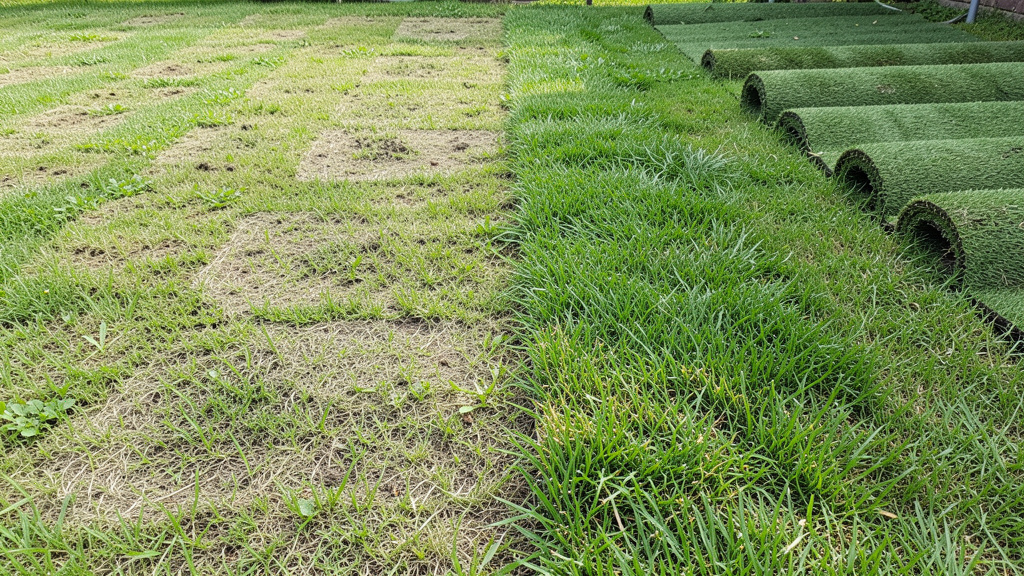
Clarity Over Confusion: Navigate the Seed-or-Sod Choice with Site-Specific Insight, Seasonal Awareness, and Sustainable Stewardship
Choosing between grass seed and sod shapes your landscape’s trajectory—impacting water use, maintenance rhythm, ecological integration, and daily enjoyment for years. This guide moves beyond oversimplified checklists to offer a grounded, adaptable framework. You’ll learn to align your decision with your soil, your climate, your capacity, and your vision—without hype, fear tactics, or one-size-fits-all prescriptions.
Introduction
Picture your yard on a quiet weekend morning. You see potential where patchy turf or bare soil exists. Online searches yield contradictory advice: “Sod delivers instant perfection!” versus “Seed builds unbreakable roots!” The tension is real. This decision carries weight—not because one method is universally superior, but because mismatched choices lead to frustration, wasted resources, and landscapes that struggle rather than thrive. Drawing on aggregated insights from USDA resources, National Turfgrass Evaluation Program (NTEP) cultivar data, and cooperative extension service guidelines across diverse climate zones, this guide centers your reality. We begin where every resilient lawn begins: with the ground beneath your feet.
The Lawn Foundation Framework: Four Lenses for Confident Clarity
True alignment emerges when you evaluate your project through interconnected lenses. This framework—refined through observed patterns in residential landscape outcomes—guides you toward a choice that feels inevitable because it honors your specific context. Move through each lens with curiosity, not pressure.
Lens 1: Site Reality Assessment (The Unchanging Ground Truth)
These factors exist independently of preference. Honoring them prevents avoidable setbacks.
Soil Composition & Drainage Insight
Grab a shovel. Dig a 12-inch hole in your intended lawn area. Fill it with water. Return in 4 hours.
– Water remains pooled? Indicates slower drainage (common in clay-rich soils). Key consideration: Sod laid directly on unamended, poorly drained soil may face rooting challenges. Seed allows time to integrate soil amendments before planting.
– Hole is dry? Suggests faster drainage (sandy soils). Key consideration: Bare seed may wash away before germination during heavy rain. Sod provides immediate soil stabilization.
Practical Step: Conduct a jar test: Fill a clear jar one-third with soil, two-thirds with water, shake vigorously, and let settle 24 hours. Distinct layers reveal texture. High clay content often benefits from compost incorporation; sandy soils gain resilience with organic matter to improve moisture retention.
Slope Gradient Awareness
Use a smartphone inclinometer app or the string-and-level method:
1. Drive stakes at the top and bottom of the slope.
2. Tie a string level between them.
3. Measure vertical drop over a 10-foot horizontal distance.
– Drop exceeds 12 inches (10% slope)? High erosion concern. Unprotected seed is vulnerable to washout. Sod acts as immediate cover but requires secure pinning on steeper grades.
– Drop under 6 inches (5% slope)? Both methods can succeed with standard preparation.
Illustrative Insight: Installing seed on a significant slope without erosion control measures can lead to substantial seed loss during rainfall events, requiring reseeding effort and resources. Proactive planning—like biodegradable erosion blankets for seed or pinned sod with netting—mitigates this risk effectively.
Sun Exposure Mapping
Track direct sunlight hourly from 8 AM to 6 PM on a clear day. Note zones of:
– Full sun (6+ hours direct light)
– Partial shade (3–6 hours)
– Full shade (<3 hours)
– Dense shade areas? Most commercially available sod features sun-adapted grasses. Shade-tolerant seed blends (fine fescues, certain tall fescues) offer targeted genetic suitability for low-light resilience.
– Dappled light under trees? Seed allows strategic placement of shade-adapted varieties beneath canopy while using sun-loving types elsewhere. Sod’s uniformity may struggle where light conditions shift sharply.
Gentle Reality Check: If mature tree canopy blocks most direct light, even shade-tolerant grasses may struggle long-term. Many extension services thoughtfully suggest alternatives like Carex pensylvanica (Pennsylvania sedge), moss gardens, or mulched pathways with stepping stones—working with your site rather than against it.
Lens 2: Timeline & Life Context Reflection
Your calendar and daily rhythm matter as much as soil chemistry.
The “Why Now?” Reflection
– Hosting an event within 8 weeks? Sod provides immediate visual coverage. Seed requires weeks for germination and months for functional density.
– Installing in autumn with no urgency? Seed often excels in cool-season zones (USDA Zones 3–7). Warm soil encourages root growth; cooler air reduces disease pressure; fall rains support establishment with less weed competition.
– Summer installation unavoidable? Sod may establish successfully with committed, consistent watering. Seed faces greater challenges from heat stress, bird activity, and aggressive warm-season weed germination.
Seasonal Insight: University extension resources note that late-summer seeding in cool-season zones often encounters heightened weed pressure compared to early-fall seeding, due to overlapping germination cycles with common weeds.
Personal Capacity Inventory
Answer with honesty:
– Can you provide consistent moisture multiple times daily for 2–4 weeks? (Critical for both methods during establishment)
– Do you have 20–40 minutes most days for the first 6 weeks to monitor soil moisture, observe growth, and adjust care?
– Is your schedule stable for the next 6–8 weeks, or are extended absences likely?
Thoughtful Consideration: If reliable daily care during establishment is uncertain—due to travel, work demands, or physical constraints—this significantly influences viability. Sod demands vigilant watering immediately post-installation; seed requires consistent surface moisture during germination. Neither forgives prolonged neglect during this phase.
Lens 3: Budget Architecture (Seeing the Full Financial Picture)
True cost spans preparation, installation, establishment care, and long-term resilience—not just the initial receipt.
Initial Investment Context (Per 1,000 sq. ft.)
Note: All figures are illustrative estimates. Actual costs vary significantly by region, supplier, season, and project complexity. Always request current local quotes.
| Component | Seed (DIY) | Sod (DIY) | Seed (Pro) | Sod (Pro) |
|———–|————|———–|————|———–|
| Material | $35–$85 | $350–$600 | $75–$150 | $450–$750 |
| Soil Preparation | $100–$300 | $100–$300 | Included | Included |
| Erosion Control | $50–$150 | $0–$50 | Included | Included |
| Labor (Time/Pro) | 8–12 hrs | 4–6 hrs | $200–$400 | $300–$600 |
| Estimated Total | $185–$535 | $450–$950 | $375–$850 | $750–$1,700 |
*Often essential on slopes >5% or very sandy soils
First-Year Care Considerations
– Seed: May require light reseeding in sparse areas, careful hand-weeding early on, and attentive moisture management during germination.
– Sod: Requires monitoring for even rooting, potential spot-repair of sections with poor soil contact, and cautious fertilization timing.
Prudent Planning: Landscape studies suggest initial installation costs represent only part of the investment. Budgeting 15–25% of your installation cost for Year-One care (water, light fertilizer, touch-ups) supports smoother establishment.
Long-Term Value Dimensions
– Genetic Diversity: Quality seed blends combine 3–5 complementary grass varieties. If disease or drought stresses one type, others may persist—enhancing ecosystem resilience. Most sod is a single cultivar.
– Soil Integration: Seed roots grow directly into your amended native soil. Sod arrives with its own soil layer; meticulous preparation ensures roots transition smoothly across this interface.
– Local Adaptation: Seed sourced through county extension recommendations often features genetics proven in your microclimate. Locally grown sod offers similar regional acclimation.
Wisdom Tip: Your state’s cooperative extension service publishes annually updated “Recommended Turfgrass Cultivars” guides—free, science-based, and hyper-local. This resource alone can prevent costly mismatches.
Lens 4: Climate & Seasonal Intelligence
Your zip code and calendar are non-negotiable partners in this process.
Cool-Season Grass Regions (USDA Zones 3–7: Fescues, Bluegrass, Ryegrass)
– Optimal Seed Window: Late summer to early fall (soil 60–75°F). Warm soil speeds germination; cool air reduces disease risk; autumn moisture supports growth.
– Optimal Sod Window: Early spring or early fall. Avoid peak summer heat (transplant shock risk) and deep winter dormancy (prevents rooting).
– Spring Seeding Note: Possible but challenging. Requires precise timing of pre-emergent herbicides to avoid inhibiting your own grass—a common friction point for beginners.
Warm-Season Grass Regions (USDA Zones 7–10: Bermuda, Zoysia, St. Augustine)
– Optimal Seed Window: Late spring to early summer (soil consistently >65°F). Important: St. Augustine and many Zoysia varieties are rarely available as seed—sod or plugs are standard.
– Optimal Sod Window: Late spring through mid-summer. Warm soil accelerates rooting. Avoid installation during extreme heatwaves (>95°F) without temporary shade protection.
– Transitional Zone Insight (e.g., Zone 7): Tall fescue seed offers year-round green where warm-season sod turns dormant brown in winter. This aesthetic preference deeply influences choice for many homeowners.
The Guiding Principle: Lawn success flows from harmony between your method, your site’s inherent conditions, and your realistic capacity to steward the establishment phase. Force a mismatch, and nature responds—not with malice, but with biological consequence. Work with these forces, and resilience follows.
Deep Dive: Grass Seed Installation—Cultivating Patience and Partnership
Choosing seed is a commitment to process—a collaboration with natural rhythms. When executed with care, it yields a lawn deeply woven into your soil ecosystem, genetically diverse, and often remarkably resilient long-term. This section explains the why behind each step to empower understanding.
Where Seed Shines Naturally
- Expansive Properties (>5,000 sq. ft.): Material cost differences become meaningful, freeing budget for superior soil preparation—the true foundation of lawn health.
- Challenging Soils: Allows full integration of compost, gypsum (for clay), or organic matter before planting. Roots grow directly into optimized soil.
- Microclimate Customization: Blend shade-tolerant varieties under trees, wear-resistant types along paths, drought-adapted selections on south-facing slopes.
- Erosion-Prone Slopes (with strategy): Hydroseeding (professional seed-mulch slurry) or erosion control blankets integrate seamlessly with seed.
- Budget-Conscious Stewardship: Lower initial material cost spreads financial impact. Ideal for phased landscape development.
The 7-Phase Seed Installation Protocol
Phase 1: Soil Preparation (The 80% Factor)
Why it anchors everything: Soil quality determines long-term vitality far more than seed brand.
– Clear & Grade: Remove debris, rocks >2 inches. Establish a gentle 1–2% slope away from structures (¼ inch drop per foot). Use a long straightedge and level.
– Soil Test: Mail a sample to your county extension lab ($15–$30). Results guide precise pH adjustment (lime/sulfur) and nutrient needs. Never guess.
– Amend Deeply: Rototill 4–6 inches. Incorporate based on test and texture:
– Clay soils: 2–3 inches of compost + gypsum if recommended
– Sandy soils: 3–4 inches of compost to boost water/nutrient retention
– Compacted soils: Core aerate before tilling if feasible
– Final Grade: Rake smooth. Lightly roll with a water-filled drum roller to firm soil (should feel like a damp sponge—slight indent under foot).
Common Pitfall: Adding topsoil over existing soil without blending creates a “textural barrier” where water pools and roots stall. Always integrate amendments thoroughly into native soil.
Phase 2: Seed Selection Science
Beyond the bag artwork:
– Verify “Pure Live Seed” (PLS) Percentage: A $60 bag at 90% PLS delivers more viable plants than a $40 bag at 60% PLS. Calculate effective cost: (Bag Price) ÷ (PLS %) = Cost per viable seed unit.
– Match to Microzones: Example blend for a Zone 6 yard with mixed sun:
– 40% Tall Fescue (drought/wear tolerance)
– 30% Fine Fescue (shade adaptation)
– 20% Kentucky Bluegrass (recovery from damage)
– 10% Perennial Ryegrass (quick cover for erosion control)
– Quality Check: Ensure label states “0% noxious weeds” and “inert matter <10%”. Avoid blends listing “annual ryegrass” prominently—it dies in summer, leaving bare patches.
Trusted Resource: Request “[Your State] Recommended Turfgrass Cultivars” from your extension office—a free, annually updated guide reflecting NTEP trial data for your region.
Phase 3: Precision Seeding Technique
- Timing: Seed when soil temperature matches grass type (use an inexpensive soil thermometer). Cool-season: 60–75°F; Warm-season: 65–85°F.
- Calibrate Spreader: Test spread pattern on pavement first. Aim for even coverage—no bare spots, no clumps.
- Cross-Seed: Spread half the seed north-south, half east-west. Ensures uniform density and minimizes gaps.
- Incorporate Gently: Lightly rake just enough to cover seeds ⅛–¼ inch deep. Seeds need soil contact and light to germinate.
- Roll Lightly: Use an empty roller to ensure seed-to-soil contact—critical for moisture uptake.
Helpful Analogy: Seeding resembles baking bread. Too deep = seeds suffocate (no rise). Too shallow = seeds dry out or get eaten (collapsed loaf). Perfect depth = consistent germination (golden crust).
Phase 4: Erosion Control Strategy
- Gentle Slopes (<5%): Light straw mulch (1 bale per 1,000 sq. ft.). Crucial: Use certified weed-free straw—not hay (which contains weed seeds).
- Moderate Slopes (5–15%): Biodegradable erosion control blanket (ECB). Pin every 12 inches with landscape staples.
- Steep/Wash-Prone Areas (>15%): Professional hydroseeding (seed + tackifier + mulch slurry) or coconut fiber matting.
Illustrative Insight: Skipping erosion control on even a moderate slope after seeding can lead to significant seed loss during rainfall, delaying establishment and requiring reseeding effort. Prevention is far simpler than correction.
Phase 5: Germination Hydration Protocol
This phase defines success.
– Goal: Keep the top ½ inch of soil consistently moist (not soggy) until all seeds sprout.
– Method: Light misting 2–4 times daily (early AM, midday if hot, late PM). Use oscillating sprinklers on low setting.
– Duration Varies by Grass Type:
– Perennial Ryegrass: 5–10 days
– Tall Fescue: 7–14 days
– Kentucky Bluegrass: 14–30 days (patience rewarded!)
– Monitor Actively: Check soil moisture hourly on hot/windy days. Soil should feel damp like a wrung-out sponge.
Critical Insight: Watering deeply once daily saturates soil below the seed zone while the surface dries—seeds desiccate before roots reach moisture. Frequent, light watering is non-negotiable during germination.
Phase 6: First Mow & Early Care
- When to Mow: At 3–4 inches tall (usually 3–6 weeks post-germination). Never remove >⅓ of blade height.
- Mower Prep: Sharp blade essential! Dull blades shred tender shoots, inviting disease. Bag clippings initially to avoid smothering seedlings.
- Fertilizing: Apply half-strength balanced fertilizer (e.g., 10-10-10) after first mow. Full rate 4 weeks later. Never fertilize before germination—feeds weeds, not grass.
- Weed Management: Hand-pull weeds meticulously for first 8 weeks. Avoid herbicides until lawn is mowed 3 times. Young grass is sensitive.
Patience Payoff: That Kentucky bluegrass taking weeks to sprout? Its rhizomes will eventually knit the lawn into a dense, self-repairing carpet unmatched by initial uniformity.
Phase 7: Seasonal Transition Strategy
- Fall-Seeded Lawns (Cool-Season): Focus on root development before winter. A late-fall application of potassium-rich fertilizer (if soil test indicates need) strengthens roots for spring.
- Spring-Seeded Lawns: Vigilant weed monitoring. Apply pre-emergent herbicides only after grass is well-established (typically after second mowing) to avoid inhibiting your own lawn.
- First Summer: Water deeply but less frequently (encourages deep roots). Avoid heavy traffic. This lawn is still maturing—handle with care.
Long-Term View: A seeded lawn reaches full maturity and density at 12–18 months. The genetic diversity pays dividends during drought or disease pressure in future years.
Deep Dive: Sod Installation—Honoring the Living Transplant
Sod offers immediate visual transformation and functional usability—a meaningful psychological and practical advantage. When site conditions align and installation is meticulous, it provides a mature foundation rapidly. However, its success hinges entirely on perfect execution during the critical first 30 days. This section reveals the thoughtful care behind “just rolling it out.”
Where Sod Excels Naturally
- Time-Sensitive Needs: Events, home sales, or immediate usability requirements.
- Erosion-Prone Sites (with preparation): Provides instant soil cover on slopes where seed would wash away—if properly pinned and prepped.
- Weed-Infested Sites: After thorough site preparation (including vegetation removal and waiting periods), sod provides a clean start.
- Precision Aesthetics: Uniform color, texture, and maturity—valued in formal landscapes.
- Grass Limitations: For varieties like St. Augustine or specific Zoysias unavailable as seed, sod is the standard path for full-lawn installation.
The 6-Phase Sod Installation Protocol
Phase 1: Pre-Installation Site Readiness (The Non-Negotiable Foundation)
Why it determines everything: Sod is a living transplant. Roots must penetrate your soil to survive long-term.
– Complete Vegetation Removal: 2–3 weeks prior, apply non-selective herbicide per label instructions to eliminate existing growth. Crucially: Wait the full recommended period (often 10–14 days) after application before proceeding—residual chemicals can inhibit sod rooting.
– Soil Test & Amend: Follow the same rigorous process as seeding. Incorporate compost, adjust pH per test results. Do not skip. Sod laid on compacted clay will struggle regardless of watering.
– Final Grade & Firming: Rake smooth. Roll with an empty water roller to create a firm, level surface. Footprints should be shallow (<¼ inch).
– Pre-Moisten Soil: Lightly water prepared soil 12–24 hours before sod arrives. Soil should be damp, not muddy.
Critical Insight: Many setbacks stem from rushing this phase. Sod does not “cover up” poor soil—it magnifies underlying issues. A bump creates a visible ridge; a low spot collects water and invites rot.
Phase 2: Sod Sourcing & Timing Strategy
- Prioritize Local Sources: Choose a sod farm within 50 miles if possible. Locally grown grass is acclimated to your climate, soil, and regional disease pressures. Long transport stresses the grass.
- Ask Essential Questions:
- “What specific grass variety/cultivar is this?” (Request scientific name)
- “When was this sod harvested?” (Ideal: same day; avoid >24 hours old)
- “What soil type is it grown in?” (Helps anticipate transition needs)
- Delivery Timing: Schedule for early morning. Install immediately upon arrival. Never let sod sit in direct sun on pallets.
- Inspect Upon Arrival: Lift a roll. Roots should be white and moist, not brown/dry. Grass blades vibrant, not yellowed. Politely decline damaged loads.
Quality Signal: Reputable farms provide cultivar specifics. Vague terms like “premium blend” without details warrant caution.
Phase 3: Precision Laying Technique
- Start at a Straight Edge: House foundation, driveway, or taut string line. Lay the first row perfectly straight—errors compound visibly.
- Butt, Don’t Overlap: Place edges tightly together like puzzle pieces. Gaps become weed havens; overlaps create ridges.
- Stagger Seams: Offset joints in adjacent rows like brickwork (minimum 6-inch offset). Prevents linear failure points.
- Contour to Grade: Use a sharp knife to trim around curves. Avoid stretching sod—it tears roots.
- Slopes: Lay sod across the slope (contour), not up/down. Pin every seam with biodegradable sod staples on slopes >5%.
Practical Tip: Keep a small bucket of water nearby. Dip the knife blade periodically for cleaner cuts through moist soil.
Phase 4: Root Establishment Rolling & Watering
- Initial Rolling: After laying the entire area, roll with a half-filled water roller. Purpose: Ensures maximum soil-to-root contact. Air pockets = dry roots = dead patches.
- First Watering: Immediately after rolling. Water slowly and deeply until soil is saturated 4–6 inches down. Some puddling is acceptable initially.
- Critical First 14 Days Watering Guidance:
- Days 1–7: Water 2x daily (early AM, late PM) for 15–20 minutes per zone. Goal: Keep sod and top inch of soil consistently moist.
- Days 8–14: Reduce to once daily, longer duration (25–30 mins). Encourages roots to reach deeper.
- Daily Check: Gently lift a corner at the edge. Healthy white root tips penetrating soil by Day 7 indicate good progress. If dry underneath, increase frequency.
Common Challenge: Watering lightly once daily keeps the sod surface green while roots desiccate at the soil interface. Deep, frequent initial watering is essential.
Phase 5: First Mow & Integration Care
- When to Mow: When grass reaches ⅓ taller than your target height (e.g., mow at 3″ if maintaining 2″). Usually 10–14 days post-install. Test first: Gently tug sod. If it resists lifting, roots are establishing.
- Mower Settings: Highest setting initially. Sharp blade essential. Bag clippings to avoid matting new growth.
- Fertilizing: Wait until after first mow. Apply half-strength balanced fertilizer. Full rate 4–6 weeks later. Never fertilize before roots establish—risks burning tender roots.
- Traffic Restriction: Avoid foot traffic for first 30 days. Roots are fragile. Use temporary pathways if access is necessary.
Observation Tip: Yellowing patches after Week 2 often indicate poor soil contact (air pockets) or inconsistent watering—not necessarily disease. Lift an edge to diagnose before treating.
Phase 6: Long-Term Integration Monitoring
- The “Knitting” Phase (Months 2–6): Sod seams should gradually disappear as roots intermingle. Persistent gaps suggest initial contact issues or uneven watering.
- Soil Interface Check: At 60 days, carefully dig a small plug. Healthy roots will have crossed from the sod layer into your native soil. If roots stop abruptly at the interface, soil preparation was insufficient—a vulnerability to address long-term.
- Seasonal Transition: First summer requires attentive watering. First winter (cool-season zones), avoid heavy traffic on frozen sod.
Realistic Expectation: Sod provides instant green, but true biological integration takes 6–12 months. Patience during establishment prevents future complications.
Navigating Complex Scenarios: Nuanced Paths for Real-World Yards
Most yards contain micro-challenges. These specialized situations demand tailored strategies beyond basic binaries.
Steep Slopes (>15% Gradient): Erosion Control as Priority #1
- Seed Path: Generally requires professional hydroseeding (seed + tackifier + mulch slurry sprayed under pressure) or heavy-duty erosion control blankets (ECBs) with high shear strength. DIY seeding rarely succeeds. Budget accordingly for materials.
- Sod Path: Demands specialized technique:
- Install horizontal terraces or erosion control wattles every 8–10 vertical feet.
- Lay sod across the slope (contour).
- Pin every seam with 6-inch sod staples (minimum 1 staple per sq. ft.).
- Cover with biodegradable netting pinned over sod.
- Hybrid Solution (Often Recommended): Install sod on the lower ⅔ of the slope for immediate stabilization and usability. Seed the upper ⅓ with erosion-control blanket where access is difficult. Creates visual continuity while managing risk and cost effectively.
Illustrative Approach: A hillside property might use sod near the patio for immediate function and seeded erosion-control blankets on the upper slope. This balances practicality, budget, and ecological function.
Heavy Shade (Under Mature Trees): Rethinking the “Lawn” Paradigm
- Fundamental Reality: Most turfgrasses require 4+ hours of direct sun for sustained health. Dense shade = chronic stress regardless of installation method.
- Seed Advantage: Allows precise blend selection:
- Cool-Season Zones: Chewings fescue, hard fescue, creeping red fescue (seek “shade blend” with >70% fine fescues)
- Warm-Season Zones: Very limited options; St. Augustine ‘Palmetto’ has best shade tolerance but still requires filtered light
- Sod Limitation: Shade-tolerant sod is rare, expensive, and often less vigorous than sun varieties.
- Critical Pre-Step: Consult an arborist about crown raising (limbing up lower branches) to allow dappled light. Even modest increases in light duration dramatically improve grass survival odds.
- Alternative Path: If canopy density blocks >80% of light, embrace alternatives:
- Moss lawns (in acidic, moist climates)
- Shade-tolerant ground covers: Carex pensylvanica, Ajuga reptans, Pachysandra terminalis
- Mulched pathways with stepping stones
Research Insight: University extension trials show fine fescue seed blends in moderate shade (4 hours sun) achieved significantly better coverage and persistence than sun-adapted sod varieties over multiple seasons. Matching genetics to light conditions consistently outperforms installation method alone.
High-Traffic Zones (Play Areas, Pet Runs, Pathways)
- Seed Strategy: Requires wear-tolerant cultivars:
- Cool-Season: Perennial ryegrass (fast recovery), tall fescue (‘Barlexas’ cultivar)
- Warm-Season: Bermuda grass (aggressive self-repair), Zoysia ‘Zeon’
- Tip: Mix in 10–15% perennial ryegrass for quick cover while slower grasses establish
- Sod Strategy: Select sod specifically grown for wear tolerance (ask the farm). Bermuda or Zoysia sod excels here.
- Reinforcement Tactics (Both Methods):
- Install subsurface drainage if area stays muddy
- Create defined pathways with stepping stones or gravel to channel traffic
- Use temporary fencing for first 8–12 weeks to protect establishment
- For pet areas: Designate a specific “bathroom zone” with gravel or mulch; train pets away from main lawn
NTEP Context: National Turfgrass Evaluation Program trials rank specific cultivars for wear recovery. Verify named varieties with suppliers—generic labels hide meaningful performance differences.
Water-Restricted Regions (Drought-Prone Areas, HOA Limits)
- Seed Advantage: Enables precise selection of certified drought-tolerant cultivars:
- Cool-Season: Tall fescue (‘Mustang 4’, ‘Titanium’), fine fescues
- Warm-Season: Bermuda (‘TifTuf’), Zoysia (‘Geo’, ‘Cavalier’)
- Native Options: Buffalo grass (seed only, Zone 5+), Blue Grama (requires full sun)
- Sod Limitation: Common sod varieties (Kentucky bluegrass, standard Bermuda) often have higher water demands. Drought-tolerant sod options exist but are less available.
- Establishment Water Strategy:
- Seed: Incorporate soil moisture crystals (polyacrylamide) into topsoil before seeding. Can reduce watering frequency during germination.
- Sod: Install smart irrigation controller with soil moisture sensors. Water based on actual need, not fixed schedule.
- Both: Apply compost tea after establishment to boost soil microbiology and water retention.
Regulatory Awareness: In California, Arizona, Nevada, and other water-conscious regions, check local ordinances. Many municipalities offer rebates for water-wise lawns using approved grasses. Seed allows precise cultivar selection to qualify.
Budget Constraints: Maximizing Value Without Compromising Foundations
- Phased Approach (Seed):
- Year 1: Seed entire area with durable, affordable blend (e.g., tall fescue). Focus budget on soil preparation.
- Year 2: Overseed thin areas with premium blend for enhanced density/color.
- Year 3: Spot-repair high-wear zones.
- Strategic Sod Placement:
- Sod only high-visibility areas (front yard, patio edges)
- Seed secondary areas (side yards, back corners)
- Use discounted sod remnants (often available end-of-day) for future patching
- DIY vs. Pro Cost-Benefit:
- Seed DIY: High success probability with meticulous prep. Best return on investment.
- Sod DIY: Higher risk. Poor soil prep or watering errors cause expensive failures. Consider hiring only for soil preparation if budget allows—this is the most technical phase.
- Material Sourcing Tips:
- Buy seed in bulk (50-lb bags) from farm supply stores—often 25–35% cheaper than retail bags.
- Ask sod farms about “seconds” or end-of-day rolls (slight discoloration but viable roots)—discounted 20–40%.
- Check with county extension for subsidized soil tests or native seed programs.
Value Story: A household allocated 70% of their budget to soil amendment (compost, lime per test) for their entire yard. They seeded the backyard with bulk tall fescue and sodded only the front 1,000 sq. ft. for curb appeal. Three years later, both areas thrived equally, with the seeded area showing notable drought resilience during dry spells.
The First Year: Divergent Paths to Shared Resilience
Installation is merely the beginning. How you nurture your lawn through its first 365 days shapes its character for decades. Seed and sod demand distinctly attuned care rhythms during this formative period.
Watering Regimens: Biology Guides the Schedule
| Phase | Seeded Lawn Focus | Sodded Lawn Focus |
|---|---|---|
| Days 1–14 | Light mist 2–4x/day to keep top ½” moist. Critical for germination. | Deep soak 2x/day to saturate sod + top 1″ soil. Critical for root-soil contact. |
| Days 15–30 | Gradually reduce frequency, increase depth as roots establish. | Gradually transition to deeper, less frequent watering to encourage root growth downward. |
| Months 2–3 | Water deeply 2–3x/week. Allow top inch to dry slightly between waterings. | Water deeply 2x/week. Monitor for even “knitting”; sponginess indicates poor contact. |
| Months 4–12 | Transition to mature schedule based on grass type, weather, and soil. Focus on deep, infrequent watering. | Same as seeded lawn. By Month 6, care should align if establishment succeeded. |
| Unifying Insight: Inconsistent moisture is the most frequent cause of establishment challenges for both methods—but manifests differently. Seed: promotes fungal issues (damping off). Sod: causes root desiccation at the soil interface. Consistency matters more than perfection. |
Fertilization Timelines: Nourishing at the Right Biological Moment
- Seeded Lawn:
- Pre-Seed: Incorporate slow-release organic matter (compost) or fertilizer per soil test during prep.
- At Germination: None. Fertilizer salts can inhibit delicate sprouts.
- First Mow: Apply half-strength balanced fertilizer.
- 4 Weeks Later: Full-strength application if needed.
- Fall (Cool-Season): Potassium-rich application (if soil test indicates) to strengthen roots for winter.
- Sodded Lawn:
- Pre-Installation: Amend soil with organic matter (compost), not synthetic fertilizer.
- First 30 Days: None. Sod arrives with nutrients; adding more risks burn.
- After First Mow: Half-strength balanced fertilizer.
- 6 Weeks Later: Full-strength application.
- First Summer: Avoid high-nitrogen fertilizers during heat stress.
Critical Guidance: “Starter fertilizer” is heavily marketed. Many contain high phosphorus unnecessary in soils with adequate levels (per soil test) and can contribute to environmental runoff. Always base applications on soil test results, not product promises.
Mowing Protocols: Protecting Immature Plants
- Seeded Lawn:
- Wait until grass reaches 3–4 inches (varies by type).
- First mow: Highest mower setting. Remove only top ⅓ of blade.
- Bag clippings initially to avoid smothering seedlings.
- Gradually lower height over subsequent mows to target height.
- Sodded Lawn:
- Wait until roots resist gentle tug (usually 10–14 days).
- First mow: Highest setting. Sharp blade essential.
- Avoid sharp mower turns on new sod—can tear seams.
- Alternate mowing patterns weekly to prevent soil compaction.
Universal Rule: Never mow when grass is wet. Wet blades tear; wet soil compacts. Wait until dew evaporates.
Weed & Pest Management: Patience Over Panic
- Seeded Lawns (First 8 Weeks):
- Weeds: Hand-pull meticulously. Do not use pre-emergent herbicides—they prevent your grass seed from germinating too. Post-emergent herbicides are too harsh for seedlings.
- Pests: Monitor for cutworms or armyworms (chewed blades). Use Bt (Bacillus thuringiensis) spray if needed—organic and targeted.
- Sodded Lawns (First 60 Days):
- Weeds: Hand-pull. Avoid herbicides until after second mowing. Sod often arrives weed-free, but weeds emerge from your soil.
- Pests: Watch for sod webworms (small moths at dusk, chewed patches). Treat with Bt or beneficial nematodes.
- Both Methods:
- A few weeds in Year One are normal. Focus on grass density—thick grass outcompetes weeds naturally by Year Two.
- Avoid “weed and feed” products. They combine incompatible timing needs (fertilizer now, herbicide later).
Mindset Shift: View Year One as establishment, not perfection. A few dandelions won’t compromise your lawn; overreacting with chemicals might.
Seasonal Transitions: Anticipating Natural Stress Points
- First Summer (Both Methods):
- Water early morning to reduce evaporation and fungal risk.
- Raise mower height ½ inch—longer blades shade soil, reducing moisture loss.
- Avoid heavy traffic during heat waves.
- Cool-Season Lawns: Expect some summer dormancy (browning). This is a natural survival response; resume green growth in fall with proper care.
- First Winter (Cool-Season Zones):
- Final fall application (if soil test indicates) strengthens roots.
- Keep leaves raked—wet mats smother young grass.
- Avoid walking on frozen lawn—breaks brittle blades.
- First Spring (Warm-Season Lawns):
- Delay first fertilizer until soil reaches 65°F and grass is 50% green.
- Watch for thatch buildup; dethatch lightly if needed after full green-up.
Long-Term Payoff: Lawns that navigate Year One with attentive, method-appropriate care develop deeper roots, greater disease resistance, and require fewer inputs in subsequent years. This foundational period is an investment in ecological function.
Cost Analysis Decoded: Clarity Beyond the Calculator
Numbers tell only part of the story. This analysis integrates hidden variables, regional realities, and long-term value metrics often omitted from simplified comparisons.
Material Cost Context (Per 1,000 sq. ft.)
Grass Seed Variables:
– Budget Blend ($35–$50): Higher inert matter, filler grasses, minimal disease resistance. Risk of reseeding within 2 years.
– Mid-Range Blend ($55–$75): 85%+ PLS, named cultivars with documented performance, balanced mix for sun/shade. Best DIY value for most.
– Premium Blend ($80–$120+): Certified cultivars with elite drought/disease scores (e.g., ‘Barlexas’ tall fescue), endophyte-enhanced for insect resistance. Worthwhile for challenging sites.
Smart Calculation: Effective cost = (Bag Price) ÷ (PLS %). A $60 bag at 90% PLS ($66.67 effective cost) often delivers better value than a $45 bag at 60% PLS ($75 effective cost).
Sod Cost Variables:
– Standard Sod ($350–$450): Common cultivars, may not be optimized for your microclimate.
– Premium Sod ($475–$600+): Named cultivars with performance data (e.g., ‘Midnight’ Kentucky bluegrass), locally grown.
– Specialty Sod ($550–$750+): Shade-tolerant blends, drought-resistant varieties (e.g., ‘TifTuf’ Bermuda), organic/no-spray options.
Hidden Consideration: Delivery fees ($50–$150), minimum order requirements (often 500+ sq. ft.), weekend/holiday premiums. Always request a written quote including all fees.
Labor Investment: Honoring Your Time
| Task | Seed (Hours) | Sod (Hours) | Notes |
|---|---|---|---|
| Soil Prep | 10–15 | 10–15 | Identical critical phase |
| Material Application | 2–3 | 3–5 | Sod heavier; often requires teamwork |
| Erosion Control | 2–4 | 0–2 | Seed often requires matting on slopes |
| Watering (First 30 Days) | 15–25 | 20–30 | Sod demands stricter consistency initially |
| Monitoring/Adjusting | 5–10 | 8–15 | Both require attentive observation |
| Total Active Hours | 34–57 | 41–67 | Seed has higher upfront labor; sod has higher initial vigilance labor |
| Personal Reflection: If your time has significant value or limited availability, factor this honestly. A failed DIY installation requiring professional repair often negates initial savings. Confidence in execution matters. |
Regional Cost Adjustments
- Water Costs: In arid regions, factor in water rates and restrictions. Seed’s longer establishment can use more water if managed inefficiently, but moisture crystals and smart irrigation narrow the gap. Check local water authority rebates for efficient systems.
- Soil Amendment Costs: Rocky New England soils may require significant topsoil/compost. Clay-heavy Southern soils need gypsum. Get local supplier quotes.
- Debris Removal: Removing old sod/debris may incur landfill fees ($50–$200) or dumpster rental.
- Professional Quotes: Always get 3 detailed bids. Beware unusually low quotes—they may skip soil prep or use inferior materials. Ask: “What exactly is included in soil preparation?” “What specific grass cultivar is specified?”
Long-Term Value Dimensions (Years 2–10)
| Factor | Seed Advantage | Sod Advantage |
|---|---|---|
| Genetic Diversity | High (multiple cultivars) = greater resilience to disease/drought | Low (single cultivar) = potential vulnerability to specific pathogens |
| Soil Integration | Roots grow directly into amended soil = potential for deeper rooting | Risk of textural discontinuity = shallower roots if prep was inadequate |
| Local Adaptation | Locally sourced seed = genetics proven for your microclimate | Locally grown sod = acclimated to regional conditions |
| Repair Flexibility | Easy spot-reseeding with matching blend | Sod patches may not match color/texture perfectly |
| Water Efficiency | Often superior long-term due to deeper roots and soil integration | Can match seed if roots fully integrate into well-prepared soil |
| Research Context: Long-term university studies indicate that lawns with excellent soil preparation and appropriate grass selection tend to use water and inputs more efficiently over time, regardless of installation method. Soil health is the dominant factor. |
When Professional Installation Makes Strategic Sense
- Sod Projects: Complex grading, significant slopes, or irrigation integration often justify professional installation ($1.50–$3.00/sq. ft. labor). Their equipment ensures perfect soil contact.
- Seed Projects: Hydroseeding professionals ($0.10–$0.25/sq. ft. for slurry) offer cost-effective erosion control and even coverage for slopes or large areas (>5,000 sq. ft.).
- Soil Prep Only: Hiring a pro just for soil preparation ($0.30–$0.75/sq. ft.) is frequently the wisest investment. Perfect soil sets up success regardless of method.
Budget Wisdom: Allocate at least 50–60% of your total budget to soil preparation. Skimping here guarantees higher long-term costs and frustration regardless of seed or sod choice.
Your Questions, Answered
Q: Can I mix seed and sod in the same yard?
A: Yes—and it’s often a strategic, budget-smart approach. Sod high-visibility or high-traffic areas (front yard, patio edges) for immediate impact and durability. Seed secondary areas (side yards, back corners) where time isn’t critical. Ensure the seed blend matches the sod grass type for seamless appearance long-term. Install sod first; seed adjacent areas after sod is established (6–8 weeks) to avoid watering conflicts.
Q: How do I know if my soil needs amendment before installing seed or sod?
A: A soil test through your county extension service ($15–$30) provides definitive guidance on pH, nutrients, and organic matter. Visual clues: water pooling >1 hour after rain (compaction/clay), soil hard as concrete when dry (compaction), or very sandy texture. Amendment isn’t optional—it’s the biological foundation. Skipping it significantly increases the risk of poor establishment regardless of method.
Q: Is there a “best” time of day to water a newly seeded or sodded lawn?
A: Early morning (4–8 AM) is generally ideal. Winds are calm, temperatures cool, and water soaks in before evaporation peaks. Evening watering (after 6 PM) is acceptable but increases fungal disease risk if grass stays wet overnight—particularly critical for seeded lawns vulnerable to damping off. Avoid midday watering (high evaporation). Most importantly: be consistent. Predictable moisture matters more than perfect timing.
Q: My seeded lawn has bare patches after 3 weeks. Should I reseed immediately?
A: First, diagnose the cause:
– Bird activity? Cover with bird netting next time.
– Uneven watering? Adjust sprinkler coverage.
– Poor soil contact? Lightly rake area, reseed, and press down gently.
Wait until existing grass is 2 inches tall before reseeding patches. Use the same seed blend. Lightly scratch soil surface, sow seed, press down gently, and keep moist. Avoid walking on the area. Most lawns benefit from 1–2 light touch-ups—this is normal and expected.
Q: Can I install sod over existing grass or weeds?
A: Never. Existing vegetation will die beneath the sod, creating a decomposing layer that blocks root penetration, traps moisture, and causes sod failure. Proper protocol:
1. Kill existing grass/weeds with non-selective herbicide per label.
2. Wait the full recommended period (usually 10–14 days) for complete die-off.
3. Remove all dead material (sod cutter or shovel).
4. Amend and grade soil thoroughly.
5. Install new sod. Skipping these steps almost guarantees expensive failure and rework.
Q: How long until I can let my kids or pets play on a new lawn?
A:
– Seeded Lawn: Minimum 12–16 weeks. Wait until lawn has been mowed 3–4 times and feels dense underfoot. Early traffic creates permanent bare spots.
– Sodded Lawn: Minimum 4–6 weeks. Test by gently tugging sod—if it resists lifting firmly, roots are establishing. Avoid concentrated play (soccer goals, swing sets) for 3+ months.
Practical Compromise: Create a designated mulched or gravel play area during the establishment phase to protect your investment.
Q: Are “weed-free” or “no-mow” grass seed blends worth it?
A: Approach with informed caution. “Weed-free” is standard for reputable brands—verify the label states “0% noxious weeds.” “No-mow” blends (typically fine fescues) grow slowly (3–6 inches) and require minimal mowing in ideal conditions (shade, low fertility, minimal traffic). In full sun or fertile soil, they may thin out or still require occasional mowing. Research specific cultivars: Look for “Chewings fescue” or “hard fescue” with regional trial data. Not suitable for high-traffic areas. Manage expectations—they are low-maintenance, not zero-maintenance.
Q: What’s the single biggest mistake homeowners make with new lawns?
A: Inconsistent watering during the critical establishment phase. Both seed and sod fail primarily from erratic moisture—not necessarily too much or too little water, but unpredictable watering. Set phone reminders. Use timers on sprinklers. Check soil moisture daily with the finger test (top inch should feel consistently damp). This single habit significantly influences success more than any other factor.
Q: Can I use leftover seed or sod next year?
A:
– Seed: Store in a cool, dry, dark place in an airtight container. Viability typically drops 10–20% per year. Test germination: Place 10 seeds on a damp paper towel in a sealed bag; keep warm. Count sprouts after 7–14 days. <70% germination? Purchase fresh seed.
– Sod: Not recommended for storage. Roots deteriorate rapidly. Leftover sod should be composted or used as mulch immediately. Never store sod rolls—they generate heat and die within days.
Q: How do I choose between organic and conventional fertilizers for establishment?
A: Organic options (compost, Milorganite, alfalfa meal) release nutrients slowly, feed soil microbes, and reduce burn risk—often ideal for sensitive new roots. Conventional synthetics act faster but require precise application to avoid damage. For Year One establishment, organic approaches generally support long-term soil health more effectively. Always follow soil test recommendations regardless of product type.
Q: Will my seeded lawn ever look as uniform as sod?
A: Initially, no—and many appreciate this natural variation. Seed creates subtle textural diversity as different cultivars establish at slightly different rates. By Year Two, with proper care, density and color typically unify beautifully. Many prefer this organic look over sod’s “carpet-like” uniformity. If absolute visual uniformity is essential (e.g., formal estate landscapes), sod is the appropriate choice. Embrace the character of a seeded lawn—it often signals greater ecological health and resilience.
Q: What should I do if my new sod turns yellow or brown in patches?
A: Don’t panic—diagnose calmly:
– Lift a corner: If roots are white and moist, it’s likely temporary stress (heat, wind). Slightly increase watering frequency.
– If roots are brown/dry: Poor soil contact or underwatering. Lift sod carefully, moisten soil, re-lay firmly, and roll.
– If soil is soggy/mushy: Overwatering or poor drainage. Reduce watering; improve drainage long-term.
– Circular patches: Possible fungal issue (e.g., brown patch). Stop midday watering; improve air flow; consult your extension service for organic management options. Early, calm intervention usually resolves the issue.
Conclusion and Next Step
You now hold a decision framework grounded in soil science, climate awareness, and real-world landscape patterns—not marketing slogans. The seed versus sod choice is not about universal superiority, but about precise alignment with your site’s reality, your timeline, your capacity for care, and your long-term vision. A steep, shaded slope in the Pacific Northwest demands a different solution than a flat, sunny lot in the Southwest. A family preparing for a milestone event faces different priorities than a retiree cultivating patience. Honor your unique context with compassion.
Recap: The Three Anchors of Your Decision
- Site Reality is Foundational: Soil drainage, slope, and sun exposure are immutable factors. Test your soil. Map your sun. Measure your slope. Let these facts guide your choice.
- Establishment Phase Defines Longevity: Success hinges on meticulous, consistent care during the first 30 days—not the method itself. Honestly assess your capacity for watering, monitoring, and patience.
- Long-Term Value > Short-Term Savings: Prioritize soil preparation. Choose grass genetics proven for your microclimate. View Year One as an investment in decades of resilience, beauty, and function.
The 24-Hour Rule: Your Tiny, Transformative Action
Within the next 24 hours, complete one concrete step that moves you from uncertainty to clarity:
– If undecided: Grab a shovel and perform the drainage test (fill hole with water, check in 4 hours). This single data point eliminates half your options.
– If leaning toward seed: Call your county extension office and request the “Recommended Turfgrass Cultivars” publication for your state.
– If leaning toward sod: Contact two local sod farms and ask: “What specific cultivar is your sod? Is it grown within 50 miles of my zip code?”
Action dissolves anxiety. Momentum builds confidence. This small step creates irreversible forward motion.
The Big Picture: Your Lawn as a Living System
A lawn is far more than grass—it’s a dynamic ecosystem interacting with soil biology, water cycles, microclimates, pollinators, and your daily life. The method you choose sets the initial trajectory, but your ongoing stewardship shapes its legacy. Whether seeded or sodded, a lawn nurtured with knowledge becomes more than scenery: it’s a cooling oasis in summer heat, a habitat for beneficial insects, a canvas for childhood memories, and a testament to patient, informed care. You are not merely installing grass; you are cultivating a living legacy. Trust the process. Honor the biology. And step into your yard tomorrow with clear eyes, informed choices, and quiet confidence.
Explore Our Complete Lawn Stewardship System:
Soil Preparation Mastery: The 7-Step Protocol for Unbeatable Lawn Foundations | Watering Wisdom: The Deep Root Protocol for Drought Resilience | Mowing Science: Blade Height, Frequency, and Pattern Strategies That Build Density | Seasonal Lawn Care Calendar: Month-by-Month Tasks for Cool and Warm Climates | Organic Lawn Fertility: Building Living Soil Without Synthetic Chemicals | Troubleshooting Lawn Diseases and Pests: Identification and Ecological Solutions | Beyond Grass: Sustainable Alternatives for Shade, Slopes, and Low-Water Landscapes