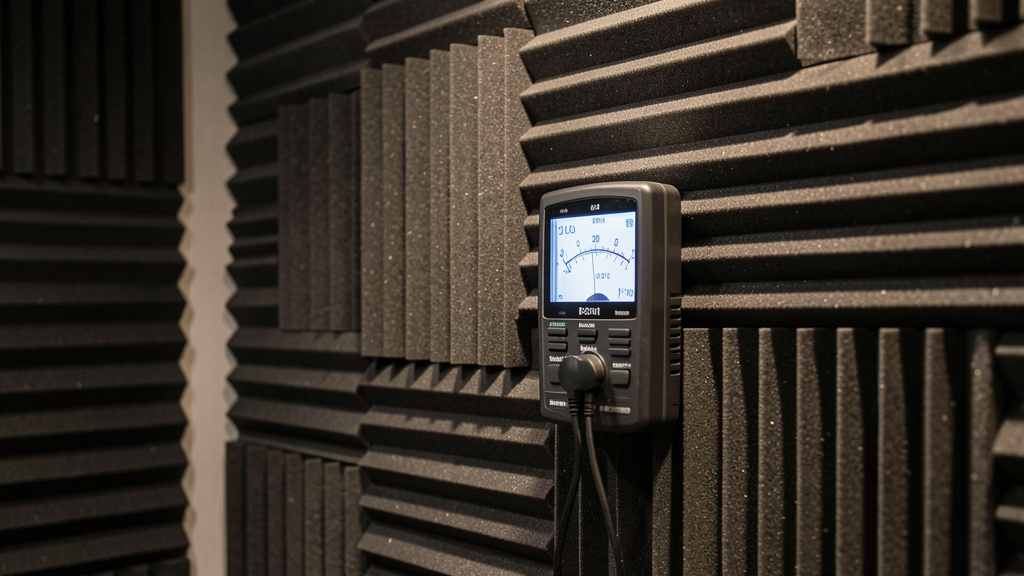
Move beyond trial and error. Learn how to assess your specific noise problem and apply a layered system of materials—based on established acoustic principles—to achieve meaningful noise reduction in your space.
Effective soundproofing isn’t about slapping acoustic foam on walls or buying the thickest mat available. Meaningful noise reduction requires understanding how sound travels, why certain materials work in specific scenarios, and how to layer solutions strategically. This guide clarifies common misconceptions, translates core acoustic principles into actionable steps, and helps you create noticeably quieter spaces—without investing time or resources in solutions mismatched to your situation. The approach reflects widely recognized building science concepts and references international testing standards (ASTM E90, ISO 10140) commonly applied across residential, commercial, and multi-family contexts.
Introduction: Why Soundproofing Efforts Often Fall Short
Hardware stores and online retailers offer countless products promising dramatic quiet: egg-crate foam, rubber mats, heavy curtains, spray barriers. Yet many users report limited results. Why? Sound behaves like water—it exploits the smallest gaps, travels through solid structures, and shifts between energy forms. A solution targeting airborne noise (voices, television) may do little against impact noise (footsteps, dropped objects). A material excellent at absorbing echoes within a room rarely blocks sound transmission between rooms. This fundamental mismatch drives recurring frustration.
True sound isolation relies on four interrelated physical principles: mass, damping, decoupling, and sealing. No single product excels at all four. Success emerges from thoughtfully combining materials to address your space’s specific noise profile. Building regulations in many regions (such as International Building Code Section 1207 in the U.S. or EN ISO 717 in parts of Europe) specify minimum Sound Transmission Class (STC) and Impact Insulation Class (IIC) ratings for partitions between dwelling units precisely because isolated material applications often underperform. Acoustic professionals typically design systems, not prescribe single “best” products. This guide adapts that systematic perspective into a clear, actionable process—whether you’re in a rental apartment, finishing a basement, or planning a dedicated media space. Understanding these principles forms the essential foundation for every effective decision.
The ABCs Framework: Assess, Block, Combine, Seal
Random product purchases rarely yield lasting results. Sustainable noise reduction follows a logical sequence. The ABCs Framework replaces overwhelm with clarity by guiding diagnosis before solution. This workflow mirrors standard industry practice: identify the noise type and path, select appropriate countermeasures, integrate them intentionally, and address vulnerabilities. Skipping phases may limit effectiveness. Let’s explore each step with practical detail.
Step 1: Assess Your Noise Problem (The Diagnostic Phase)
Before selecting any material, become a sound detective. Misdiagnosis is a frequent reason soundproofing efforts fall short of expectations. Is noise entering through walls, floors, ceilings, doors, or sneaking via ducts and outlets? Is it low-frequency rumble (traffic, subwoofers) or sharper mid/high frequencies (speech, keyboard clicks)? Solutions for bass-heavy neighbor music differ significantly from those for overhead footsteps.
Identify Noise Type & Path:
* Airborne Noise: Travels through air (speech, TV, barking). Primarily addressed with mass and sealing. Simple check: Hold a lit candle near potential leak points (outlets, door gaps). If the flame flickers consistently, air—and likely sound—is moving there.
* Impact Noise (Structure-Borne): Generated by physical contact (footsteps, furniture movement, appliance vibration). Requires decoupling and damping. Simple check: Have someone walk deliberately upstairs. If you feel vibrations through the floor and hear the sound clearly, impact noise is a dominant factor.
* Flanking Noise: Sound traveling around your intended barrier—through ceiling cavities, under doors, along ductwork, or via electrical boxes. Often overlooked. Simple check: Close the room door tightly. If noise diminishes noticeably, gaps around the door or other flanking paths are significant contributors.
Practical Assessment Protocol:
1. Map Source & Path: Stand in the affected area. Close your eyes. Where does sound feel most prominent? Gently tap walls or floors—does the sound character change? Note all potential entry points: doors, windows, vents, outlets, light fixtures, baseboards, ceiling edges.
2. Frequency Clues: Persistent low rumbles (below 250 Hz) suggest traffic, HVAC systems, or subwoofers—typically more challenging to address, requiring robust mass and specialized damping. Mid/high frequencies (500 Hz+) like conversation are generally more manageable with standard mass-based solutions.
3. Time & Context: Does noise intensity change throughout the day? (e.g., footsteps primarily during daytime hours = impact noise from above). Is it constant (HVAC hum) or intermittent (door slams)? This informs urgency and solution complexity.
4. Simple Tools: Use a free decibel meter app (like NIOSH SLM) to log noise levels at different times. Record a short audio sample of the issue for reference. Press your ear gently against different surfaces—sound often reveals its path audibly.
Why this step matters: Adding mass-loaded vinyl to a wall won’t resolve noise primarily entering through an unsealed HVAC vent. Assessment directs effort and resources where they’ll have the greatest impact. For instance, addressing a major flanking path like a door gap often yields more noticeable improvement than adding mass to a already-solid wall. Diagnosis guides effective action.
Step 2: Block with Mass and Density (The Foundation Layer)
Mass forms a critical first defense against airborne noise. The underlying principle is straightforward: denser, heavier materials resist sound wave vibration more effectively. Imagine sound waves encountering tissue paper versus a thick bookshelf—the denser barrier impedes transmission. The Mass Law indicates that approximately doubling the mass of a uniform barrier may improve isolation by 5–6 dB—a perceptible reduction. However, mass alone has limitations, especially with low frequencies, and works best when combined with other principles.
Core Mass Materials Overview:
* Standard Drywall (Gypsum Board): Common baseline. A single layer of 1/2″ drywall typically achieves STC ~33. Upgrading to 5/8″ Type X fire-rated drywall adds density and rigidity, potentially reaching STC ~36–39. Tip: Installing sheets horizontally on walls can help minimize aligned seams with studs. Consideration: Verify product specifications; some marketed “soundproofing drywall” offers minimal density gain over standard options. Look for weight per square foot (psf); higher-density variants exceed 2.5 psf.
* Mass-Loaded Vinyl (MLV): A flexible sheet (typically 1–2 lbs per sq ft) made of vinyl compounded with inert minerals. STC ratings commonly range from 26 (1 lb) to 32+ (2 lb). How it functions: Its limp mass property helps resist resonant vibration—unlike rigid materials that may vibrate sympathetically at certain frequencies. Installation note: Seams should overlap by 2+ inches and be sealed continuously with acoustic sealant. MLV is generally most effective when sandwiched between other rigid layers (e.g., between drywall sheets or under flooring) rather than applied directly over framing facing the noise source, which can sometimes lead to unintended vibration. Alternative consideration: Multiple layers of standard drywall with a damping compound often provide comparable or better performance at similar cost and may be easier to finish smoothly.
* Concrete & Cement Board: High-mass solutions. A 4-inch concrete wall may achieve STC 50+. For retrofits, cement board (like HardieBacker, ~2.5 psf) adds significant mass under tile or as a wall layer. Important: Verify structural capacity before adding substantial weight to floors or ceilings. Professional consultation is advisable for ceiling applications or uncertain structural conditions.
* Specialty High-Mass Drywall: Products like QuietRock integrate multiple layers (gypsum, damping compounds, constrained layers) to achieve high STC ratings (50+) in a single sheet. Context: These are typically expensive ($100+/sheet), heavy, and require precise installation per manufacturer guidelines. Often cost-prohibitive for entire rooms compared to layered standard solutions. May be considered for critical single barriers (e.g., a shared wall for a home theater).
Clarifying the Role of Mass: “More mass is always better” is an incomplete guideline. A single, very heavy rigid barrier can still transmit sound efficiently at its resonant frequency. This is why mass is most effective when combined with damping (to dissipate vibrational energy) and decoupling (to break structural vibration paths). Mass is necessary but rarely sufficient alone. Think of it as one essential component within a coordinated system.
Step 3: Combine with Damping and Decoupling (The Synergy Layer)
This phase transforms basic barriers into high-performing assemblies. Mass impedes sound energy, but when sound waves strike a rigid surface, they induce vibration. Those vibrations can travel through the structure and re-radiate sound on the opposite side. Damping and decoupling disrupt this energy transfer pathway.
Damping: Converting Vibrational Energy
Damping materials are viscoelastic compounds that absorb vibrational energy within a structure, converting it into negligible heat. They perform best when constrained between two rigid layers (constrained layer damping).
- Viscoelastic Damping Compounds (e.g., Green Glue-type products): Widely used in both DIY and professional applications. Applied between layers of drywall, plywood, or OSB. As the constrained layers vibrate slightly out of phase, the compound shears internally, dissipating energy. Application notes: Follow manufacturer coverage guidelines (often ~2 tubes per 4×8 sheet). Apply in a serpentine pattern to ensure full contact. Allow recommended curing time (often 7–14 days) before finishing. Performance context: Adding damping compound between two layers of 5/8″ drywall can significantly improve STC performance compared to drywall alone. Budget note: While proprietary compounds are optimized, some explore alternatives. However, efficacy, odor, and long-term flexibility vary. Verified acoustic compounds generally offer more reliable, consistent results.
- Damping Mats: Pre-formed sheets (often rubber or composite) used under flooring or between wall layers. Effective for impact noise reduction on floors. Key point: Install continuously without gaps. Overlapping seams should be taped per product instructions. Works best when integrated into a floating floor system (decoupling).
Decoupling: Interrupting the Vibration Pathway
Decoupling physically separates the source side of a structure from the receiving side, preventing vibrations from traveling directly through framing. This is particularly valuable for impact noise and enhances airborne isolation.
- Resilient Channels (RC-1, RC-2): Thin metal channels screwed only to studs or joists. Drywall is then screwed only to the channel lips, creating a slight separation. Critical installation note: Screws must penetrate only the channel—not the stud behind it (“short-circuiting”), which negates the decoupling benefit. Use a depth stop. RC-1 is lighter weight; RC-2 (heavier gauge) is often preferred for ceilings. Performance context: Proper installation may contribute 5–10 STC points. Alternative: Sound Isolation Clips & Hat Channels (e.g., Kinetics, RSIC systems). Clips mount to studs; hat channel mounts to clips. Generally more forgiving of minor installation variations, offers higher potential performance gains (10–15+ STC points), and provides better low-frequency isolation. Often recommended for critical applications (bedrooms, home theaters, ceilings) or when installer experience is uncertain.
- Staggered or Double Stud Walls: A high-performance decoupling method for new construction or major renovations. Two separate stud rows with drywall on each side create a wide air cavity. Can achieve STC 60+. Practical note: Requires significant additional floor space (wall thickness increases by 6+ inches) and is rarely feasible in existing-home retrofits. Included for conceptual completeness.
- Floating Floors: Designed for impact noise (footsteps). A new subfloor layer (plywood) is installed on top of damping mats and/or resilient underlayment, separated from the structural floor. Critical detail: The floating layer must not contact walls. Maintain a 1/2″ perimeter gap, filled with acoustic sealant or specialized isolation strips. Failure here creates a flanking path, significantly reducing effectiveness. Material options: Cork underlayment (natural damping properties), rubber mats (strong impact absorption), or engineered composite systems.
The Fundamental Principle: Sound energy follows the path of least resistance. Mass impedes the direct path, damping dissipates residual energy within the barrier, and decoupling severs the structural bridge—forcing sound to navigate a complex pathway where its energy diminishes.
Step 4: Seal Every Gap (The Detail Layer)
A barrier’s performance is limited by its weakest point. Even small air gaps can significantly compromise overall effectiveness. Sound exploits leaks efficiently. Sealing is not merely finishing work; it is a core performance requirement.
Target Common Vulnerability Points:
* Perimeter Gaps: Where walls meet floors, ceilings, or adjacent walls. Fill with acoustic sealant (a permanently flexible, non-hardening caulk like OSI SC-175 or equivalent). Avoid standard silicone or painter’s caulk—they harden, crack over time, and lose sealing integrity. Apply a continuous bead before installing baseboards or crown molding where accessible.
* Electrical Boxes: Significant flanking paths. Install putty pads (moldable, non-hardening sealant sheets) behind outlet/switch plates on the side facing the noise source. For new installations, consider boxes with integrated gaskets. Seal gaps around boxes within the wall cavity with acoustic sealant before closing drywall.
* Doors: Often the weakest link. Solid core doors (minimum 1.75″ thick) provide substantially better isolation than hollow core doors (STC ~20). Key upgrades: Install an automatic door bottom (seal drops when door closes) and perimeter acoustic seals (kerf-mounted brushes or vinyl fins). Address the threshold gap. A well-sealed solid core door assembly may reach STC 35–45; an unsealed hollow core door remains near STC 20–25.
* Windows: Single-pane windows offer limited isolation (STC ~25–27). Options include acoustic laminated glass (interlayer dampens vibration), secondary glazing (adding an interior pane with an air gap), or quality acoustic window inserts. Seal existing window frame gaps meticulously with acoustic sealant. Heavy, tightly woven acoustic curtains (with mass-loaded vinyl core) offer modest supplemental improvement (STC 5–10) and help with internal room acoustics, but are not a primary solution for significant noise intrusion.
* Vents & Ducts: Consider duct liner internally or external duct wrap with mass-loaded vinyl. Use acoustic vent covers with baffled pathways that absorb sound while permitting airflow. For highly sensitive spaces (studios), dedicated HVAC design with lined ducts and vibration isolators may be warranted.
Sealing Verification Protocol: After major assembly (drywall installed, before painting), conduct a “dark room test.” Close all doors/windows, turn off lights. Have a helper shine a bright flashlight along all seams, outlets, and edges from the noisy side. Any visible light indicates a potential sound leak. Seal every pinpoint of light with acoustic sealant. This visual method identifies leaks that auditory checks might miss.
Material Profiles: Properties, Applications, and Practical Considerations
Moving beyond marketing claims, let’s examine materials through the lens of function and integration. Performance depends heavily on correct application within a system—not just the material itself.
Mass-Loaded Vinyl (MLV): The Flexible Barrier
- Composition: Vinyl polymer compounded with inert minerals (barium sulfate, calcium carbonate). Density typically 1–2+ lbs/sq ft.
- Key Properties: Limp mass characteristic (minimizes resonance), flexible, moisture-resistant. Fire-rated options available (verify ASTM E84 Class A rating). Note: MLV functions as a barrier material; it does not absorb sound within a room.
- Best Applications: Sandwiched between drywall layers on walls/ceilings; under floating floors (over subfloor, under underlayment); wrapped around ducts; lining cabinet backs near noisy appliances. Critical: Should be fully encapsulated within the assembly. Exposed MLV not properly constrained may vibrate or develop surface irregularities over time.
- Installation Notes: Heavy and awkward to handle alone; sharp utility knife recommended for cutting. Seams must overlap 2+ inches and be sealed continuously with acoustic sealant or specialized tape. Avoid stapling MLV directly to framing facing the noise source without constraint, as this can create vibration pathways. Ideal placement is between constrained layers (e.g., between two sheets of drywall).
- Common Consideration: Using MLV as a standalone wall covering without decoupling or damping typically yields minimal improvement. For example, applying MLV directly over existing drywall without proper constraint may result in limited noise reduction and potential material movement. MLV is a component within a system, not a standalone solution.
- Cost Context: Approximately $1.50–$3.50 per sq ft. Compare against adding a second drywall layer with damping compound—often more effective and easier to finish for wall applications.
Viscoelastic Damping Compounds: The Energy Dissipator
- Composition: Proprietary polymer blends designed for optimal shear loss across frequencies. Low-VOC, non-toxic formulations are standard.
- Key Properties: High damping loss factor, remains flexible after curing, bonds well to gypsum, wood, metal. Performance is optimized when constrained between two rigid layers of differing density (e.g., drywall + plywood).
- Best Applications: Between layers of drywall on walls/ceilings; between subfloor and underlayment; within custom panel constructions. Essential for multi-layer mass barrier assemblies.
- Installation Notes: Apply in a continuous “S” or zig-zag pattern covering most of the surface. Use a notched trowel or dispenser gun for even coverage. Clamp layers firmly during cure (screws suffice). Full performance develops over days/weeks as compound cures. Temperature note: Apply within manufacturer-specified temperature ranges (often 50°F–90°F / 10°C–32°C) for optimal adhesion and flow.
- Performance Context: Most effective across the 125 Hz – 2000 Hz range (covering speech and many common noises). Less impactful alone on very low frequencies (<63 Hz), but when combined with mass and decoupling, significantly elevates the system’s overall performance. Laboratory-tested assemblies show notable STC improvements when used correctly between constrained layers versus layers without damping.
- Budget Note: While branded products dominate, generic “acoustic damping compound” exists. Verify independent lab test reports (ASTM E492) if considering alternatives. Performance consistency matters—this compound is a functional element of the system.
Resilient Channels vs. Sound Isolation Clips: Decoupling Options
-
Resilient Channel (RC-1/RC-2):
- Function: Thin hat-shaped metal channel screwed perpendicularly to studs. Drywall attaches only to the channel lip.
- Pros: Lower material cost ($0.50–$1.50/ft), familiar to many installers.
- Cons: Highly installation-sensitive. Screws penetrating the channel and the stud behind (“short-circuiting”) eliminate decoupling benefit. Prone to sagging on ceilings over time, especially lighter gauges. Limited low-frequency performance. Requires meticulous screw placement.
- Consideration: May be acceptable for budget-conscious wall projects with experienced installation. Generally not recommended for ceilings due to sag risk and critical need for reliable overhead decoupling. Installation errors can significantly reduce potential gains.
-
Sound Isolation Clips & Hat Channel:
- Function: Rubber or neoprene-isolated clips mount to studs; hat channel snaps into clips; drywall mounts to channel. Creates a defined mechanical break.
- Pros: More forgiving of minor installation variations. Typically delivers higher, more reliable performance gains (10–15+ STC points). Better low-frequency isolation. Minimal sag risk on ceilings. Clips distribute load evenly.
- Cons: Higher material cost ($2.50–$5.00+/clip + channel), slightly more complex installation sequence.
- Consideration: Often recommended for critical applications (bedrooms, home theaters, ceilings), new construction, or situations where installation precision is uncertain. The reliability and performance consistency frequently justify the additional investment.
Acoustic Sealant: The Essential Detail
- Composition: Permanently flexible polymer (often butyl or acrylic-based). Remains pliable for years.
- Key Properties: High adhesion to multiple substrates (drywall, wood, metal, concrete), paintable, low odor. Must remain flexible—rigid seals crack with normal building movement.
- Best Applications: Perimeter seals (walls/floors/ceilings), sealing electrical box gaps, sealing material seams (MLV, drywall), door/window perimeters, floating floor perimeter gaps.
- Installation Notes: Standard caulk gun application. Cut nozzle tip for precise bead control. Apply before installing finish materials where possible for best access. Smooth bead for optimal contact. Critical: Seal all penetrations—pipes, wires, conduit—as they pass through barriers. A single unsealed penetration can allow noticeable sound transmission.
- Clarification: “Acoustic caulk” and “acoustic sealant” are often used interchangeably. Focus on technical properties: flexibility (high elongation), adhesion strength, and non-hardening characteristic. Standard silicone or painter’s caulk lacks the necessary long-term flexibility and density.
- Practical Tip: Keep a small tube accessible for maintenance. Applying a thin bead of sealant under existing outlet plates on the noise-source side can provide a modest, reversible improvement for renters.
Underlayment Materials: Managing Floor-Borne Noise
- Cork Underlayment:
- Properties: Natural cellular structure provides inherent damping. Good thermal properties. Density: 8–12 lbs/cu ft. Typical IIC improvement: 15–25 points.
- Best For: Floating floors over concrete (basements), under hardwood/laminate. Renewable resource. Note: Requires vapor barrier over concrete slabs. Less effective against very heavy impacts than denser options.
- Rubber Underlayment (Recycled or Virgin):
- Properties: High density and elasticity excel at absorbing impact energy. Strong vibration damping. Density: 15–45+ lbs/cu ft. Typical IIC improvement: 20–35+ points. Thicker generally performs better.
- Best For: High-impact areas (playrooms, multi-story dwellings), under tile, vinyl, or engineered wood. Good moisture resistance. Note: May have initial odor (typically dissipates); verify low-VOC certification. Very thick mats may feel slightly soft underfoot.
- Composite Systems (e.g., Silent Floor-type products):
- Properties: Engineered multi-layer constructions (often foam core + mass layer + vapor barrier). Designed for specific performance targets (IIC 55+). Often include perimeter isolation components.
- Best For: Applications requiring maximum impact noise reduction (studios, high-end residences). Streamlines installation with integrated parts. Consideration: Highest cost range ($2–$5+/sq ft).
- Critical Installation Note: Underlayment must be installed continuously. Seams should be tightly butted or taped per manufacturer specs. Perimeter gap is essential—maintain a 1/4″–1/2″ gap around the room edge, filled with acoustic sealant or isolation strip. Omitting this allows vibrations to travel directly into walls (“flanking”), significantly reducing effectiveness. Always confirm compatibility with your chosen finished floor product.
Addressing Common Scenarios: Applying the Framework
Theory gains clarity through practical application. Here’s how the ABCs Framework adapts to frequent situations.
Scenario 1: Apartment Dweller – Noise from Upstairs Neighbors (Footsteps, Dropped Objects)
- Assess: Primarily impact noise (structure-borne) traveling through floor joists. Likely flanking through shared walls or ceiling perimeter. Low-frequency thuds indicate heavier impacts.
- Block: Adding mass directly to the ceiling is often complex and heavy. Focus shifts to damping and decoupling on the receiving side (your ceiling).
- Combine (Critical): For permanent solutions (with landlord approval): Install sound isolation clips and hat channel on the existing ceiling structure, then add two layers of 5/8″ drywall with damping compound between them. This decouples the new ceiling layer from vibrations above and dissipates residual energy. Alternative (Less Effective): Resilient channel—but clips are generally preferred for ceiling reliability. Renter-Friendly Focus: If structural changes aren’t permitted, concentrate on absorption within your space to reduce perceived noise: thick rugs with dense pads (8+ lb/sq yd rubber pad), heavy curtains, upholstered furniture. This won’t stop transmission but can make noise less noticeable to you. Document concerns and discuss potential solutions (like adding underlayment above) with property management—building codes in some areas address minimum IIC ratings for floor/ceiling assemblies.
- Seal: Meticulously seal all perimeter gaps between the new ceiling assembly and walls with acoustic sealant. Seal electrical boxes in the ceiling cavity.
Scenario 2: Home Office Adjacent to Living Area – TV and Conversation Noise
- Assess: Primarily airborne noise (mid/high frequencies) through the shared wall. Check for flanking via door gaps, shared closets, or ductwork.
- Block: Add mass to the shared wall. Remove existing drywall if feasible during renovation, or add layers over it for retrofits.
- Combine: Recommended Retrofit Path: Install sound isolation clips/hat channel on studs. Attach first layer of 5/8″ drywall. Apply damping compound. Attach second drywall layer, offsetting seams from the first layer. If removing drywall: Add dense insulation (mineral wool like Roxul Safe’n’Sound) into the cavity first for added damping and absorption. Door Solution: Replace hollow core door with solid core door. Install automatic door bottom and perimeter acoustic seals. This single upgrade often provides the most noticeable improvement for airborne noise.
- Seal: Seal all perimeter gaps, electrical boxes (use putty pads behind plates on the living room side), and where new drywall meets floor/ceiling. Perform the flashlight test to verify seal integrity.
Scenario 3: Basement Home Theater – Containing Noise Within the Room
- Assess: Both airborne (dialogue, effects) and low-frequency impact (subwoofer vibrations) through walls, ceiling, floor. Flanking via stairs, ducts, utility penetrations is critical.
- Block & Combine (Comprehensive System):
- Walls: Double stud wall if space allows. Otherwise: clips/channels + double drywall with damping compound on all shared walls. Fill cavities with dense mineral wool insulation.
- Ceiling: Clips/channels + double drywall with damping compound. Crucially decouple ceiling assembly from floor joists above. Address potential flanking into adjacent spaces.
- Floor: Floating floor system: damping mat (rubber/cork) + plywood subfloor + finished floor. Perimeter isolation strip is essential.
- Door: Solid core exterior-grade door with full perimeter seals and automatic bottom. For high isolation, consider a vestibule with two doors.
- Windows: Acoustic laminated glass or high-performance inserts. Seal frames meticulously.
- HVAC: Line ducts internally with acoustic liner. Install duct silencers. Use flexible connectors at equipment. Ensure return air has a dedicated, isolated pathway.
- Seal: Every penetration—electrical, plumbing, data lines—must be sealed with acoustic sealant or fire-rated putty pads. Obsessive attention to sealing is non-negotiable. A single unsealed conduit can allow significant low-frequency energy to escape.
Scenario 4: Bedroom Facing a Busy Street – Traffic Noise
- Assess: Mixed airborne noise (tire hum, engine noise—strong low-frequency component) and potential vibration. Windows are typically the weakest link. Evaluate wall mass and door seals.
- Block: Prioritize the window. Secondary glazing (adding an interior acrylic or glass pane with a 2″+ air gap) is highly effective. Acoustic laminated glass replacement offers top performance but at higher cost. Heavy, tightly sealed acoustic curtains provide modest supplemental reduction (STC 5–10) and help with light control.
- Combine: If the exterior wall faces the street, apply mass/damping/decoupling techniques as in Scenario 2. Seal all window frame gaps thoroughly with acoustic sealant—older windows often leak significantly. Upgrade door seals; replace weatherstripping with acoustic-grade options.
- Seal: Pay close attention to window and door perimeters. Use acoustic sealant, not standard caulk. Install acoustic vent covers if windows require occasional ventilation. Address any visible wall cracks or foundation gaps near the noise source.
Budget-Conscious Pathways: Strategic Choices at Every Level
Effective soundproofing aligns with your constraints. Strategic allocation matters more than total spend. Prioritize based on your Assessment findings.
The $100 “Quick Win” Kit (Renter-Friendly, Non-Permanent)
- Focus: Address the most common, severe flanking path: the door.
- Materials: High-quality door sweep or automatic door bottom ($40–$80), acoustic door seal kit ($25–$50), tube of acoustic sealant ($10), putty pads for outlets on the noise-source side ($15).
- Action: Install door seals meticulously. Apply putty pads behind outlet/switch plates on the wall facing the noise. Seal visible gaps around the existing door frame with acoustic sealant (removable with care). Potential Impact: Can yield a noticeable reduction in perceived airborne noise (e.g., conversation, TV) by addressing a major leak. Limitation: Minimal effect on structure-borne impact noise. Temporary and reversible.
The $500–$1,500 “Targeted Retrofit” (Homeowner, Moderate DIY)
- Focus: Significantly improve one critical barrier (e.g., shared bedroom wall, home office wall).
- Materials: Sound isolation clips & hat channel kit ($200–$400 for ~100 sq ft), two layers of 5/8″ drywall ($150–$300), damping compound ($80–$120 for 4 tubes), acoustic sealant ($20), putty pads ($20), solid core door upgrade if applicable ($200–$500).
- Action: Remove existing drywall on target wall (if feasible). Install clips/channels. Apply first drywall layer. Apply damping compound. Apply second drywall layer (offset seams). Seal all perimeter gaps and electrical boxes meticulously. Upgrade the door if it’s a weak point. Potential Impact: Can achieve STC ratings in the 50–55 range on the treated assembly—transformative for speech and moderate TV noise. Key Success Factor: Precise clip installation and thorough sealing are essential for realizing the investment’s value. Cost estimates are approximate and vary by location and material availability.
The $2,000–$5,000+ “Comprehensive Room Solution” (New Build/Renovation, Critical Space)
- Focus: Holistic system integration for a dedicated quiet space (theater, studio, master suite).
- Materials: Clips/channels for all walls/ceiling, multiple drywall layers with damping compound, floating floor system (damping mat, plywood, isolation strips), solid core acoustic door assembly, secondary glazing or window inserts, duct liners/silencers, extensive acoustic sealant.
- Action: Integrate soundproofing into the construction sequence. Frame walls with decoupling in mind. Install insulation in cavities. Seal every penetration during rough-in phase. Coordinate with trades on sealing penetrations. Potential Impact: Achieves STC/IIC ratings of 55–65+, creating a genuinely isolated environment. Essential for meaningful low-frequency noise control (subwoofers, traffic rumble). Professional Consideration: For complex projects or extreme requirements, consulting an acoustic professional ($500–$1,500) can prevent costly errors and optimize system design.
Budget Wisdom: Avoid spending on “acoustic foam panels” for sound isolation. They treat room acoustics (reducing echoes/reverberation inside the room), not transmission between rooms. Redirect that budget toward sealing gaps or adding mass. Prioritize sealing and decoupling over exotic materials. A meticulously sealed standard assembly consistently outperforms a poorly sealed “premium” assembly. Manage expectations: complete silence is rarely achievable; meaningful, noticeable reduction is the realistic and valuable goal.
Navigating Common Pitfalls and Clarifying Misconceptions
Awareness of frequent stumbling blocks prevents frustration and wasted effort.
Pitfall 1: Confusing Sound Absorption with Sound Isolation
* Misconception: “Acoustic foam panels on the wall will stop my neighbor’s noise.”
* Clarification: Foam, fabric panels, and similar products are absorbers. They reduce echoes and reverberation within your room, improving sound clarity inside the space. They add negligible mass and do very little to block sound transmission through the wall. Installing them on a shared wall addresses internal room acoustics but not isolation. Guidance: Use absorbers inside your quiet room after structural isolation is addressed. They enhance perceived quietness but are not isolation tools.
Pitfall 2: Overlooking Flanking Paths
* Misconception: “I soundproofed the shared wall, so why is noise still audible?”
* Clarification: Sound travels the path of least resistance. Sealing the wall but leaving a gap under the door allows sound to flood through that opening. Unsealed ceiling perimeters, ducts, or electrical boxes create alternative pathways. Guidance: Think in three dimensions during Assessment. Map all potential paths. Seal perimeter gaps thoroughly. Address doors and windows. Use putty pads on all electrical boxes along the barrier. Seal penetrations for pipes and wires.
Pitfall 3: Compromising Decoupling During Installation
* Misconception: “I installed resilient channel, so my wall is decoupled.”
* Clarification: If drywall screws penetrate through the resilient channel and into the stud behind, the decoupling is “short-circuited.” Vibration travels directly through the screw. This is a frequent installation error. Guidance: Sound isolation clips are generally more forgiving. If using resilient channels, use a depth stop on your drill, mark screw depth, and verify screws contact only the channel lip. For clips, ensure the hat channel is fully seated without contacting studs.
Pitfall 4: Underestimating Low-Frequency Challenges
* Misconception: “This material blocks all noise equally.”
* Clarification: Low frequencies (bass, traffic rumble, HVAC hum) have long wavelengths and high energy. They require significantly more mass, specialized damping, and robust decoupling to control than mid/high frequencies. A solution effective for speech may have limited impact on deep bass. Guidance: During Assessment, note low-frequency presence. Prioritize systems combining high mass (double drywall), verified damping compounds, and superior decoupling (clips over channels). Set realistic expectations—significant reduction of deep bass in retrofits is challenging and costly; meaningful attenuation is the practical objective.
Pitfall 5: Underestimating the Importance of Sealing
* Misconception: “The drywall seams are taped and mudded; that’s sealed enough.”
* Clarification: Standard drywall mud and tape create a rigid seal that can crack with normal building movement. Acoustic sealant remains flexible for years, maintaining an airtight (and soundtight) barrier. Even a small gap around a door can compromise performance significantly. Guidance: Treat sealing as a critical system component. Use acoustic sealant on all perimeter joints, around electrical boxes within cavities, and on material seams. Perform the flashlight test to verify completeness.
Your Questions, Answered
Q: What’s often the most impactful first step for reducing noise?
A: In many common scenarios involving airborne noise, addressing air gaps around doors and windows provides significant return. Installing a quality automatic door bottom and perimeter seals on a hollow-core door can improve its effective rating noticeably—often yielding a more perceptible reduction than adding mass to a wall, at lower cost and effort. However, the most impactful step depends entirely on your specific Assessment findings. Always diagnose first.
Q: Can I improve sound isolation without removing existing walls?
A: Yes, with realistic expectations. Adding a second layer of drywall with damping compound over existing drywall (using resilient channels or clips if feasible) can meaningfully boost performance. However, achieving full decoupling is more challenging without removing the first layer. Focus intensely on sealing all gaps, upgrading the door, and adding mass where practical. Retrofits typically achieve good improvement (e.g., STC 45–50 on treated assemblies) but rarely match new-construction performance levels. Manage expectations accordingly.
Q: Do soundproofing curtains provide meaningful noise reduction?
A: They offer modest improvement (typically STC 5–10), primarily for mid/high frequencies, and help reduce internal room echoes. They are generally ineffective against low-frequency noise (traffic rumble, bass) and cannot match the performance of properly sealed windows, secondary glazing, or window inserts. Best used as a supplementary measure alongside more robust solutions, or for temporary/rental situations where window modification isn’t possible. Look for curtains specifying a mass-loaded vinyl core and tight-weave fabric construction.
Q: What’s the difference between STC and IIC ratings? Why should I care?
A: STC (Sound Transmission Class) measures a barrier’s effectiveness against airborne noise (speech, TV). Higher STC = better blocking. IIC (Impact Insulation Class) measures effectiveness against impact noise (footsteps, dropped objects) on floors/ceilings. Higher IIC = better impact noise reduction. Building codes in many areas specify minimums (e.g., STC 50, IIC 50 between dwelling units). When evaluating materials or assemblies, seek independently tested STC/IIC values (ASTM E90/E492), not manufacturer estimates alone. Real-world performance is often 5–10 points lower than lab tests due to flanking paths and installation variables.
Q: Is standard insulation (fiberglass, cellulose) useful for soundproofing walls?
A: Insulation within a wall cavity enhances performance but is not a standalone solution. It adds damping and absorbs sound within the cavity, reducing resonance. Mineral wool (like Roxul Safe’n’Sound) is generally superior to fiberglass or cellulose for sound control—it’s denser and provides better damping across frequencies. Always use cavity insulation in conjunction with mass, decoupling, and sealing. Never rely on insulation alone; an insulated single-stud wall still has modest STC performance (~35–40).
Q: Is spray foam insulation recommended for soundproofing cavities?
A: Standard expanding spray foam is generally not recommended for filling wall or floor cavities intended for sound isolation. While it seals air gaps well, its rigid nature can sometimes couple framing members, potentially increasing sound transmission at certain frequencies. It also lacks the damping properties of mineral wool. Use open-cell spray foam only for sealing small, specific air leaks (like around window frames) where acoustic sealant is impractical. For cavity fill, dense-pack cellulose offers modest improvement, but mineral wool remains the preferred choice for acoustic performance in most scenarios.
Q: How much space will soundproofing treatments consume?
A: It varies by system. Adding a second drywall layer with damping compound adds ~1 inch per wall. Resilient channels add ~1/2 inch. Sound isolation clips + hat channel add ~1.5 inches. Floating floors add 1/2 inch (thin cork) to 2+ inches (thick rubber/composite systems). Double-stud walls add 6+ inches. For retrofits in existing homes, space loss is usually minimal (1–1.5 inches per treated wall) and often acceptable given the noise reduction benefit. Plan furniture placement accordingly during planning.
Q: Are there environmentally conscious soundproofing material options?
A: Yes. Cork underlayment is renewable and provides good damping. Recycled rubber underlayment (from post-consumer tires) offers strong impact noise reduction. Hemp or cotton insulation (like UltraTouch) provides cavity damping with lower embodied energy than some alternatives. Look for products with recycled content certifications (e.g., SCS Recycled Content) and low-VOC emissions (GREENGUARD Gold). Verify performance data—eco-friendly attributes don’t automatically guarantee acoustic effectiveness. Mineral wool often contains significant recycled content (slag) and is highly effective.
Q: Will thorough sealing affect room ventilation or HVAC performance?
A: Creating a tightly sealed room can reduce natural air exchange. For highly isolated rooms (e.g., home theaters), ensure adequate HVAC airflow. Solutions include installing acoustic duct liners and silencers on vents, using a dedicated mini-split system, or adding an energy recovery ventilator (ERV) for fresh air without significant noise ingress. Never block HVAC vents entirely—this creates pressure imbalances and reduces system efficiency. Consult an HVAC professional when undertaking major soundproofing projects affecting room enclosure.
Q: How can I gauge if my soundproofing efforts were successful?
A: Subjective improvement is the initial indicator (“I notice the TV much less”). For objective comparison: Use a decibel meter app to record noise levels before and after at consistent times, locations, and source conditions. Note the reduction in dB (a 10 dB drop is generally perceived as roughly half as loud). For critical applications or verification, consider hiring an acoustic consultant for pre- and post-construction testing per ASTM standards. Maintain realistic expectations—complete silence is uncommon; achieving a significant, noticeable reduction in disruptive noise is a successful outcome.
Conclusion and Your Path Forward
Meaningful sound reduction stems not from a single “magic” material, but from embracing a systematic, principle-based approach. You now have the ABCs Framework—a repeatable process to diagnose noise thoughtfully, apply mass strategically, integrate damping and decoupling intentionally, and seal vulnerabilities thoroughly. Remember this core insight: Sound exploits weakness. Your solution must be holistic. A meticulously sealed standard assembly consistently outperforms a poorly executed “premium” installation. The most carefully selected material underperforms if installed incorrectly; the simplest sealant delivers value when applied with precision.
Recap: Three Foundational Principles
- Diagnose Before You Act: Identify noise type (airborne/impact), primary path, and frequency characteristics. Target your solution.
- Layer Principles, Not Just Products: Combine mass + damping + decoupling + sealing. No single material accomplishes everything.
- Seal with Diligence: Treat every gap, seam, and penetration as critical. Flexibility and continuity in sealing are essential.
The 24-Hour Rule: Your Immediate Next Step
Within the next 24 hours, complete this single, specific action: Conduct the Flashlight Test. Tonight, after dark, close yourself in the room needing attention. Have a helper shine a bright flashlight along every seam of the shared wall—top, bottom, sides, around outlets, near the door frame—from the noisy side. Mark every pinpoint of light you see with a small piece of painter’s tape. Tomorrow, you’ll have a clear, visual map of your weakest points. This takes under 15 minutes and provides more actionable intelligence than hours of generic research. Start here. Address these gaps first with acoustic sealant. You will likely notice an immediate, tangible difference in perceived quiet.
The Bigger Picture: Quiet as a Component of Well-Being
Beyond the technical achievement lies a profound human benefit. Unwanted noise is a documented contributor to stress—disrupting sleep, impairing concentration, and affecting overall comfort. Creating intentional quiet is not indulgence; it’s an investment in mental clarity, restorative rest, and greater control over your personal environment. Whether it’s hearing a child’s bedtime story without street noise intrusion, recording audio without interruptions, or simply reclaiming peace within your home, the pursuit of reduced noise is deeply personal. You are not merely modifying surfaces; you are cultivating a more comfortable, functional sanctuary. The principles in this guide provide a reliable foundation to build that sanctuary with confidence, care, and lasting results. The quieter space you seek is achievable through methodical, informed action.
Explore Our Complete System:
Building a Floating Floor for Impact Noise Reduction | Understanding STC & IIC Ratings: A Practical Guide | Soundproofing Doors: From Hollow Core to Effective Seal | Acoustic Treatment vs. Soundproofing: Clearing the Confusion | Creating a Budget-Friendly Quiet Space: A Step-by-Step Approach | Managing Low-Frequency Noise: Practical Strategies for Bass and Traffic | Non-Permanent Sound Control Solutions for Renters