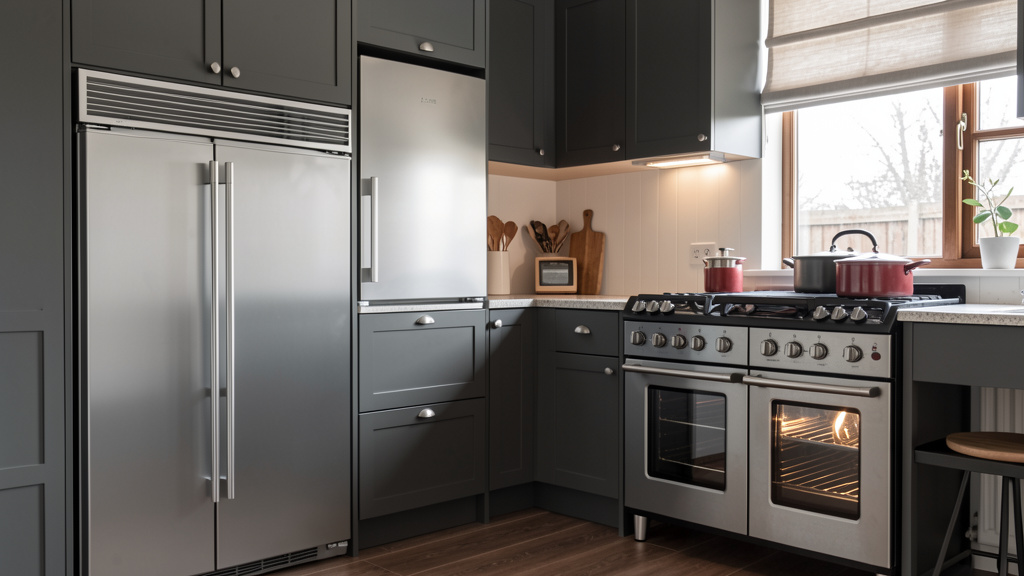
Stop Guessing Which Appliance Type Fits Your Kitchen—and Your Life. A Step-by-Step Guide to Making the Right Choice for Every Appliance, Every Budget, and Every Lifestyle.
Choosing between built-in and freestanding kitchen appliances extends far beyond surface aesthetics—it fundamentally shapes your kitchen’s functionality, daily workflow efficiency, long-term maintenance experience, and alignment with evolving household needs. This guide moves beyond the oversimplified “built-in equals premium, freestanding equals budget” narrative by offering a practical, layered framework informed by recurring patterns in kitchen design outcomes, spatial considerations, and homeowner decision pathways. Whether renovating a historic home, designing new construction, or replacing a single aging unit, you’ll gain clear criteria to select appliances that harmonize with your authentic routines, physical space constraints, and value priorities—minimizing future friction and maximizing daily satisfaction.
Introduction
Step into any kitchen showroom, and two distinct visions emerge. One presents seamless cabinetry flowing uninterrupted around refrigeration and cooking zones, handles aligned with quiet precision, evoking calm order. The other celebrates expressive, standalone appliances—vintage-inspired ranges in cheerful hues, sculptural refrigerators with distinctive profiles—highlighting personality and straightforward replacement. Between these visual poles lies a nuanced decision landscape where practical needs, spatial realities, budget considerations, and future uncertainties intersect. Homeowners often report unexpected stress during appliance selection precisely because it balances so many competing factors: “Will this support our family’s cooking rhythm?” “Can it adapt if our needs change?” “Does the installation complexity match our renovation scope?” “Will maintenance feel manageable?”
Analysis of common kitchen renovation outcomes reveals a consistent insight: the most enduring satisfaction arises not from selecting the most expensive option, but from aligning appliance integration with three foundational considerations—your genuine lifestyle patterns, your kitchen’s physical constraints, and your definition of long-term value. A household preparing large meals daily has fundamentally different needs than one prioritizing quick weekday dinners. A compact galley kitchen in an older home presents structural considerations a new open-plan layout may not. This guide replaces uncertainty with structured clarity. We move beyond superficial comparisons to deliver a repeatable methodology for evaluating every major appliance category through lenses that reflect your reality. By the conclusion, you’ll possess a personalized decision pathway—not just for today’s choice, but for navigating future upgrades, repairs, and evolving household dynamics with confidence.
The Kitchen Integration Decision Framework: Three Layers to Clarity
Avoid framing this as a binary choice. Achieving appliance harmony requires examining your situation through three interconnected layers. Skipping any layer risks misalignment—a visually seamless built-in refrigerator that disrupts workflow, or a budget-friendly freestanding range that creates cleaning challenges or aesthetic friction. This framework, developed to address frequently encountered challenges in kitchen appliance integration, transforms a complex decision into a logical sequence of focused evaluations. Proceed sequentially: Lifestyle Assessment first (the why), Kitchen Anatomy second (the where), Long-Term Value third (the what next). Each layer builds upon the previous, filtering options until a well-supported choice emerges.
Layer 1: The Lifestyle Assessment – Your Daily Kitchen Reality
Before measuring cabinetry openings, reflect inward. Your kitchen serves your life; appliances should support—not complicate—your routines. Answer these questions with honest self-awareness. There are no universally “correct” answers, only answers true to your context.
Cooking Frequency & Style Reflection:
Consider your typical engagement with the kitchen. Are you the “Weekend Culinary Enthusiast” who transforms the space for extended cooking sessions? The “Efficiency-Focused Household” prioritizing speed for smoothies, reheating, and simple assembly? Or the “Active Family Hub” managing multiple meals, snacks, and after-school demands? Each pattern suggests different priorities:
* Weekend Culinary Enthusiast: May benefit from precise temperature control (dual-fuel capabilities), expansive cooking surfaces (multiple burners, specialized zones), and dedicated appliances like warming drawers or steam ovens. Built-in wall ovens paired with a separate cooktop often enhance workflow for serious bakers. High-performance freestanding ranges remain excellent alternatives where space or budget constraints exist.
* Efficiency-Focused Household: Values intuitive controls, rapid preheat times, and easy cleanup. A quality freestanding range with a smooth-top electric element or induction surface offers simplicity and reliability. Built-in microwave drawers provide seamless integration and ergonomic access (reducing bending) but at a higher investment. Assess whether “seamless integration” matters less than “immediate functionality.”
* Active Family Hub: Prioritizes durability, generous capacity, intuitive safety features, and flexible storage. A freestanding refrigerator with a bottom freezer (easier snack access for children) or side-by-side configuration (accommodating larger items) may outperform narrow built-in columns. A freestanding dishwasher with adaptable rack systems and robust soil sensing handles varied loads effectively. Safety features like control locks become highly relevant.
Household Dynamics & Future Considerations:
Who uses the space currently, and how might that evolve? Document current users: primary cook heights (ergonomics matter), presence of young children or aging relatives, frequency of multi-person cooking. Then, thoughtfully project forward:
* Scenario Exploration: “If our family grows, will current layouts allow safe movement around cooking zones?” “If mobility needs change later, would pull-out shelves or waist-height oven placement become essential?” “If remote work increases lunch preparation, is accessible counter space near food prep zones more valuable than a fully concealed microwave?”
* Gathering Style: Do large holiday meals necessitate multiple oven cavities (favoring built-in wall oven + warming drawer)? Or casual entertaining where flexible beverage storage (a dedicated undercounter unit) outweighs a second full refrigerator? Freestanding appliances offer temporary mobility (e.g., moving a cart with supplemental cooling for parties). Built-ins provide permanent, integrated solutions but less flexibility.
Maintenance Perspective & Repair Outlook:
Honestly assess your relationship with upkeep. Some find cleaning seamless cabinetry fronts satisfying; others prefer accessible sides for thorough wiping. Some feel comfortable coordinating appliance service; others prioritize minimizing downtime.
* Cleaning Realities: Built-in appliances often create tighter gaps between units and cabinetry. While visually clean, these spaces may require specific tools (crevice brushes, microfiber wands) for maintenance. Freestanding appliances typically allow full access to sides and backs for wiping, though exposed surfaces may show wear over time. Dishwasher integration is critical: a poorly sealed door—on any type—can potentially allow moisture migration into adjacent cabinetry. Freestanding models often feature accessible kickplates and filters.
* Repair Consideration: Reflect on your comfort with potential service timelines. Built-in appliances, especially custom-paneled units, may require brand-specialized technicians and parts, potentially extending service windows. Freestanding appliances often utilize more standardized components, which local technicians may service more readily. Consider: “How disruptive would temporary appliance downtime be in our household rhythm?”
The Fundamental Principle: Successful appliance integration occurs when the chosen solution recedes into the background of daily life—reliably supporting routines without demanding constant attention, adjustment, or anxiety. The most satisfying appliance is the one you rarely notice, until it perfectly fulfills its purpose.
Layer 2: The Kitchen Anatomy Audit – Measuring Your Physical Reality
Lifestyle insights require grounding in your kitchen’s immutable physical constraints. This audit prevents the common frustration of selecting an appliance online only to discover fit issues, clearance conflicts, or utility mismatches. Approach this phase with surveyor-like precision.
Step 1: Pathway Assessment
Measure the narrowest point along the route from your exterior entry (or garage) to the installation site. Include stairwell widths, hallway turns, and doorframe dimensions (height and width). Built-in appliances, particularly large refrigeration units or stacked ovens, may arrive in sections but still require significant clearance. Freestanding units are typically delivered whole. A standard 36-inch refrigerator may require 38+ inches of clearance for maneuvering. Critical Check: Temporarily remove rugs or furniture along the path. Photograph the route. Share measurements with your appliance retailer early—they can identify potential delivery constraints before purchase.
Step 2: Appliance Niche Documentation
For each appliance location, create a detailed sketch with these measurements (record in both inches and centimeters):
* Width: Measure at top, middle, and bottom of the opening. Walls are rarely perfectly plumb. Note the smallest width.
* Height: Measure from finished floor to underside of cabinet (for undercounter units) or to ceiling (for full-height units). Account for soffits, bulkheads, or uneven surfaces. For ranges, measure floor to bottom of overhead microwave or cabinet.
* Depth: Measure from back wall to front face of adjacent cabinetry or countertops. Crucially, include any protruding handles, knobs, or control panels on existing elements. Built-in refrigerators often require specific depth allowances for ventilation and door operation.
* Critical Clearances: Consult preliminary appliance specifications early. Requirements vary:
* Refrigerators: Typically require 1–2 inches of clearance on sides/top for airflow (unless specified as “zero-clearance” or “flush-fit”). Built-in models demand precise cabinet framing per manufacturer guidelines.
* Ranges/Ovens: Freestanding ranges have specific clearance requirements from combustible surfaces. Built-in wall ovens require exact cabinet cutout dimensions and ventilation specifications. Gas units need precise gas line placement.
* Dishwashers: Require accessible connections for water supply, drain line, and electrical behind the unit. Built-in models need precise cabinet face frame alignment for the door to sit flush.
* Utility Mapping: Locate and photograph:
* Electrical outlets (voltage? 120V standard or 240V for ranges?)
* Water supply valves and drain locations (for dishwasher, refrigerator ice maker)
* Gas line shut-off valve and pipe location (for gas units)
* Ventilation ducting path and termination point
* Note distances from utilities to intended appliance locations. Relocating utilities often represents a significant portion of integration costs.
Step 3: Workflow Pathway Validation
The work triangle (sink-refrigerator-cooktop) remains a valuable efficiency reference. Map your current or planned flow:
1. Stand at your sink. Walk naturally to the refrigerator location. Is the path clear? Does the door swing obstruct movement?
2. Walk from refrigerator to primary cooking zone. Does the path cross high-traffic areas? Is there adequate landing space (minimum 15 inches recommended) on both sides of the cooktop for hot pans?
3. Walk from cooktop to sink. Is the path logical? Is counter space available adjacent to the sink for prep and cleanup?
* Integration Impact: Seamless cabinetry can enhance flow by eliminating protruding corners. However, poorly planned placements (e.g., refrigerator door swinging into a main walkway) create bottlenecks. Freestanding appliances with protruding handles require careful positioning. Use painter’s tape on the floor to outline proposed footprints before finalizing choices. Walk the paths repeatedly at different times of day.
Step 4: Surface Interface Evaluation
How will the appliance meet surrounding surfaces? This intersection defines both aesthetics and function.
* Countertop Overhang: Standard overhang is approximately 1.5 inches. Will a freestanding range’s control panel sit under this overhang, making knobs difficult to reach? Built-in cooktops are designed to sit flush within the countertop cutout.
* Cabinet Face Frames: For built-in dishwashers or panel-ready refrigerators, the cabinet face frame depth must align with the appliance’s required reveal. Mismatches cause doors to sit proud or recessed. Freestanding appliances have finished sides; ensure these complement your cabinet color/finish if visible.
* Toe Kick Alignment: Built-in appliances (dishwashers, column refrigerators) should align with adjacent cabinet toe kicks for a clean line. Freestanding units have integrated toe kicks that may differ in height or depth—creating visual discontinuity. Solutions exist (custom filler strips), but add cost and complexity.
Layer 3: The Long-Term Value Perspective – Beyond Initial Cost
Purchase price is only the starting point. True value unfolds over years of ownership. This layer encourages reflection on hidden costs, usage patterns, and personal value definitions.
Initial Investment Considerations:
* Freestanding: Generally lower entry cost. A quality 30-inch freestanding gas range often begins in the $800–$1,500 range. Standard-depth refrigerators: $1,000–$2,500. Dishwashers: $400–$900.
* Built-In: Higher initial investment. A 30-inch built-in cooktop + separate single wall oven typically starts around $2,500–$5,000+. Column refrigeration systems: $4,000–$10,000+. Fully integrated dishwashers with custom panels: $1,200–$2,500+.
* Important Nuance: “Built-in” exists on a spectrum. Slide-in ranges (designed to fit between cabinets with a finished top overlapping the countertop) cost more than basic freestanding models but less than full cooktop + wall oven setups, offering a semi-integrated appearance. Similarly, “counter-depth” refrigerators (typically 24–27 inches deep vs. standard 30–34 inches) provide a more integrated profile at a moderate premium over standard-depth models. Define realistic budget ranges for each appliance category before browsing.
Installation & Integration Factors:
This area frequently impacts total project cost significantly. Freestanding appliances often connect with minimal modification if utilities align. Built-ins frequently require structural adjustments.
* Freestanding: Basic installation (disconnect old, connect new) may cost $100–$300 per appliance if utilities are optimally positioned. Moving a gas line? $200–$600+. Adjusting plumbing? $150–$400.
* Built-In: Costs can accumulate:
* Cabinetry Modifications: Framing openings for wall ovens, reinforcing countertops for cooktops, building custom panels. $500–$3,000+ per location.
* Utility Relocation: Precise placement of gas lines, dedicated electrical circuits, plumbing stubs. $500–$1,500+ per utility point moved.
* Ventilation: High-performance cooktops require equally capable, properly ducted range hoods—installation can range $800–$2,500+.
* Professional Coordination: Electricians, plumbers, carpenters. Obtain multiple detailed quotes before purchasing appliances. Provide exact model numbers and installation manuals for accurate estimates.
* Practical Step: When requesting quotes, share specific model numbers and installation manuals. Vague descriptions lead to inaccurate bids and potential change orders later.
Ownership Experience Over Time:
Consider the full lifecycle:
* Energy Use: ENERGY STAR certified models typically reduce annual energy costs. Built-in refrigerators often feature advanced insulation and compressors, but many modern freestanding units are highly efficient. Review the EnergyGuide label. Calculate potential savings: (Estimated annual kWh × local electricity rate) × expected ownership years. Savings can offset higher initial costs over time.
* Maintenance & Service: Freestanding appliances often benefit from widely available parts and technician familiarity. Built-in units, especially custom-paneled models, may involve higher parts costs or require brand-specialized service. Research brand reliability resources (Consumer Reports, J.D. Power) for shortlisted models. Extended warranties warrant consideration for complex integrated systems.
* Resale Context: Real estate perspectives vary:
* Higher-Value Markets: Cohesive, high-quality integrated appliance packages are often noted positively, particularly when flawlessly executed. However, highly customized or dated integrations may limit appeal.
* Mid-Range Markets: Functionality, condition, and neutral finishes typically matter more than integration type. A clean, modern freestanding suite in good working order is widely desirable.
* Universal Insight: Poorly executed integration—misaligned panels, mismatched finishes, visible gaps—can detract from perceived value. Flawless execution of either approach is preferable to compromised built-ins. Neutral finishes (stainless steel, black stainless, white) generally have broader appeal than bold colors.
Personalized Value Reflection:
Create a simple weighted consideration guide. Assign relative importance (e.g., Upfront Cost: 30%, Installation Complexity: 25%, Long-Term Reliability: 25%, Aesthetic Preference: 20%). Rate shortlisted options against these criteria. This helps objectify emotionally charged decisions.
Appliance-by-Appliance Consideration Guide: Contextual Insights for Each Unit
Generic advice falls short because integration dynamics differ significantly by appliance type. A “built-in” refrigerator addresses different needs than a “built-in” dishwasher. This section explores critical decision factors for major appliances, emphasizing practical realities over marketing language.
Refrigerators: The Visual Anchor
The refrigerator often serves as the kitchen’s visual focal point. Its integration choice carries significant aesthetic weight.
Freestanding Refrigerators: Practical Versatility
Integration Approach: Stand independently with finished sides (stainless steel, black, white, textured finishes). Doors swing open with handles mounted directly on the unit. Standard depths range 30–36 inches (including handles).
* Well-Suited For: Budget-conscious updates, kitchens with minor wall/floor irregularities (more tolerant of imperfections), households prioritizing interior capacity per dollar, situations where future relocation is possible.
* Notable Strengths:
* Accessible Entry Cost: Lowest initial investment. Installation is typically straightforward if water lines exist.
* Capacity Efficiency: Standard-depth models generally offer more interior cubic feet than counter-depth or built-in columns of similar external width—valuable for larger households or bulk shopping.
* Service Accessibility: Technicians access components readily from the rear. Parts are widely available. Replacement is typically straightforward without cabinet modifications.
* Style Adaptability: Available in numerous colors, finishes (including retro styles), and configurations (French door, side-by-side, top/bottom freezer). Easier to refresh later for a style update.
* Key Considerations:
* Protrusion Effect: Standard-depth models extend beyond standard cabinetry (typically 24 inches deep), potentially disrupting sightlines or pathways. Consideration: Counter-depth freestanding models (24–27 inches deep) sit nearer to flush with countertops, offering a more integrated appearance at a moderate premium. Verify interior capacity meets needs.
* Side Visibility: In open-plan kitchens or islands, sides are visible. Ensure the side finish complements your design scheme. Some models offer “panel-ready” side options.
* Door Swing Clearance: Measure meticulously! French door units require adequate space for full opening without hitting cabinets, islands, or walls. Models with “tight-space” hinges may improve access in constrained areas.
* Illustrative Scenario: A household in a 1990s suburban home with a U-shaped kitchen prioritizes storage for active family needs and has a moderate appliance budget. A counter-depth French door freestanding refrigerator provides near-flush integration with existing cabinets, ample capacity, and leaves budget for other key appliances. The visible stainless steel sides coordinate with new faucet and lighting fixtures. Why it aligns:* Addresses core capacity needs while thoughtfully mitigating the protrusion concern affordably. Service simplicity is a practical bonus.
Built-In Refrigerators: Integrated Presence
Integration Approach: Designed to be framed within cabinetry. Typically consist of separate refrigerator and freezer columns (enabling flexible placement) or a single integrated unit. Require custom cabinet panels matching surrounding cabinetry. Depths are engineered (usually ~24 inches) to align precisely with cabinet fronts. Ventilation is integrated into cabinetry design.
* Well-Suited For: New construction or full renovations where cabinetry is built new, projects prioritizing a furniture-like, minimalist aesthetic, kitchens where appliances should visually recede, households valuing advanced temperature/humidity zoning.
* Notable Strengths:
* Visual Cohesion: Creates uninterrupted cabinetry lines. The kitchen feels like a unified space. Custom panels allow seamless blending with wood tones, painted finishes, or unique materials.
* Advanced Preservation Features: Often include dual evaporators (separate cooling systems preventing odor transfer), precise humidity controls, and specialized zones—beneficial for food preservation enthusiasts.
* Configurable Layout: Column systems allow placing refrigerator and freezer sections based on workflow (left/right preference). Additional columns (beverage, wine) can be incorporated. Capacity scales precisely to needs.
* Ergonomic Potential: Columns can be installed at optimal heights (e.g., refrigerator section at waist level), reducing bending. Handles can integrate with cabinet hardware for uniformity.
* Key Considerations:
* Total Project Cost: Appliance cost is one component. Budget for custom panels ($800–$2,500+ per column), professional installation ($500–$1,500+), cabinetry modifications ($1,000–$3,000+), and specialized ventilation ($300–$800). Total investment often significantly exceeds the appliance sticker price.
* Installation Precision: Requires plumb walls, level floors, and exact cabinet openings per manufacturer specifications. Even minor deviations can affect door operation or panel alignment. Experienced installers familiar with the brand are essential. Obtain installation specs before finalizing cabinet designs.
* Service Considerations: Service may require panel removal, potentially risking damage. Technicians may need brand-specific training. Parts for custom configurations could have longer lead times. Extended warranties are frequently considered. Factor in potential cabinet repair costs if service requires disassembly.
* Capacity Awareness: Achieving shallow depth may reduce interior capacity compared to a standard-depth freestanding model of similar width. Measure your current usable space carefully.
* Illustrative Scenario: A household building a new modern farmhouse kitchen featuring floor-to-ceiling shaker cabinets desires a serene, uncluttered space where the kitchen feels like an extension of the living area. They invest in refrigerator and freezer columns with custom-painted panels matching surrounding cabinetry, placed flanking the cooking zone for efficient workflow. Why it aligns:* The renovation scope (new cabinetry) makes integration feasible. The aesthetic goal (seamless, furniture-like) is directly served. Holistic budgeting included appliance, cabinetry, and installation. Research focused on brands with reliable column systems and service support.
The Middle Path: Panel-Ready Freestanding
A compelling intermediate option exists. Many manufacturers offer “panel-ready” freestanding or counter-depth refrigerators. These units accept custom cabinet panels on the doors (and sometimes sides) but install like standard freestanding units—requiring no complex cabinetry framing. They typically sit slightly proud of cabinets (1–2 inches) but achieve much of the integrated aesthetic at lower cost and complexity. Ideal for renovations where full cabinetry replacement isn’t feasible but enhanced visual integration is desired. Verify panel compatibility and installation requirements carefully.
Ranges, Cooktops & Wall Ovens: Core Cooking Zones
Cooking appliance choices profoundly impact safety, workflow, and design flexibility.
Freestanding Ranges: Integrated Function
Integration Approach: Single unit combining cooktop and oven. Finished sides and backguard. Controls typically on the front face above the oven door. Designed to stand alone or fit between cabinets with small gaps.
* Well-Suited For: Budget-conscious updates, direct replacements with minimal changes, space-constrained kitchens (studio apartments, small galley layouts), households where cooking is primarily functional.
* Notable Strengths:
* Simplicity & Value: Lowest cost entry for a complete cooking solution. Installation is straightforward if connections align. Replacement is typically uncomplicated.
* Space Efficiency: Combines two functions in one footprint—critical where separating cooktop and oven isn’t feasible.
* Integrated Backsplash: The raised backguard protects the wall and provides a finished appearance without requiring extended backsplash tile behind the unit.
* Service Clarity: If service is needed, the entire unit is addressed. No ambiguity about component compatibility.
* Key Considerations:
* Gap Management: Gaps exist on sides when placed between cabinets (for ventilation and door swing). These can collect debris. Considerations: High-quality gap covers (silicone or metal), ensuring cabinets have finished interiors visible in gaps, or incorporating regular cleaning into maintenance routines. Poorly managed gaps can appear untidy.
* Control Panel Exposure: Front-mounted controls are exposed to spills and accidental bumps. Cleaning may require extra attention. Some find the visual presence of controls disrupts a minimalist design.
* Workflow Constraint: Cook and bake functions share one location. Simultaneous use by multiple people can be challenging in tight spaces. Oven door opens into the main pathway.
* Ergonomic Note: Standard oven cavities sit low (knee to waist height), requiring bending to check food or remove dishes—potentially strenuous over time.
* Illustrative Scenario: A single professional in a renovated city condo with a compact kitchen has existing gas and electrical connections positioned for a standard range. Selecting a sleek freestanding gas range provides reliable, easy-to-clean cooking within severe space constraints and budget parameters. Finished sides complement white cabinetry. Why it aligns:* Maximizes function within physical and financial constraints. Meets primary need for dependable, accessible cooking without complex installation.
Slide-In Ranges: Enhanced Integration
Integration Approach: Designed to fit flush between two cabinets. Features: no backguard (requires full-height backsplash tile behind it), controls on the front face above the cooktop surface, finished top overlapping the countertop slightly on sides and front. Creates a continuous surface transition.
* Well-Suited For: Households seeking the clean appearance of integrated appliances without the cost/complexity of separating cooktop and oven. Renovations updating cabinetry/countertops but not pursuing full cooktop + wall oven installation.
* Notable Strengths:
* Refined Aesthetics: Eliminates the bulky backguard and minimizes side gaps. The overlapping top enhances the perception of space and cleanliness. Front controls position operation naturally for the cook.
* Simplified Cleaning: No backguard to clean behind. Spills on the cooktop wipe directly onto the overlapping surface.
* Improved Workflow: Controls are positioned for the cook standing in front of the range, not reaching over hot burners.
* Key Considerations:
* Installation Precision: Must fit exactly within the cabinet opening. Requires precise measurement and potentially minor cabinet adjustment. Countertop cutout must accommodate the overlap. Less tolerant of uneven walls than freestanding models.
* Backsplash Requirement: Necessitates a full, durable backsplash tile extending from countertop to bottom of upper cabinets. Adds design and cost consideration.
* Cost Consideration: Typically carries a premium over equivalent freestanding models.
* Functional Scope: Still combines cooktop and oven in one location with standard oven height. Does not resolve workflow limitations of a single-unit design.
* Illustrative Scenario: A household updating a 1980s kitchen loves their existing cabinet layout but dislikes the dated gaps and backguard of their current freestanding range. Installing new countertops with a full backsplash and selecting a slide-in gas range achieves a modern, custom appearance without full cabinet replacement. Why it aligns:* Delivers significant aesthetic improvement within a moderate renovation scope. Directly addresses specific pain points of the previous installation.
Built-In Cooktops + Wall Ovens: Optimized Workflow
Integration Approach: Complete separation of functions. Cooktop installed into a countertop cutout. Wall oven(s) installed within cabinetry at a chosen height (typically waist to chest level). Options include gas, electric, or induction cooktops; single or double wall ovens.
* Well-Suited For: Enthusiastic home cooks and bakers, open-concept kitchens where the cooking zone is a social hub, multi-cook households, renovations/new builds prioritizing ergonomic design and flexible workflow, island cooktop placements.
* Notable Strengths:
* Workflow & Safety Optimization: Cooktop in an island enables interaction. Wall oven at comfortable height reduces bending. Multiple people can work simultaneously with reduced crowding. Oven door opens away from primary traffic flow.
* Design Flexibility: Place cooktop where workflow dictates (island, peninsula, perimeter). Position oven based on ergonomics (near prep space) or aesthetics. Mix fuel types (gas cooktop + electric convection wall oven).
* Performance Access: Enables selection of high-BTU professional-style gas cooktops, precision induction surfaces, and advanced wall oven features (convection steam, precise probes) sometimes unavailable in range form factors.
* Ergonomic Advantage: Wall oven height minimizes strain. Cooktop height matches standard counter height for comfortable prep and cooking.
* Key Considerations:
* Investment & Complexity: Requires two appliance purchases. Demands precise countertop cutout (cooktop) and cabinet framing (oven). Requires dedicated ventilation directly above the cooktop (island hoods add complexity/cost). Utility connections routed to two locations. Installation costs are substantial.
* Ventilation Necessity: A powerful, properly sized, and ducted-to-exterior range hood is essential, especially for high-BTU gas or induction cooktops. Undersized or recirculating hoods compromise air quality and can cause moisture issues. Budget appropriately for a quality hood system.
* Space Requirements: Needs adequate clearance around cooktop (landing space) and in front of wall oven. Not feasible in very compact kitchens.
* Aesthetic Coordination: Ensure cooktop trim, oven handle style, and control interfaces complement each other and the overall kitchen design. Mixing brands increases coordination effort.
* Illustrative Scenario: A household building their forever home features a large island with seating. One partner enjoys baking requiring precise oven control; the other prefers gas cooking convenience. Installing a professional gas cooktop in the island (with a high-CFM island hood) and a double electric convection wall oven in perimeter cabinets at waist height aligns perfectly with their cooking styles, social needs, and new construction scope. Why it aligns:* Optimizes safety (oven away from island traffic), ergonomics, performance, and social interaction. The investment aligns with daily usage patterns and long-term enjoyment goals.
Dishwashers: The Quiet Integrator
Dishwasher integration significantly influences kitchen aesthetics and usability, often overlooked until installation.
Freestanding Dishwashers: Visible Utility
Integration Approach: Finished on all sides, including a visible control panel on the top of the door. Designed to stand alone or fit under a countertop with visible sides/kickplate.
* Well-Suited For: Budget-conscious projects, direct replacements with minimal cabinet modification, situations where future relocation is possible, households where appliance visibility is not a primary concern.
* Notable Strengths:
* Accessible Cost & Installation: Lowest purchase price. Installation is generally straightforward if plumbing/electrical are accessible. Often manageable for DIYers with basic skills.
* Full Service Access: Technicians can pull the unit forward completely for repairs without disturbing cabinetry. Parts are standard.
* Clear Status Indication: Control panel lights on the door top show cycle progress and completion visibly.
* Key Considerations:
* Visual Integration: The visible control panel, kickplate, and potentially mismatched side panels can disrupt cabinetry lines. In high-design kitchens, it may appear less integrated.
* Kickplate Alignment: The dishwasher’s kickplate may not align perfectly with adjacent cabinet toe kicks in height, depth, or color.
* Door Alignment: Achieving perfect flush alignment with surrounding cabinet doors can require careful adjustment. Gaps may appear uneven.
* Practical Note:* Many freestanding models offer trim kits or allow the front panel to be replaced with a custom cabinet panel (though the control panel usually remains visible on top). This provides a low-cost upgrade path for improved visual integration.
Built-In (Integrated) Dishwashers: Seamless Appearance
Integration Approach: Designed to accept a custom cabinet panel matching surrounding doors. Controls are typically hidden on the top edge of the door, invisible when closed. The entire front presents as a seamless cabinet door.
* Well-Suited For: Kitchens prioritizing a furniture-like, minimalist aesthetic, high-end renovations/new builds, prominent dishwasher locations (e.g., end of a cabinet run).
* Notable Strengths:
* Visual Harmony: Creates a continuous line of cabinetry. The dishwasher visually recedes, contributing to a calm, uncluttered appearance. Essential for achieving a fully integrated kitchen feel.
* Customization: The panel can match wood species, paint color, or style of other cabinets exactly. Handle can integrate with cabinet hardware.
* Quiet Operation Focus: Higher-end integrated models often emphasize superior insulation and sound-dampening technology.
* Key Considerations:
* Installation Precision: Cabinet opening must be exact. The custom panel must be perfectly sized and attached. Misalignment is highly noticeable. Requires skilled installation.
* Hidden Controls: No visible indicator when running. Users must check for a subtle floor light (if equipped) or open the door slightly to see the display. Risk of accidentally opening a hot, steamy dishwasher mid-cycle. Consideration: Select models with a discreet exterior status light (e.g., small LED on the kickplate).
* Service Process: Replacing the custom panel during service risks damage. Technicians need access to sides/top, which may require temporary cabinet adjustment. Ensure installers know safe panel removal procedures.
* Cost Consideration: Appliance cost is higher. Add cost of custom panel ($150–$400) and precise installation labor.
* Critical Note: Regardless of type, the most important* factor for dishwasher longevity is the door seal. A poorly sealed unit—integrated or freestanding—can potentially allow moisture migration into adjacent cabinetry. Ensure installers verify a perfect seal during installation. Conduct a thorough test cycle before finalizing surrounding cabinetry.
Microwaves & Supporting Appliances: Purposeful Placement
Over-the-Range (OTR) Microwaves:
Freestanding Approach: Standard OTR units provide ventilation (ducted or recirculating) and storage. Cost-effective solution. Consideration: Often positioned high for safe removal of hot food, especially for shorter users. Ventilation performance can be inferior to dedicated range hoods. May appear visually bulky.
* Built-In Alternative: Microwave drawers installed undercounter (in island or base cabinet). Advantages: Ergonomic access (no overhead reaching), frees upper cabinet space, integrates seamlessly. Considerations: Higher cost ($800–$1,800+), requires precise cabinet modification, smaller cavity size. Perspective:* Microwave drawers excel in accessibility and aesthetics but require significant investment. For many households, a well-placed countertop microwave (on a dedicated shelf or cart) offers strong value and flexibility unless design priorities strongly favor the drawer.
Beverage Centers, Wine Coolers, Warming Drawers:
These appliances are inherently designed for built-in installation undercounter within cabinetry. The decision centers on “integrated vs. countertop appliance.” Key considerations:
* Ventilation Requirement: Built-in units require front-venting (vents on the door frame) to dissipate heat when enclosed. Countertop models vent from back/sides and cannot be enclosed in cabinetry without risk of overheating. Verify “front-venting” or “built-in capable” specifications explicitly.
* Cabinet Modifications: Installation requires framing an opening, ensuring proper clearance, and often reinforcing the cabinet base. Factor this labor and material cost into planning.
* Value Reflection: Is the convenience and aesthetic integration worth the investment and permanent modification? For daily rituals (e.g., coffee preparation), a built-in system may be justified. For occasional use, a countertop appliance may suffice.
Installation Insights: Practical Considerations Before Purchase
Showroom displays rarely highlight the practical realities of installation. Insights gathered from industry patterns reveal recurring themes that support smoother projects. Applying this awareness before purchase prevents common frustrations.
Measurement Verification is Foundational
Inaccurate measurements are frequently cited as a leading cause of installation delays. Common scenarios include cabinet openings slightly undersized due to unaccounted face frame thickness, or refrigerator niches with adequate width but insufficient height clearance.
Recommended Protocol:
1. Obtain preliminary dimensional specifications for shortlisted models before finalizing cabinet designs or placing orders.
2. Print the dimensional diagram.
3. Have your cabinetmaker or contractor mark the required opening dimensions in the actual space* using painter’s tape.
4. Verify utility locations against specification diagrams.
5. Photograph the taped outline and utility points. Share with your appliance retailer for confirmation. This proactive step prevents costly modifications later.
Utility Relocation Realities
Moving gas lines, adding dedicated circuits, or rerouting plumbing involves cutting into walls/floors, potential permitting, and skilled trade labor. A seemingly minor adjustment (e.g., shifting a dishwasher location) can incur significant costs if extending lines through finished walls.
Strategic Approach: During your Kitchen Anatomy Audit, design appliance layout around existing utility locations whenever feasible. If relocation is necessary:
* Obtain written, itemized quotes from licensed tradespeople before* purchasing appliances.
* Provide exact appliance model numbers for accurate assessment.
* Include a contingency (15–20%) in your installation budget for unforeseen conditions (e.g., discovering outdated plumbing behind walls).
Ventilation: A Critical Element (Especially for Cooktops)
Proper ventilation is essential for air quality, safety, and protecting your home. Industry guidelines generally recommend a minimum of 100 CFM of ventilation capacity for every 10,000 BTUs of cooktop output. For example, a 60,000 BTU cooktop would require at least 600 CFM.
Key Guidelines:
* Ducting Preference: Ducted-to-exterior ventilation is strongly recommended for effective removal of heat, moisture, smoke, and combustion byproducts. Recirculating (ductless) hoods filter grease but do not remove heat or moisture and are generally considered a compromise solution, often used where external ducting is impossible.
* Duct Run Efficiency: Keep duct runs as short and straight as possible; each bend reduces efficiency.
* Professional Installation: Hood installation involves structural mounting, ductwork, and electrical connections. Engaging experienced professionals is highly recommended.
* Makeup Air Consideration:* In tightly sealed modern homes, powerful hoods (over 400 CFM) may require consultation with an HVAC professional regarding makeup air to prevent negative pressure issues.
The Dry Fit Step
Before connecting utilities, conduct a “dry fit.” Place the appliance in position without making connections. Verify:
Door swings clear all obstacles.
Gaps between appliance and cabinetry are even and within specifications.
Control panels are accessible and at a comfortable height.
The unit sits level.
For built-ins: Custom panels align with adjacent doors.
Addressing alignment issues before* plumbing/electrical connections are made is significantly easier and less costly. This brief step prevents major complications.
Thoughtful Timing
Appliances should typically be installed after:
1. Construction dust is fully cleared (cabinets installed, countertops sealed, painting complete, flooring finished).
2. A final verification confirms all measurements and utility locations are correct.
Delivering appliances too early risks damage from ongoing work. Coordinate closely with contractors and delivery teams. Schedule delivery for the project’s final phase. If possible, be present during delivery and installation for immediate verification.
Budget Perspective: Understanding Total Project Investment
Transparency supports informed decisions. Below is a realistic cost framework reflecting aggregated industry data. All figures are estimates; obtain local quotes. The goal is to illuminate cost components often overlooked.
| Appliance Category | Freestanding (Purchase) | Freestanding (Install) | Built-In (Purchase) | Built-In (Install + Integration) | Total Project Cost Range | Key Cost Variables |
|---|---|---|---|---|---|---|
| Refrigerator | $1,000 – $2,800 | $100 – $300 | $3,500 – $10,000+ | $1,500 – $4,000+ | FS: $1,100–$3,100 BI: $5,000–$14,000+ |
Cabinet panels, framing modifications, utility relocation, brand tier |
| Range / Cooktop+Oven | $700 – $2,500 | $150 – $500 | $2,500 – $8,000+ | $1,200 – $3,500+ | FS: $850–$3,000 BI: $3,700–$11,500+ |
Hood system cost (critical for BI cooktops), countertop cutout, cabinet framing, gas line work |
| Dishwasher | $400 – $900 | $100 – $250 | $800 – $2,200 | $300 – $800 | FS: $500–$1,150 BI: $1,100–$3,000 |
Custom panel cost, precise cabinet alignment labor |
| Microwave | $150 – $400 (Countertop) | $0 – $100 | $700 – $1,800 (Drawer) | $400 – $1,000 | FS: $150–$500 BI: $1,100–$2,800 |
Cabinet modification complexity for drawer |
| TOTAL ESTIMATE (Core 4) | $2,250 – $6,600 | $350 – $1,150 | $7,500 – $22,000+ | $3,400 – $9,300+ | FS: $2,600–$7,750 BI: $10,900–$31,300+ |
Contingency (15%): ADD $390–$1,160 (FS) / $1,635–$4,700 (BI) |
| *Cost estimates are approximate and vary significantly based on geographic location, project complexity, brand selection, and local labor rates. Always obtain multiple detailed quotes from licensed professionals. |
Interpreting the Framework: Strategic Insights
The Integration Premium: For built-in approaches, installation and integration costs often equal or exceed the appliance purchase price. This is a critical reality. A $5,000 built-in refrigerator package can realistically become a $9,000+ project. Budget holistically.
* Strategic Allocation:
* Prioritize Heavily Used Items: Refrigerator (daily use, impacts food management), Cooktop (core cooking experience), Ventilation (health/safety). These see frequent use and significantly impact daily satisfaction.
* Value-Conscious Choices: Dishwasher (modern mid-tier models perform exceptionally well), Microwave (countertop offers strong functionality), Oven (if cooktop is primary focus; wall oven can be mid-tier).
Tiered Approach Example:
* Foundational: Freestanding counter-depth refrigerator ($1,600), Slide-in range ($1,400), Integrated dishwasher ($900), Countertop microwave ($200). Total: ~$4,100
* Enhanced: Panel-ready counter-depth refrigerator ($2,500), Built-in gas cooktop + single wall oven ($3,800), Integrated dishwasher ($1,100), Microwave drawer ($1,200). Total: ~$8,600
* Comprehensive: Custom-paneled column refrigerators ($8,000), Professional cooktop + double wall oven ($6,500), Premium integrated dishwasher ($1,800), Beverage center ($1,500). Total: ~$17,800+
Many households find the “Enhanced” tier offers an optimal balance of integration, performance, and value for significant renovations.
* Financing Awareness: If financing, calculate the total cost of credit. A $10,000 package financed at 10% APR over 5 years results in approximately $12,750 total repayment. Sometimes, selecting a high-quality freestanding suite and paying cash represents stronger financial stewardship than financing a built-in premium.
Design Harmony: Cultivating a Cohesive Kitchen Aesthetic
A kitchen feels harmonious not because every appliance is built-in, but because every element—appliances included—respects a unified design language. A thoughtfully executed freestanding suite can feel intentional and high-end; poorly executed built-ins can feel disjointed. Here’s how to cultivate cohesion.
Finish Consistency as a Guiding Principle
Mismatched appliance finishes are a common aesthetic challenge.
Guideline: Limit visible appliance finishes to two, ideally one.
* Single Finish Approach: All stainless steel (ensure consistent brush direction if possible), all black stainless, all white. Creates calm, modern sophistication.
* Two-Finish Strategy: Primary finish (e.g., stainless for major appliances) + intentional accent finish (e.g., matte black range hood, faucet). Repeat the accent elsewhere (lighting, hardware) for cohesion.
Freestanding Finish Tip: During partial remodels with existing mixed-finish appliances, removable appliance skins or wraps can temporarily unify colors for staging or bridging gaps.
Hardware Harmony:* For built-ins with custom panels, ensure handle style (bar pull, knob, integrated finger pull) complements cabinet hardware. For freestanding appliances with visible handles, select models where handle design echoes cabinet pulls.
Thoughtful Use of Color & Texture
Intentional Statements: A freestanding range in a distinctive color (navy, matte black) can serve as a focal point if the rest of the kitchen is neutral and the color is echoed subtly in accessories. Avoid competing bold colors on multiple appliances.
Textural Depth: Instead of color, use texture. A range with a textured black finish, a refrigerator with a linen-look panel, or matte black appliances add dimension without overwhelming. Ensure textures complement countertops and backsplash (e.g., matte finishes with honed stone).
Refined Integration:* For built-ins, select panel materials with subtle texture—wire-brushed oak, fluted wood, textured laminate. This prevents a sterile appearance and adds warmth. Appliances recede, allowing cabinetry and materials to shine.
Intentional Gap Management – Freestanding Integration
Gaps between freestanding appliances and cabinets are not flaws—they are design opportunities when handled purposefully.
Custom Fillers: Install filler strips (matching cabinet material) on appliance sides. Creates a finished look, hides minor wall imperfections, and provides surfaces for magnetic knife strips or spice racks.
Functional Fillers: Place a narrow utensil crock or small herb garden in the gap beside the range (ensuring it doesn’t block door swing or ventilation). Turns dead space into useful storage.
Integrated Lighting: Install a slim LED strip in the gap above the range (between cooktop and backsplash) for task lighting. Or use puck lights inside upper cabinet gaps for ambient glow.
Design Embrace: In industrial or eclectic schemes, leave gaps clean and frame them intentionally with contrasting grout or thin metal trim. Makes the gap part of the design narrative.
Flow in Open-Plan Environments
When kitchens flow into living/dining areas, appliance visibility increases.
Island Strategy: For island cooktops, built-in solutions are generally preferred for aesthetics and safety (controls face the room). If using a freestanding range in an island (less common), ensure the rear is finished and consider a decorative backsplash panel.
Sightline Check: Sit at your dining table and living room sofa. Note which appliance elements are visible. Prioritize seamless integration (built-in or panel-ready) for appliances in these sightlines. Appliances in less visible perimeter areas can prioritize function.
Visual Balance:* A large freestanding refrigerator on one wall can be balanced visually by a substantial island or floor-to-ceiling pantry cabinet on the opposite wall. Apply basic design principles of balance and proportion.
Navigating Common Considerations: Insights to Support Confident Decisions
Awareness of frequently encountered challenges supports smoother decision-making. These insights, drawn from recurring project patterns, are entirely addressable with foresight.
Consideration 1: Workflow Over Pure Aesthetics
Scenario: Placing a refrigerator at the far end of the kitchen for visual symmetry, forcing excessive steps between fridge, sink, and stove during meal prep.
Insight: Revisit Layer 2 (Kitchen Anatomy Audit). Map your workflow triangle first. Position the refrigerator within a comfortable reach zone of the primary prep sink (typically 4–7 feet). Slight visual asymmetry that saves significant daily steps often yields greater long-term satisfaction than perfect symmetry that disrupts function.
Consideration 2: Human-Centered Measurement
Scenario: Installing a wall oven at standard height, only to find the primary cook must strain to see inside or lift heavy dishes.
Insight: During planning, have the primary user stand in the intended location. Mark comfortable reach zones:
* Oven Height: Center of cavity ideally at or slightly below elbow height. For many adults, the bottom of a single wall oven sits 30–36 inches off the floor.
* Microwave Height: Bottom of cavity no higher than 54 inches off the floor for safe access. Microwave drawers address this effectively.
* Handle Reach: Ensure refrigerator handles are within easy grasp without stretching. Test door swing clearance with the user in the typical approach path.
Consideration 3: Ventilation Appropriateness
Scenario: Pairing a high-BTU gas cooktop with an undersized or recirculating hood, resulting in lingering odors, greasy film on surfaces, or condensation issues.
Insight: Determine required ventilation capacity before selecting the hood (using the 100 CFM per 10,000 BTU guideline). Prioritize ducted-to-exterior installation where feasible. If budget is constrained, select a cooktop whose output aligns with a feasible ventilation solution. Adequate ventilation is particularly important for gas cooking.
Consideration 4: Maintenance Realities of Integration
Scenario: Custom-paneled built-in appliances accumulate debris in unseen gaps, or custom panels are damaged during service with no reference for matching later.
Insight:
* Design for Cleanability: Specify minimal, accessible gaps. Consider slightly recessed panels to accommodate minor shifts over time.
* Documentation: Photograph custom panels thoroughly before installation. Note paint codes, wood species, and finish details. Keep this documentation with home records.
* Routine Care: Include “clean appliance gaps” in your regular kitchen maintenance schedule. Use a vacuum crevice tool and microfiber wand.
Consideration 5: Future Flexibility Awareness
Scenario: Highly customized built-in appliances create uncertainty for future buyers concerned about repair complexity or non-standard configurations.
Insight:
* Standard Sizes: Opt for common widths (30″, 36″) even within built-in systems. Avoid highly niche configurations.
* Timeless Finishes: Custom panels in neutral, enduring colors (white, gray, natural wood tones) have broader appeal than bold or highly specific styles.
* Panel Retention: If replacing a custom-paneled appliance later, retain the original panels. A skilled cabinetmaker may adapt them or use them as a perfect reference.
* Transparent Documentation: When selling, provide clear documentation of the appliance system and warranties. Frame positively: “Professionally integrated suite designed for seamless aesthetics and efficient workflow.”
Your Questions, Answered
Homeowners consistently explore these nuanced questions. Answers reflect common industry perspectives and practical considerations.
Q: Is a built-in refrigerator truly worth the significant investment over a counter-depth freestanding model?
A: Value is deeply personal. If seamless visual integration is a top priority and your project scope (new cabinetry) supports holistic integration, built-in columns deliver unmatched visual harmony and often advanced preservation features. However, a high-quality counter-depth freestanding refrigerator (with optional panel-ready doors) achieves much of the integrated appearance at a fraction of the total project cost, with generally simpler service and replacement pathways. For many households, the counter-depth freestanding model represents an optimal balance of aesthetics, function, and value. Reserve true built-in columns for scenarios where budget and renovation scope align with achieving a specific, furniture-like aesthetic goal.
Q: Can I install a freestanding range in a space designed for a slide-in, or vice versa?
A: This is generally not advisable without modifications. Slide-in ranges lack side panels and a backguard; installing one where a freestanding range was intended requires a full-height backsplash and leaves visible side gaps. Installing a freestanding range (with backguard and side panels) where a slide-in was planned creates an unsightly gap behind the backguard and misaligned controls. The countertop cutout and cabinet spacing differ. Attempting this swap typically results in a visibly awkward installation requiring costly adjustments. Always match the appliance type to the designed space and cabinetry configuration.
Q: Do built-in appliances increase my home’s resale value?
A: Impact varies by market and execution. In higher-end markets, a flawlessly executed, high-quality integrated appliance package is often expected and can prevent a home from feeling dated. However, across most markets, real estate professionals emphasize that functionality, condition, and neutral appeal outweigh integration type. A clean, modern, fully functional freestanding appliance suite is generally preferable to poorly installed, mismatched, or malfunctioning built-ins. The greatest value detractor is inconsistency (e.g., one built-in appliance amid freestanding units) or visible installation flaws. Focus on selecting reliable, neutral-finish appliances in good working order—this typically delivers stronger resale appeal than forcing built-ins on a constrained budget.
Q: What’s the most common oversight when choosing between built-in and freestanding?
A: Proceeding to visual inspiration before completing Layer 1 (Lifestyle Assessment). Falling in love with the concept of seamless built-ins without honestly evaluating daily cooking habits, cleaning preferences, maintenance tolerance, or future needs can lead to regret. A busy household valuing quick cleanup might find tight gaps around built-in panels challenging. Someone who rarely cooks may not justify the built-in investment. Begin with “How do I actually use my kitchen?” not “What looks ideal online?” The right choice feels effortless in daily use.
Q: Are induction cooktops only available as built-in? Can I get a freestanding induction range?
A: Induction technology is available in both formats. Freestanding induction ranges are increasingly common from major brands and offer an excellent entry point to induction cooking at a lower total investment than a separate built-in cooktop + wall oven. They provide induction’s speed, precision, and safety with single-unit simplicity. Built-in induction cooktops offer greater design flexibility (placement in island), often higher power output per zone, and seamless countertop integration. Choose freestanding induction for accessible adoption; choose built-in for maximum design integration and performance within a renovation/new build scope.
Q: How should I plan for future replacement of custom-paneled built-in appliances?
A: Proactive steps support future flexibility:
1. Standard Sizes: Select column widths (30″, 36″) that are industry standards, not brand-specific oddities.
2. Thorough Documentation: Photograph panels extensively. Note cabinet maker details, wood species, stain color codes, and finish type. Store this with home records.
3. Retain Original Panels: When replacing an appliance, keep the old custom panels. A skilled cabinetmaker can often adapt them for a new appliance of similar dimensions or use them as a perfect reference for new panels.
4. Brand Ecosystem Consideration: Some appliance brands offer proprietary panel systems designed for easier future replacement within their product lines. Factor this into initial brand selection if long-term serviceability is a high priority.
Q: Is mixing built-in and freestanding appliances ever appropriate?
A: Yes, when done intentionally and with design cohesion. Common successful approaches:
Built-in column refrigerators + Slide-in Range: The refrigerator serves as a visual anchor; the slide-in range offers a finished, semi-integrated appearance. Use gap fillers for a polished look.
Built-in Wall Oven + Freestanding Range: Viable if the oven placement optimizes ergonomics and the range is selected for cooktop performance.
Critical Guideline:* Avoid haphazard mixing. The combination should serve a clear purpose (budget allocation, workflow optimization) and be executed with cohesive finishes, intentional gap treatment, and unified hardware. Mixing within the same visual zone (e.g., built-in dishwasher next to a freestanding refrigerator with visible sides) requires a deliberate design strategy to bridge the visual transition.
Q: Do built-in appliances offer superior smart features?
A: Smart functionality (Wi-Fi connectivity, app control, voice assistant integration) is largely independent of integration type. Both high-end freestanding and built-in models from major brands offer robust smart ecosystems. Evaluate smart features based on which specific capabilities add genuine value to your routine: remote oven start? Filter alerts? Energy tracking? Do not select built-in solely for smart features; assess the smart capabilities of models within your chosen integration path. Also consider privacy: research brand data policies. Many users find core appliance functions most valuable and may disable connectivity features over time.
Q: How can I help prevent dishwasher leaks from damaging cabinetry?
A: A multi-layered approach supports prevention:
1. Professional Installation: Essential. Ensure the installer verifies the door seal creates a complete gasket contact.
2. Drip Pan: Install a stainless steel or plastic drip pan underneath the dishwasher during installation to catch minor moisture.
3. Automatic Shutoff Valve: Consider an automatic water shutoff valve (e.g., FloodStop) with a sensor placed under the unit. It cuts water supply instantly if moisture is detected—highly recommended for any dishwasher, especially integrated models where leaks are harder to spot early.
4. Routine Maintenance: Clean the door gasket monthly with vinegar to prevent debris buildup compromising the seal. Check the filter regularly.
5. Post-Install Verification: Run a full cycle immediately after installation. Check thoroughly underneath and around the unit for any moisture before finalizing surrounding cabinetry.
Q: Are there environmental considerations in this choice?
A: Yes, though nuanced. Freestanding appliances often have lower embodied energy (less material, simpler manufacturing) and may be easier to repair/recycle due to standardized parts. Built-in appliances, particularly custom-paneled units, involve additional materials and complex installation. However, higher-end built-in models frequently feature superior energy efficiency (advanced insulation, compressors) and potentially longer lifespans due to robust construction, which may offset initial impact over 15+ years. The most environmentally conscious choice often involves:
Selecting the most energy-efficient model (highest ENERGY STAR rating) within your needed size/category, regardless of integration type.
Prioritizing repairability (research brand serviceability).
Ensuring proper installation to maximize efficiency and lifespan.
Planning for end-of-life recycling.
Avoid assuming “built-in equals greener”; evaluate the specific model’s efficiency, longevity, and your ability to maintain it long-term.
Conclusion and Your Next Step
The journey of appliance integration is ultimately a reflection of how you live, what you value, and how you envision your home supporting your life. There is no universal “best” choice—only the best choice for you, forged at the intersection of your authentic lifestyle patterns, your kitchen’s physical reality, and your personal definition of value. The framework presented here—Lifestyle Assessment, Kitchen Anatomy Audit, Long-Term Value Perspective—provides a compass for navigating this decision with clarity, replacing uncertainty with grounded confidence. Remember the Fundamental Principle: the right appliance integration recedes into the background of daily life, reliably supporting your routines without demanding constant attention.
Recap: Your Three Anchors
1. Authentic Lifestyle Reflection: Your cooking habits, household dynamics, and maintenance perspective are the essential starting point. Design for your reality, not an idealized version.
2. Precision Measurement Practice: Treat measurements as foundational data. Verify dimensions against specifications. Conduct a dry fit. This discipline prevents the majority of installation complications.
3. Holistic Value Perspective: Look beyond the initial price tag. Consider installation complexity, long-term energy use, service accessibility, and alignment with your household’s evolving needs. The lowest upfront cost is rarely the most valuable long-term choice.
The 24-Hour Reflection: Your Immediate Step
Before browsing appliance websites or visiting showrooms, commit to this small but powerful action:
Over the next 24 hours, observe your current kitchen with fresh awareness. Note exactly where you stand during meal prep, how many steps you take between sink, refrigerator, and cooktop, where clutter accumulates, and what small frustrations arise daily. Then, spend 30 minutes carefully measuring your existing appliance openings and utility locations. Sketch a simple diagram.
This grounded data—your lived experience and physical constraints—is infinitely more valuable than external inspiration. It forms the unshakable foundation upon which every subsequent decision can be confidently built. You will enter the selection process empowered, not overwhelmed.
The Bigger Picture: Your Kitchen as a Living Space
Your kitchen is not a static display; it is a dynamic environment that evolves with your life. The appliance choices you make today should offer resilience—the flexibility to adapt to changing needs, the durability to withstand daily use, and the timeless quality to remain satisfying for years. Whether you choose the accessible practicality of thoughtfully integrated freestanding appliances or invest in the seamless harmony of a built-in suite, the goal remains consistent: to create a space that feels intuitively yours, where function and beauty coexist to nourish not just your body, but your daily experience. Make the choice that serves the life you live today, with thoughtful consideration for the life you’ll live tomorrow.
Explore Our Complete Kitchen Integration System:
Mastering Kitchen Workflow: Designing the Perfect Work Triangle | Cabinet Selection Decoded: Framed vs. Frameless, Materials & Finishes | Countertop Showdown: Quartz, Granite, Solid Surface & Beyond | Lighting Layers: Task, Ambient & Accent for a Functional Kitchen | The Ultimate Kitchen Renovation Timeline: A Room-by-Room Guide | Sustainable Kitchen Choices: Eco-Friendly Materials & Appliances | Budgeting for Success: Avoiding Cost Overruns in Your Kitchen Project